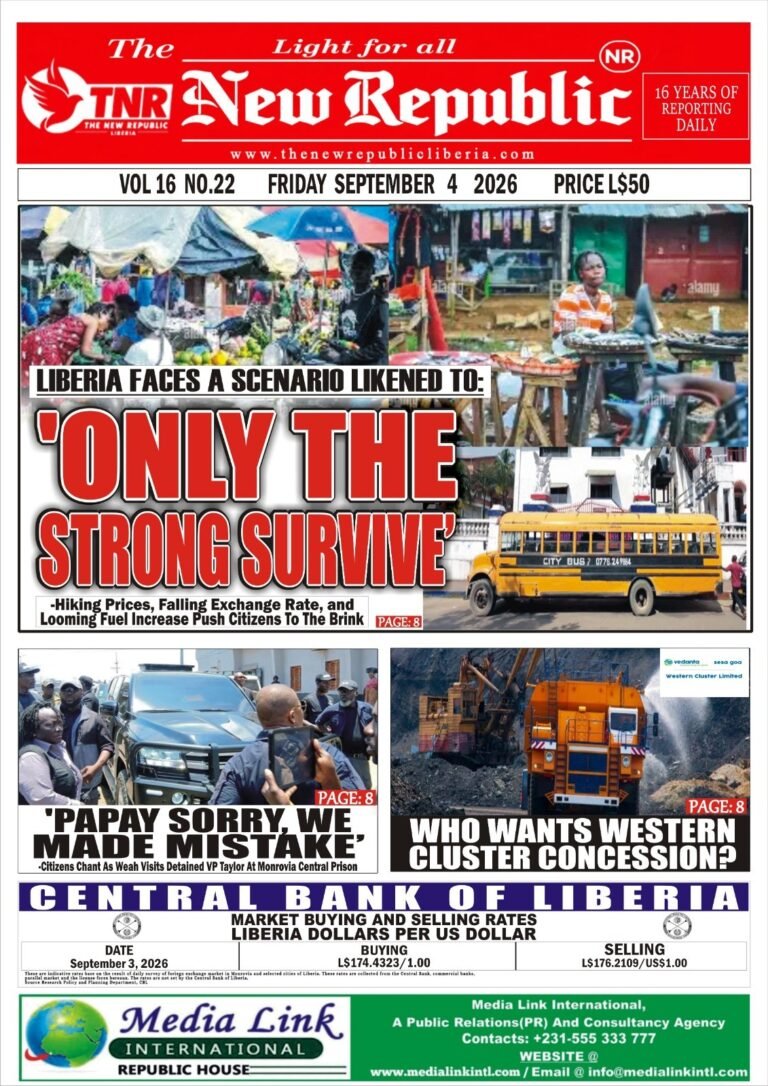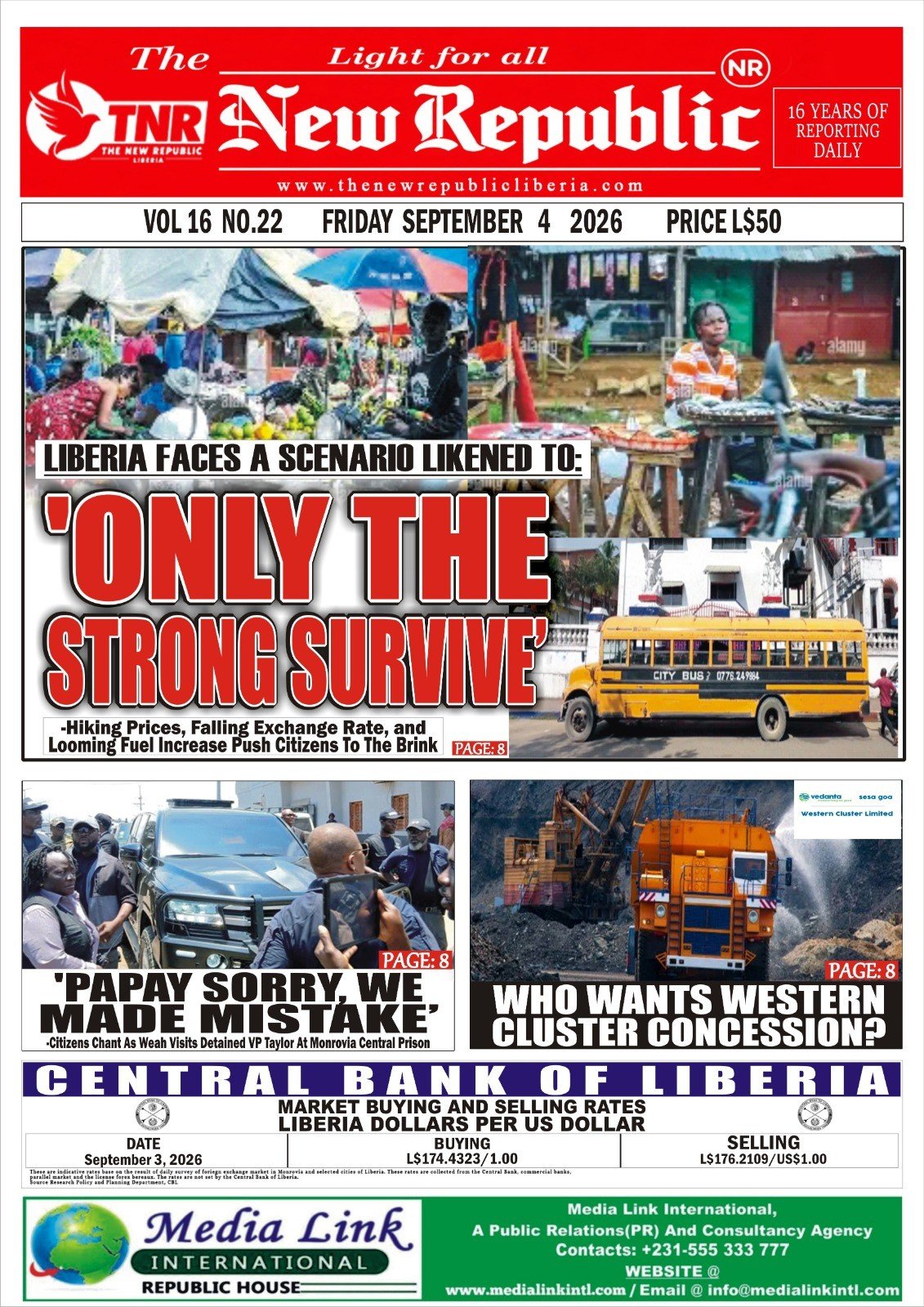
MONROVIA–Liberians are increasingly describing the current economic squeeze as a fight for survival, with rising hiking prices, a weakening exchange rate, and warnings of an imminent fuel increase pushing households closer to the brink.
At the gas stations in Monrovia, drivers are already bracing for another hike while forex bureaus across Monrovia, the Liberian dollar keeps sliding.
With this development, political and social analysts say Liberia is now living through a moment they describe as “only the strong can survive,” a harsh economic season where prices keep climbing while the currency keeps falling.
For ordinary Liberians already struggling to feed their families and send children to school, the pressure is becoming unbearable.
The core of the crisis is the exchange rate where the Liberian dollar has continued to decline against the US dollar in recent weeks on both official and parallel markets.
According to them, when the LD weakens, importers pay more to bring in rice, oil, flour, cement, and other staples, most of which Liberia depends on.
Economists say those extra costs are passed directly to consumers, saying market women say customers are buying less and complaining more.
“Before, L$1,000 could buy you a bag of charcoal, some soup ingredients, and transport,” said a seller in Duala. “Now L$1,000 can’t even finish one week. People are buying half-half.”
Basic goods have seen steady increases. A 25kg bag of rice that was sold for L$2,800 in July is now pushing L$3,100 in some areas while cooking oil, bread, and tin foods up 10% – 20% since August.
Also, is the issue of transport fares wherein commercial drivers have adjusted fares to match fuel and spare part costs
From bustling markets in Monrovia to communities outside the city, residents say everyday spending has become more difficult as the cost of food, transport, and basic goods climbs faster than incomes.
Traders and customers alike describe an atmosphere of fear and uncertainty, one in which only those with stronger buying power appear able to cope.
Hiking prices are being blamed for shrinking household budgets and increasing the time families spend comparing prices across different sellers.
Consumers say the prices of staple items and household necessities have become unpredictable, forcing many to scale down meals or delay purchases.
Some marketers in Monrovia say they are also struggling as their costs rise, even as they try to stay afloat amid reduced demand.
Residents say the falling exchange rate has made imported items and supplies significantly more expensive.
What is more scaring, according some residents, is that falling exchange rate does commensurate with market prices, as goods are either sold at the same hiked prices or far more exorbitantly.
Traders who rely on goods priced in foreign currency say their profit margins are being squeezed, while customers face rising costs at the point of sale.
Several market watchers describe a growing cycle, including weaker currency increases prices, which reduces buying power and worsens business activity.
Many Liberians are preparing for the impact of a looming fuel increase, warning it could drive costs higher across the economy. Transport fares, delivery charges, and the price of goods hauled from one area to another are expected to rise further if fuel becomes more expensive.
Residents worry that higher transport costs will translate into higher market prices, pushing already stretched households even further.
In interviews, some residents likened the situation to the phrase “only the strong survive,” describing how families with savings, stable incomes, or easier access to cash are better positioned to cope while others are forced into difficult trade-offs.
As people look for ways to keep going, many say they are:
reducing consumption of higher-cost items,
turning to smaller portions and cheaper alternatives,
relying on informal borrowing or support from extended family,
and seeking additional income opportunities to cover rising essentials.
Marketers and traders in Monrovia say the government and relevant agencies must move faster to reduce the burden on ordinary citizens.
They are calling for measures that can stabilize prices, improve currency stability, and protect the cost of critical commodities—including fuel and transportation.
As Liberians continue to navigate the tightening economic reality, the fear remains that the current situation could deepen if fuel prices rise as expected, making daily life even more difficult for the majority of households.
Callers on a local radio talk show Thursday blamed bulk of the problem on the ministry of commerce, accusing it of sitting supinely and allowing business play the market in their hands.
“The ministry of commerce is highly inactive when it comes to price control; they have not issued any price listing since the inception of this government,” remarked a seller down waterside market.
“Whenever the rate drops, it does not affect prices because they are either increased or remained the same; rather it affects citizens.”
He added: “Now the US rate is down by $50LD, prices of goods remain the same in some places while others are adding cents to their goods citing the exchange situation.”
Adding to the worry, the Liberia Petroleum Refining Company, LPRC, has announced an anticipated increase in the pump price of gasoline and other petroleum products.
LPRC officials say the adjustment is being driven by global oil prices and the exchange rate. But for citizens, it means another layer of hardship is coming.
According to experts, fuel touches everything, and that when gasoline and diesel go up, transport fares go up. “When transport goes up, market goods go up. When electricity generators cost more to run, businesses pass that cost on too,” said an expert.
“Once fuel increases, everything increases,” a taxi driver in Paynesville said. “We are already suffering. I don’t know where they want us to get the money from.”
Already, citizens are experiencing hikes in transport fares because of the same gasoline price increase.
Many fear the situation could reach an uncontrollable proportion in the coming days if nothing tangible is done to arrest it.
“Of course, there is only the strong will survive situation,” said political analysts, as they called on the government to ensure citizens don’t feel the pinch of what they termed “their own making.”
There are unconfirmed reports the falling exchange rate is a result of the Central Bank of Liberia’s plans to infuse new bank notes into the community, but cannot do so amid a soaring exchange rate.
“What they are trying to do is to create an artificial Liberian dollar shortage in order to put pressure on the exchange rate to drop, to be able to control inflation,” said one forex bureau agent said to be knowledgeable of the plan.

That phrase is now common on talk shows, in churches, and on the streets, as analysts use it to describe an economy where only those with steady dollar income, savings, or political connections can cope.
For civil servants paid in Liberian dollars, the falling exchange rate means their salaries buy less every month. For students, parents are struggling to pay fees. For small businesses, restocking has become a gamble.
“People are making hard choices,” said a social analyst in Monrovia. “Do I buy medicine or pay school fees? Do I eat two meals or three? The middle class is shrinking and the poor are getting poorer.”
Reports say the situation is worse outside Monrovia where transport costs make goods even more expensive.
Economists point to several factors, including exchange rate pressure, high demand for US dollars for imports vs. limited dollar inflow and global inflation. Also, is the issue of world prices for food and fuel remain high.
Liberia still imports most of what it consumes. And once fuel increases are announced, businesses preemptively raise prices
The government has said it is working with the Central Bank to stabilize the exchange rate and monitor market prices. But citizens say they are not feeling the impact yet.
In communities, the signs are everywhere with more children are being kept home from school because parents can’t afford fees and materials.
There are reports that more families are eating once a day, and that more young people are leaving for “greener pastures” in different environments, seeking employment opportunities.
“Government should remember the poor people,” Ma Korto said as she arranged her goods in Duala. “We are the ones feeling it. The strong will survive, but what about us?”
About The Author