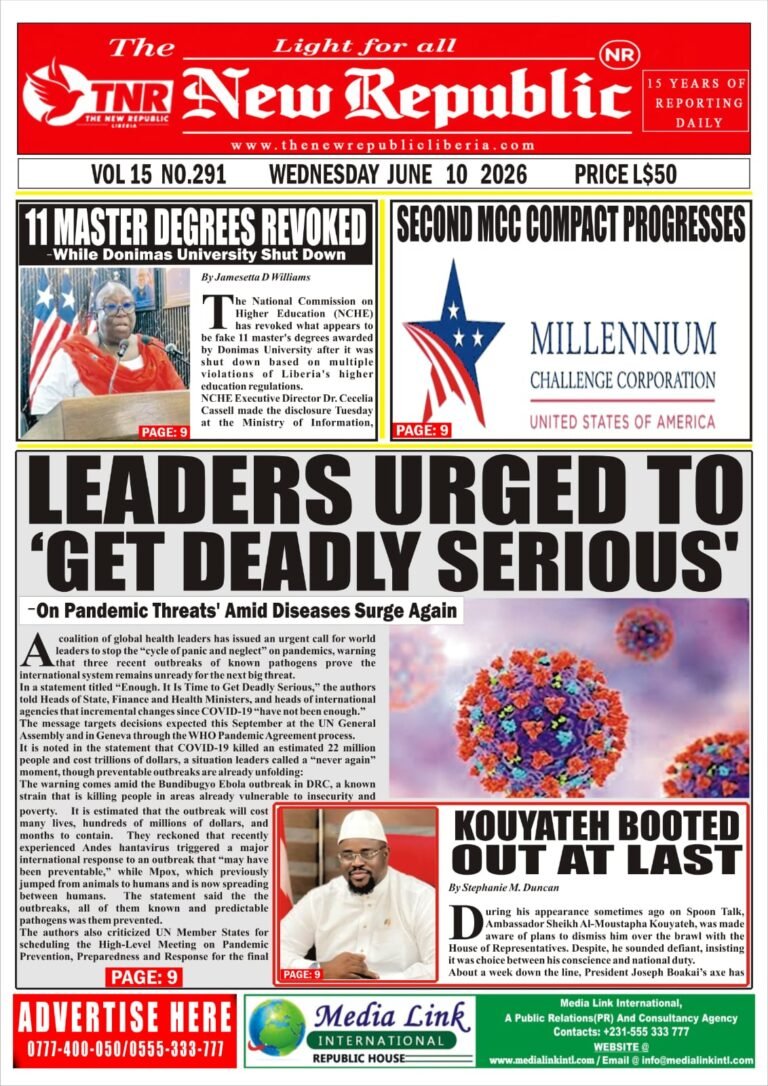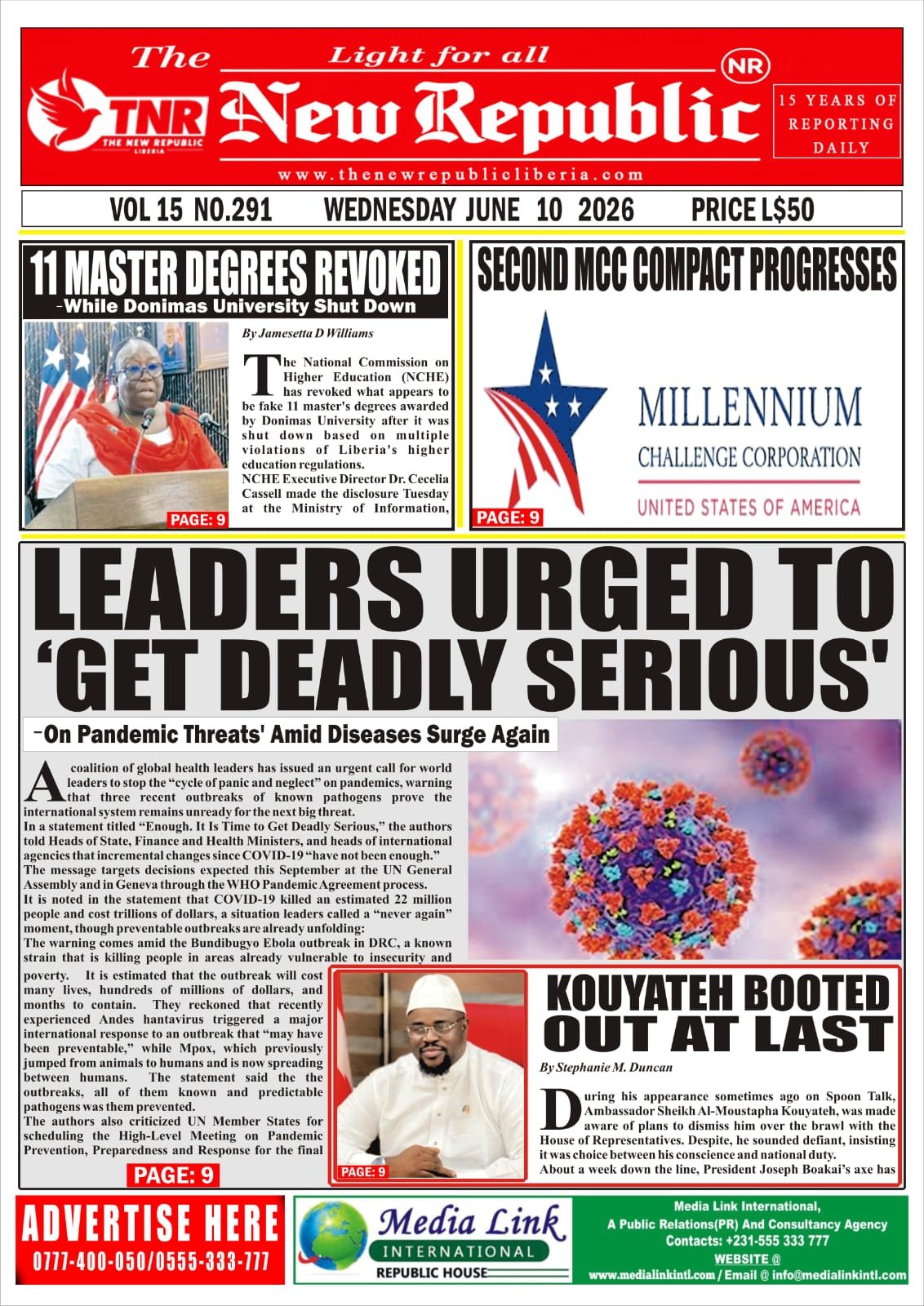
MONROVIA – A coalition of global health leaders has issued an urgent call for world leaders to stop the “cycle of panic and neglect” on pandemics, warning that three recent outbreaks of known pathogens prove the international system remains unready for the next big threat.
In a statement titled “Enough. It Is Time to Get Deadly Serious,” the authors told Heads of State, Finance and Health Ministers, and heads of international agencies that incremental changes since COVID-19 “have not been enough.”
The message targets decisions expected this September at the UN General Assembly and in Geneva through the WHO Pandemic Agreement process.
It is noted in the statement that COVID-19 killed an estimated 22 million people and cost trillions of dollars, a situation leaders called a “never again” moment, though preventable outbreaks are already unfolding:
The warning comes amid the Bundibugyo Ebola outbreak in DRC, a known strain that is killing people in areas already vulnerable to insecurity and poverty.
It is estimated that the outbreak will cost many lives, hundreds of millions of dollars, and months to contain.
They reckoned that recently experienced Andes hantavirus triggered a major international response to an outbreak that “may have been preventable,” while Mpox, which previously jumped from animals to humans and is now spreading between humans.
The statement said the the outbreaks, all of them known and predictable pathogens was them prevented.
The authors also criticized UN Member States for scheduling the High-Level Meeting on Pandemic Prevention, Preparedness and Response for the final Friday of UNGA week, when many heads of state have already left New York. They say the timing signals a lack of political urgency.
Since COVID-19, the world has adopted amended International Health Regulations and strengthened regional collaboration. But the letter says the Pandemic Agreement remains incomplete, too few countries have updated national outbreak plans, and the call for $15 billion per year for prevention and preparedness “has not come close to being met.”
The pledge to have diagnostics, vaccines and treatments ready within 100 days of identifying a new threat is also off track. “For Bundibugyo, that will not happen,” the statement warns.
Ahead of the September UNGA High-Level Meeting in New York and ongoing WHO negotiations in Geneva, the authors ask leaders to finalize and ratify the WHO Pandemic Agreement and implement it rapidly, establish fair, predictable financing fund for sustained prevention, the “100 Days Mission,” and rapid emergency deployment.
According to the statement, the current system is “fragmented and vastly under-funded,” and called on leaders to turn commitments into national and regional plans that integrate human, animal, and environmental health, accelerate regional self-reliance and build capacity for research, development, and manufacturing of medical countermeasures, including technology transfer.
World leaders are also urged to create a risk and readiness monitoring framework, as well as track risks from emergence to recovery, pinpoint weak spots, and guide investment.
The statement argues humanity can now sequence pathogens in hours, develop vaccines in months, and use AI across economies. “The world already has many of the tools it needs. The question is whether leaders will choose to invest in and use them,” it says.
These must be the last ‘rare but known’ diseases that will surprise us,” the authors wrote. “A pandemic threat will come. The world is not ready. We have no choice but to demand political courage, sustained investment, and action. To choose otherwise is indefensible.”
About The Author