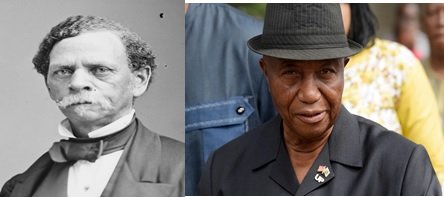
MONROVIA – From first President Joseph Jenkins Roberts to current President Joseph Boakai, Liberia’s quest for development keeps hitting the same wall.
While billions in aid and natural resource revenue flow in, everything seems developmentally static, with the roads stay broken, clinics lack drugs, schools lack teachers, economic hardship billows, and the lights are hardly on the longest of day or night.
What experts call a ‘sad story’, repeated for decades, is that while Liberia begs the world for handouts, its own officials, past and present, are accused of pocketing billions.
While billions of dollars of donors and other taxpayers’ money have been pumped into Liberia to tackle its degrading development outlook, its officials are bent on siphoning millions for personal gains, reportedly buying and building mansions abroad and at home.
Reports speak of how several officials of government, past and present, own not less than two three private properties allegedly from stolen public resources.
International partners have poured massive sums into Liberia since the civil war ended in 2003, targeting exactly the sectors Liberians need most, such as roads, education, health, electricity and many others.
Statistics show that the World Bank pumps about $3.2+ billion in active portfolio. For example, this paper learns that as of May 31, 2026, the World Bank’s active portfolio for Liberia totals US$3,224,660,000 in loans, credits, and grants. The money is tied to projects in energy, including regional emergency solar power Intervention project at US$57 million
Under the “Excellence in Learning in Liberia”program and other programs and projects, such roads, WB availed US$60 million, along with $41 million for southeastern Corridor Road Asset Management.
Also, the WB in recent times, approved the total of $95 million for multiple projects for statistics, digital integration, and resilient growth.
According to records, between 2016-2023 alone, aid volume to Liberia was $2.775 billion in 2016-19 and $2.415 billion in 2020-23, with about 50% of aid volume flowing through government systems between 2020-2023.
The new World Bank Country Partnership Framework 2025-2030 zeroes in on education, energy access, accountable governance, and private investment – the same gaps that keep Liberia poor.
The same is said to be with the International Monetary Fund (IMF, where Liberia has benefited from $266 million Resilience facility and $106 million through the Extended Credit Facility (ECF)
In 2025, the IMF approved a SDR 193.8 million, an equivalent of US$266 million arrangement under the Resilience and Sustainability Facility, plus SDR 19.3 million.
The organization disbursed US$26.49 million under the ECF, putting the total ECF disbursements to SDR 77.2 million or US$105.96 million.
The IMF says the money is meant to restore macro stability, ensure debt sustainability, and strengthen governance.
In addition to these international financial interventions and overtures, the United States is said to have obligated about $164.4 million in foreign aid to Liberia for FY2024, with another $68.9 million reported for FY2025. Of the amount, 99.6% was for economic purposes, this paper gathered.
The World Bank, USAID, IMF, AfDB, and EU are cited as financing infrastructure and energy development.
Besides, the African Development Bank (AfDB) is credited for most of the country’s outstanding development projects in roads and other infrastructures, committing millions of dollars.
China has an entrenched roots into Liberia’s development trajectory, funding and undertaking tones of development initiatives unseen in years, including antebellum political governance of the country.
It is stated that these are just minute amount of moneys the international community channeled to Liberia over the years, including this post-war governance period.
What experts see as paradox and contraventions is how the country has failed to utilize these external supports to use its own resources on other vital projects and socio-economic programs that help to better citizens’ lives.
“While donors fund hospitals and power lines, Liberia’s natural wealth bleeds out,” said one expert, who also shed light on a March 2026 Forest Trends report using Liberia Extractive Industries Transparency Initiative data that found a staggering US$2.7 billion gap between what Liberia reports as mineral exports and what importing countries say they received from 2007-2023.
It is reported that mining companies paid just US$844 million to government, but importing countries recorded US$7.8 billion in Liberian mineral imports – primarily gold and iron ore.
That 43% gap points to smuggling, under-reporting, and transfer pricing to evade taxes. According to development and financial experts, the losses are concrete.
For example, they indicated that ArcelorMittal Liberia generated over US$1.21 billion between 2009-2022, while government received only US$138 million – about 11%.
Also, host communities are owed over US$173 million under Mineral Development Agreements, but barely US$119 million has been paid, and even that hasn’t fully reached beneficiaries, while 90% of artisanal gold leaves Liberia illegally. Some multinationals declared zero profits for 20+ years, paying no corporate tax.
“Schools lack textbooks and trained teachers. Clinics operate without essential drugs. Basic infrastructure is either broken or nonexistent” in mining areas.
At the same time, audits show budget money meant for services is also misused. Recent General Auditing Commission (GAC) audits found US$2.8 million disbursed above the approved national budget and US$78.2 million under-disbursed, depriving 106 ministries and agencies, including health and education.
On top of that, 11 state-owned enterprises were assessed US$10.1 million in income taxes but remitted only US$5.6 million.
At the Executive Mansion, a GAC audit flagged US$7.9 million in salary payments lacking supporting documentation and US$3.5 million budget overrun on supplementary personnel, while the LACC says government has lost US$6.5 million + L$17.9 million to corruption across health, WASH, agriculture, and education agencies.
High-profile cases include the US$6.2 million allegedly transferred from Central Bank to FIA accounts in 2023, a US$1.8 million rural women’s fund theft, and US$410,000 embezzled at Lofa University are still not being finalized.
The U.S. Treasury sanctioned senior officials including former Minister of State Nathaniel McGill for “misappropriating government assets for personal gain” and “using government funds allocated to other institutions to run his own projects”.
Corruption watchdogs note officials “built mansions around the globe” while communities lack water and electricity.
The U.S. State Department’s 2024 Fiscal Transparency Report says Liberia maintained “off-budget accounts not subject to audit or oversight” and did not disclose earnings from major state-owned enterprises.
Since independence, corruption has been blamed for Liberia’s woes. As World Bank, IMF, and other donors fund health clinics, school buildings, solar power, roads, democracy programs, billions in iron ore, gold, timber revenue fail to reach Treasury or communities.
All of these are blamed on officials of government who are often accused of kickbacks, contract rigging, cash payments, and building mansions abroad.
As Integrity Watch Liberia warned that “Liberia does not suffer from a shortage of natural wealth, but it suffers from a failure to manage what it already owns”. they added that until the leaks are plugged, the country will keep getting rich resources and poor results.
About The Author