ArcelorMittal Liberia’s (AML) expanded mining operations are creating opportunities to strengthen Liberia’s economy through increased iron ore production, employment, local procurement, government revenue and investment in critical infrastructure.
The amended Mineral Development Agreement (MDA), extending the company’s mining rights to 2050 with an option for a further 25 years, establishes a long-term framework for continued investment and expansion. The agreement was ratified by the Liberian legislature and provides for a $200 million payment to the Government of Liberia for specified rights, including the extension of mining rights and reserved railway capacity.
The expansion is backed by substantial investment in mining, processing, rail and port infrastructure. AML’s total investment in Liberia is expected to reach approximately $3.5 billion, including its latest expansion program.
Increasing annual iron ore production from approximately 5 million metric tons to as much as 20 million metric tons require additional operational capacity across mining, processing, transportation and export activities.
That is why the expansion is generating employment opportunities for Liberians, both directly through company operations and indirectly through contractors and suppliers. These opportunities extend to engineering, special constancies, equipment maintenance, construction, logistics and other support services.
The economic impact for Liberia also reaches businesses outside the concession. Mining operations require a wide range of goods and services, including fuel, food, transport, construction materials, equipment, security, accommodation and maintenance.
As demand for these services grows given the expansion of AML operations, qualified Liberian businesses have opportunities to secure contracts, employ additional workers and expand their operations. The extent of these benefits are shown in how much procurement spending is directed to local suppliers and how many Liberians are employed by the company and its contractors.
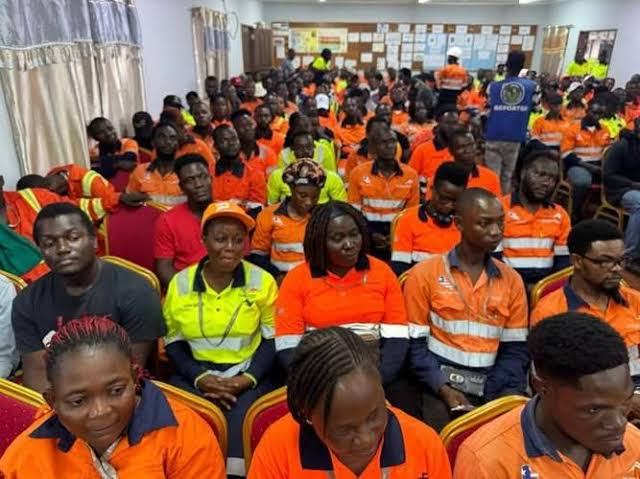
ArcelorMittal Liberia (AML) has approximately 8,995 workers, including company employees, fixed-term staff and contractors, according to workforce records reviewed Liberian media in 2025. The figures showed that 2,848 were full-time company employees, including 2,555 Liberians, while 6,147 were fixed-term staff and contractors, including 4,705 Liberians. Overall, Liberians accounted for 7,260, or approximately 81 percent, of the combined workforce.
Beyond its existing workforce, AML’s Phase II expansion generated additional employment through construction and related activities. In January 2026, the company reported that the expansion had created more than 6,000 construction jobs, the majority filled by Liberians. Separately, a report published that month said contractors hired 5,508 Liberians during 2025. These figures demonstrate the expansion’s contribution to employment, although the construction and annual hiring figures may overlap with the broader workforce totals and should not be added together.
AML’s expansion includes improvements to the Port of Buchanan, including an additional berth, alongside investments in the railway connecting the mining operations in Nimba County to the coast.
These investments are intended to support increased iron ore shipments and improve the capacity of the export system. They rail expansion also generated demand for construction, maintenance, transportation and related services which could increase the commercial value of the railway and port beyond AML’s own operations, while supporting Liberia’s ability to transport minerals and other goods to international markets.
Government Revenue and Export Earnings
The 2025 agreement provides for a $200 million payment to the government for specified rights associated with the extension and railway capacity. Beyond this payment, the government can benefit from applicable taxes, royalties, fees and other fiscal obligations arising from the company’s operations.
Higher iron ore production could increase export earnings and government revenue, although the actual gains will depend on international iron ore prices, production volumes, operating costs and the applicable fiscal terms.
Revenue collected by government many say are key in supporting public spending on infrastructure and essential services. The broader economic benefit will depend on effective revenue collection, accountable management of public funds and the extent to which mining income contributes to national development.
The expansion program, valued at approximately $1.8 billion, includes the iron ore concentration facility at Tokadeh, railway upgrades, improvements to the Port of Buchanan and investments in power infrastructure.
The concentrator enables the processing of iron ore to improve its quality before export and forms a central part of the plan to increase production. Together, these investments strengthen the infrastructure needed to move minerals from northern Liberia to international markets.
Construction and operation of these facilities also create demand for technical expertise, equipment, transport and other services. Where Liberian companies can participate in supplying these needs, the benefits can extend into the wider domestic economy.
The extension of AML’s MDA provides a long-term framework for investment, while the expansion creates opportunities for increased employment, business growth, export earnings and government revenue.
Realizing these benefits will depend on production performance, local participation in procurement, employment opportunities for Liberians and effective management of public revenue. The potential for shared railway access could also create additional economic opportunities if the necessary arrangements are implemented without impeding AML’s rights under the agreement with the government of Liberia.
For Liberia, the wider objective is to ensure that increased mineral production translates into measurable economic benefits beyond the mine, supporting local businesses, creating jobs and strengthening public finances
About The Author