By Stephanie M. Duncan
MONROVIA – Whose authority is it to apportion new legislative seats is the newest public debate that has drawn the attention of many legal minds as well as some members of the National Legislature.
The House of Representatives has been showing signs of determination to proceed with the apportionment of additional legislative seats.
Recall that a specialized committee set up by the House leadership on the proposal to set threshold for new electoral districts recommended to plenary the establishment of 16 additional electoral districts in Liberia.
The committee’s recommendation will increase the number of legislative seats from the current 73 seats to 89 in line with the new population threshold for electoral districts.
The report was presented by the Chair of the committee, Sinoe County District 1 Representative, Thomas Romeo Quioh, during the 8th day sitting of the Special Session of 1st quarter of the 3rd session of the 55th Legislature on Tuesday, April 21, 2026.
The report states that the proposal guarantees that no county will lose its current representation, even though counties with high population density will be awarded additional seats.
With the new proposal Montserrado County, which currently has 17 seats, will be awarded three new seats, while awarding two new seats each to Nimba, Bong and Lofa Counties.
Also, one seat each will be added to Grand Bassa, Margibi, Grand Gedeh, Grand Cape Mount, Maryland, Sinoe and Bomi Counties.
Unfortunately, there would be no addition seat for River Gee, Gbarpolu,
Grand Kru, and River Cess Counties.
The committee’s report shows that heavily populated counties, especially Montserrado, Nimba, Bong, and Lofa, will see the most significant increases, due to the updated population figures from the Liberia Institute of Statistics and Geo-Information Services (LISGIS).
The proposal also introduces a tier-based system to guide future districting, giving the National Elections Commission a clearer standard for representation.
Following the presentation of the report and subsequent debate by plenary, a motion was proffered by Maryland County District 2 Representative Anthony William for further debate on the matter, the official day for closure of the special session.
The motion was then modified by Montserrado County District 16 Representative, Dixon Seboe that no resolution would be subsequent passed on the day of the argument.
The amended motion was accepted, suggesting that the motion will only be debated without any action owing to the critical nature of said proposal.
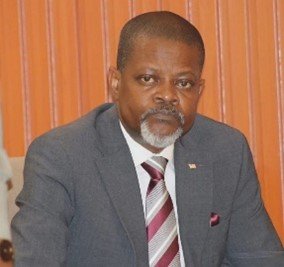
Montserrado County Senator Abraham Darius Dillon has joined the debate, arguing the measure exceeds the Legislature’s constitutional authority.
Senator Dillon said the 1986 Constitution clearly separates the responsibilities of the Legislature and the National Elections Commission (NEC) regarding the allocation of legislative seats.
According to him, the Legislature does not have the constitutional mandate to determine, assign, or distribute legislative seats among Liberia’s counties. Instead, he said Article 80(d) limits the Legislature’s role to establishing the population threshold for representation based on the results of a duly conducted national population census.
“The Legislature has no authority to set and assign legislative seats by counties,” Dillon said. “Its role is to establish the population threshold based on the results of a duly conducted national census.”
The Montserrado County lawmaker further argued that Article 80(e) of the Constitution grants the National Elections Commission the exclusive responsibility to apportion legislative constituencies and seats after the Legislature has established the constitutional population threshold.
According to Senator Dillon, the NEC is constitutionally empowered to determine the allocation of seats in line with census results and applicable electoral laws.
He said the constitutional separation of responsibilities is intended to safeguard the independence, transparency, and fairness of Liberia’s electoral process by insulating constituency demarcation and seat allocation from political interference.
The senator further cautioned that any proposal inconsistent with the constitutional framework should be subjected to thorough legal scrutiny before it becomes law.
“We will set this matter straight and right should the issue be brought before the Senate from the House of Representatives,” Dillon stated.
He called on all branches of government to strictly adhere to the Constitution and respect the National Elections Commission’s independent constitutional mandate in matters relating to electoral boundaries and legislative seat apportionment.
About The Author