By Stephanie M. Duncan
Nobel Peace Prize laureate Leymah Gbowee has criticized members of the Liberian Legislature after children participating in the 10th edition of the Peace Through Fair Play Pact were allegedly denied the opportunity to meet lawmakers because she refused to address senators as “Honourable.”
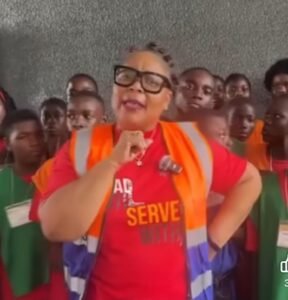
Speaking in a video message following the group’s visit to the Capitol on Thursday, Gbowee described the incident as disappointing, saying lawmakers placed personal pride above the interests of children who had traveled from several counties to learn about Liberia’s democratic institutions.
According to Gbowee, the annual Peace Through Fair Play Pact brings children from rural communities to Monrovia to visit key branches of government, including the Supreme Court, the Senate, the House of Representatives and the Executive Mansion, to help them better understand governance and civic responsibility.
She said the delegation, made up of children from Bomi, Sinoe, River Gee and Montserrado counties, began the day with a visit to the Supreme Court before proceeding to the Capitol, where they were welcomed by Vice President Jeremiah Kpan Koung.
Gbowee explained that the children were expected to present a statement before senators. However, she claimed they were informed that lawmakers would only receive them if she personally entered the Senate chamber and addressed members as “Honourable Senators.”
She said she declined to do so because she does not believe public officials are automatically entitled to the title.
“I refused to do it,” Gbowee said, adding that she also chose not to enter the Senate chamber but requested that the children be allowed to proceed with their visit independently. According to her, the request was denied.
She expressed disappointment that children who had traveled long distances from counties including River Gee and Sinoe were allegedly prevented from interacting with lawmakers because of the disagreement over the use of the honorary title.
Gbowee questioned whether the title “Honourable” is legally required for elected officials in Liberia, saying she had consulted lawyers who informed her that neither the Constitution nor the country’s laws mandate its use.
She challenged anyone to produce a constitutional or legal provision requiring senators and representatives to be addressed as “Honourable,” pledging to donate US$10,000 to the constituents of any lawmaker if such a provision exists.
“It is pathetic, really, really pathetic, that people will put their egos above the well-being of Liberian children,” Gbowee said.
Her remarks follow an earlier public statement in which she questioned the routine use of the title “Honourable” for elected officials, arguing that respect should be earned through service and conduct rather than automatically conferred by office.
About The Author