By Jamesetta D. Williams
TUBMANBURG, Bomi County — The Government of Liberia has reaffirmed its commitment to strengthening oversight of the mining sector, curbing illegal mining, promoting local mineral processing, and ensuring that the country’s natural resources contribute more significantly to national revenue and economic development.
The commitment was highlighted during the fourth edition of the Government Town Hall Meeting held on October 9, 2026, in Tubmanburg City, Bomi County, under the theme, Liberia’s Extractive Industry and the Mining Sector’s Contribution to National Revenue, Economic Growth, and the Country’s Transformation Agenda.
The meeting brought together government officials and residents to discuss the management of Liberia’s mineral resources, revenue generation, environmental protection, mining investments, and the need to ensure that communities benefit from activities taking place within their areas.
Speaking at the gathering, Minister of Mines and Energy R. Matenokay Tingban emphasized that Liberia’s mineral wealth presents a significant opportunity to generate government revenue, create jobs, attract investment, and advance the country’s development agenda.
However, the minister cautioned that possessing abundant natural resources does not automatically translate into national development, stressing the need for effective management and greater economic benefits from mineral extraction.
“The central question is not simply what we extract. It is how much value remains in Liberia after extraction,” the minister emphasized.
He said the government must ensure that mining activities contribute to economic stability, employment opportunities, local business development, and improved living conditions rather than relying primarily on exporting minerals in their raw form.
The Minister of Mines and Energy described mining as an important contributor to Liberia’s domestic revenue and overall economic growth.
According to figures cited in his presentation, mining activities contributed approximately US$121 million in 2023, with the sector’s contribution reportedly increasing to about US$124 million in 2024.
The minister said the figures demonstrate the importance of the extractive industry to the government’s fiscal position but cautioned that revenue alone should not be the only measure of the sector’s performance.
He identified employment creation, support for local businesses, community development, and environmental protection as other important indicators of success.
Meanwhile, Liberia Revenue Authority General Commission James Dorbor Jallah disclosed that the mining sector had contributed approximately US$432 million to the country’s reported US$1.059 billion in revenue collected at the time of his presentation.
Jallah said the figures reflected the extractive industry’s significant role in supporting the government’s domestic revenue mobilization efforts.
He also commended the Ministry of Mines and Energy for its work in the sector, noting that the figures provided an opportunity to assess the industry’s contribution to public finances over the past six to seven years.
The revenue figures cited during the meeting underscored the importance of strengthening the management of the country’s mineral resources and ensuring that mining operators meet their legal and financial obligations.
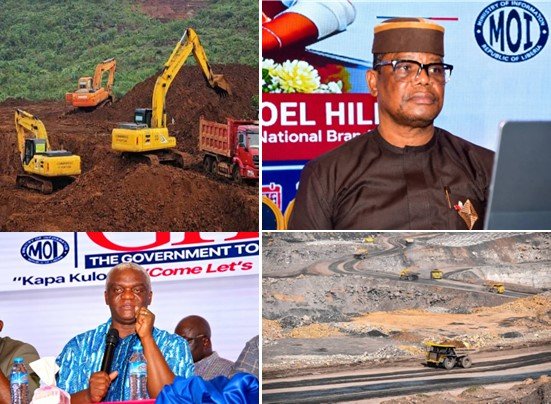
The Acting Minister of Information, Johnny , urged Liberians to demand transparency and accountability in the management of revenue generated from mining activities.
He said the government’s reported achievement of reaching the US$1 billion domestic revenue milestone demonstrated the importance of domestic revenue collection, including contributions from the extractive industry.
However, the acting minister stressed that collecting revenue was only one part of the development process.
He challenged government officials and other stakeholders to explain how mining revenue was being managed and how the proceeds were being translated into tangible benefits for citizens.
According to him, the benefits of mining should be reflected in improved roads, schools, healthcare facilities, employment opportunities, and better living conditions, particularly in communities where mineral extraction takes place.
He encouraged residents of Bomi County to use the town hall meeting as a platform to raise concerns, ask questions, and propose solutions concerning the management of the country’s natural resources.
The acting minister maintained that Liberia’s mineral wealth must produce benefits that citizens can see and experience in their communities.
The government also addressed concerns about illegal mining activities and their potential impact on Liberia’s natural resources and environment.
A government representative urged citizens interested in mining to obtain the necessary authorization from the Ministry of Mines and Energy before beginning operations.
The official said mining activities must be conducted in accordance with the country’s laws and regulations, adding that the government would not support illegal operations.
The representative encouraged citizens who depend on mining for their livelihoods to seek legal opportunities and consult the relevant authorities about the requirements for operating within the sector.
The meeting also addressed the seizure of mining equipment during enforcement operations in Bomi County.
According to the government representative, investigations into suspected illegal mining activities were ongoing, and the relevant team was expected to submit its findings to the appropriate authorities.
The official said individuals found responsible for violations could face applicable penalties, while cases requiring prosecution would be referred to the relevant authorities.
The government also pledged to make the findings public after the investigations were completed.
The involvement of foreign nationals in suspected illegal mining activities was another issue raised during the discussion, including concerns about Chinese nationals and other foreign operators.
The government representative acknowledged that illegal mining remained a challenge, particularly in remote areas where enforcement officers faced difficulties maintaining a constant presence.
The official explained that some mining operations take place deep in forests and other difficult-to-access locations, making monitoring and enforcement more complicated.
The representative called on local communities to cooperate with the relevant authorities by reporting suspected illegal mining activities.
The government maintained that addressing illegal mining required cooperation among public institutions, mining operators, and citizens.
The representative also explained that some mining operations had been suspended for six months because of outstanding challenges requiring attention.
According to the official, the relevant authorities would assess whether operators had complied with the law before considering the renewal of their licenses.
Companies or individuals that fail to meet the required conditions could face non-renewal of their licenses and other applicable penalties. Outstanding obligations to the Government of Liberia would also need to be addressed in accordance with the law.
Beyond increasing revenue and strengthening enforcement, the government emphasized the need to add value to Liberia’s mineral resources before they are exported.
Minister Tingban said the Ministry of Mines and Energy was discussing ways to develop local mineral-processing capacity, including initiatives that could support the establishment of processing facilities.
He cited gold and lead from Grand Kru County as examples of mineral resources that could benefit from additional processing within Liberia.
The minister said processing minerals locally could create employment opportunities, stimulate business activities, increase government revenue, and allow the country to retain a greater share of the economic benefits generated by its natural resources.
He also referenced discussions involving mineral-processing companies and proposals related to establishing a gold refinery.
The ministry, he said, was considering how such initiatives could be supported through engagement with relevant stakeholders.
The proposed approach reflects the government’s broader interest in moving beyond the export of raw minerals toward activities that could generate additional economic opportunities within the country.
The meeting also highlighted the potential contribution of new mining investments to Liberia’s economic growth and domestic revenue generation.
According to the presentation, the government was working to advance several mining projects that could generate additional revenue once they become operational and meet the necessary requirements.
Projects involving Western Cluster, Westcrest, and other iron ore and gold mining interests were mentioned during the discussion.
The relevant authorities, including the Inter-Ministerial Concessions Committee, are involved in processes relating to mining concessions and agreements.
The government expressed expectations that progress on these projects could expand economic activity, create employment opportunities, and increase revenue available to support national development priorities.
Iron ore mining interests in different parts of Liberia, including Grand Gedeh County, were also referenced as part of the country’s broader investment opportunities.
The presentation further addressed the review of certain mining agreements to ensure that concession arrangements are properly structured.
In one case discussed, two geographically separated properties were initially considered under a single mineral development agreement. The government determined that the properties should be handled separately because they were not contiguous.
The proposed separation is intended to ensure that the properties are addressed through the appropriate concession processes.
The government also disclosed that it was working toward establishing a state-owned mining company as part of efforts to strengthen Liberia’s participation in the mining industry.
A government representative acknowledged that private investors often bring the capital, technology, and technical expertise needed to develop major mining projects.
However, the official stressed that foreign investment should also create opportunities for Liberians to acquire technical knowledge, develop specialized skills, and participate more meaningfully in the industry.
The representative said the proposed state-owned company could help develop Liberia’s capacity to participate more directly in the mining sector.
The government also referenced its engagement with international partners in New York around the United Nations General Assembly, where Liberia’s investment opportunities were presented to the international community.
The broader objective, according to the presentation, is to attract investors who can help develop the country’s natural resources while supporting economic growth and national development.
Environmental protection remained a key concern throughout the discussions, with the government emphasizing the need for mining operators to comply with regulations governing their activities.
The government said responsible mining practices were necessary to protect communities and prevent the country’s natural resources from being exploited in ways that could cause harm.
The discussion also highlighted the need to strengthen monitoring and enforcement to ensure that companies and individuals operating in the sector fulfill their legal responsibilities.
Participants raised concerns about the benefits communities receive from mining operations, including the availability of educational opportunities and other social development initiatives.
In response to questions about scholarships for Liberian students pursuing studies abroad, a government representative explained that some mineral development agreements contain provisions intended to support community development and other social benefits.
The official referenced mining companies such as ArcelorMittal, noting that relevant provisions in mineral development agreements provide a framework for funding social development initiatives.
However, the representative said the appropriate education authorities would be better positioned to provide detailed information about scholarship opportunities and how such programs are implemented.
The discussion highlighted the importance of ensuring that commitments contained in mining agreements translate into meaningful opportunities for affected communities.
The fourth Government Town Hall Meeting provided a platform for discussing the contribution of Liberia’s extractive industry to national revenue, economic growth, and development.
Government officials emphasized that improving the sector’s performance would require stronger regulatory enforcement, greater transparency, responsible investment, environmental protection, and increased local processing of mineral resources.
The government also urged citizens to cooperate with authorities in reporting suspected illegal mining activities and to remain engaged in discussions concerning the management of the country’s natural resources.
Officials maintained that Liberia’s mineral wealth must generate more than revenue for the government; it must also create jobs, strengthen local businesses, support public services, and improve the living conditions of citizens.
The government said effective management of the mining sector would be essential to ensuring that the country’s natural resources contribute meaningfully to its broader development agenda.
About The Author