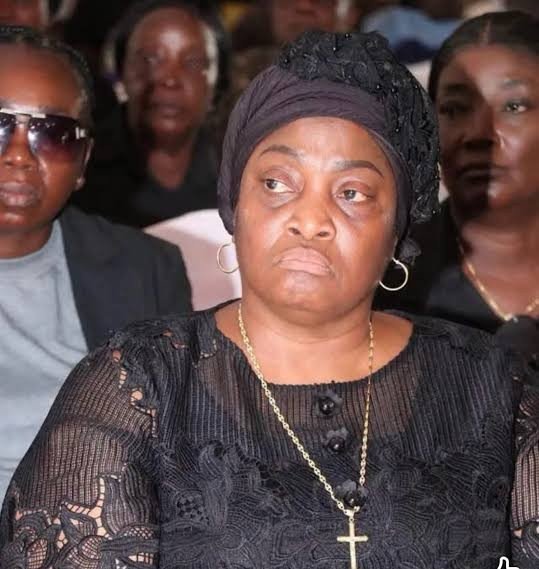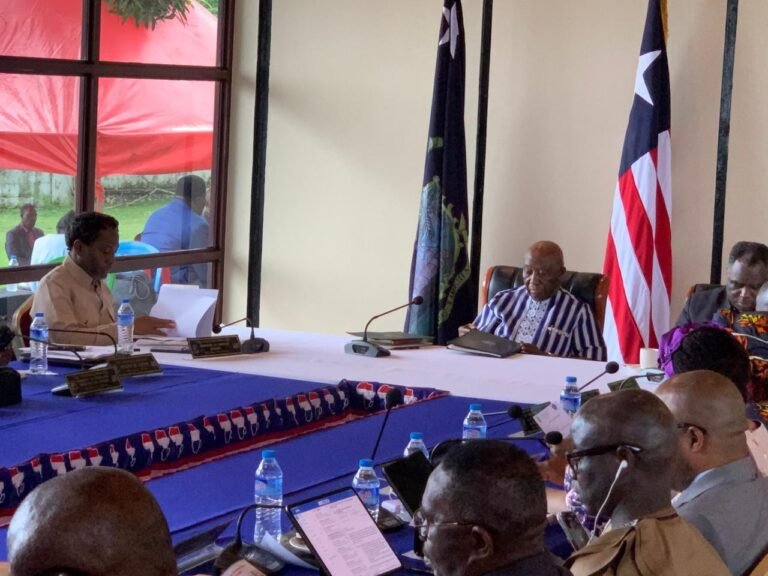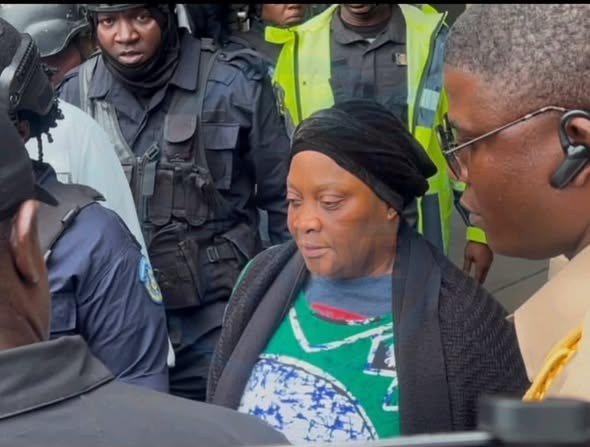
MONROVIA–Though their indictments may not be the same, the same scenario of humiliating two former political leaders, a former head of state in Charles Gyude Bryant and then Vice President Jewel Howard Taylor, appear similar in what critics term “Unity Party’s handcuff of legal crackdown against drugs, corruption and other misfits.”
Those with knowledge on how former officials endured the manacle under the UP administrations, speak of the case of former National Transitional Government Chairman, Charles Gyude Bryant and now former vice President Jewel Howard Taylor.
According to them, just as Madam Taylor was intercepted en route to the RIA by state security officers, so was Bryant, then head of the National Transitional Government of Liberia (NGTL), humiliated, pulled out of his house by police officers.
Bryant headed the last of the different transitional governments, which oversaw the 2005 elections that brought the first Unity Party government headed by Madam Ellen Johnson Sirleaf to power.
Acting on its pledge to wage war against corruption, the Sirleaf-led administration sought charges against the former head of state for alleged corruption and pillaging of state resources.
What happy to Bryant?
In January 2007, Bryant was questioned by police regarding allegations of corruption during his time in office, and on 27 February 2007, he was charged with embezzlement.
The NTGL he headed was alleged to have embezzled more than US$1 million, prompting government to issue a warrant for his arrest on 12 March.
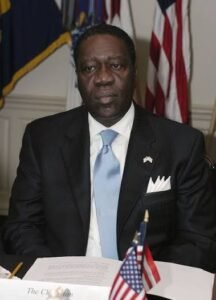
He was not immediately arrested because he was said to be absent from Monrovia and in Lofa County instead, and on 13 March he was arrested and released on bond shortly thereafter.
In court on 25 April, the defense argued that Bryant constitutionally enjoyed immunity for actions taken as head of state, while the prosecution argued that he did not because his appointment resulted from the Accra Accords in August 2003 and occurred outside the constitutional framework.
However, on 24 August 2007, the Supreme Court of Liberia ruled in favor of the prosecution’s argument, enabling Bryant’s trial to continue.
Bryant was arrested on 7 December 2007 after failing to appear in court earlier in the week. He had said that he was boycotting the court because of his belief that he enjoys immunity.
As he was being taken to a prison in Monrovia, he said: “This is a very, very dark day for Liberia. This is the reward we get for restoring peace and democracy to our country.”
He was released from the central prison in Monrovia on 8 December after he signed a commitment to appear in court on 10 December.
On 30 April 2009, Bryant, along with four others, was acquitted of embezzling US$1 million from the state oil refinery. Additional charges regarding the alleged theft of US$1.3 million from the state were dropped on 24 September 2010 as the government failed to provide any proof of wrongdoing.
Bryant was a former businessman who ran the power-sharing administration for the two years following the 1989-2003 war, which killed some 200,000 people and devastated the nation’s infrastructure.
He was elected to head the transitional government at the famous Accra Peace Accords that brought together warring faction heads, heads of political parties, other national players and international partners.
Liberia’s President Ellen Johnson-Sirleaf, who came to power in post-war polls in 2005 as Africa’s first elected female head of state, had vowed zero tolerance for corruption as she tried to return the country to its former prosperity.
The Bryant administration, which grouped all the factions from the civil war, was tasked with guiding Africa’s oldest independent republic to polls after ex-dictator Charles Taylor — now now imprisoned in Britain for war crimes — went into exile.
Bryant denied the findings of the ECOWAS report, and warned that any prosecutions could prompt a constitutional crisis in the mineral-rich state by reopening the wounds of one of modern Africa’s bloodiest wars.
Recall that more than a million people were driven from their homes by the fighting, in which drugged child soldiers raped, mutilated and killed their way across the country in a conflict partly financed by diamonds from neighbouring war-torn Sierra Leone.
Jewel’s case
Though a different indictment, political observers have pointed to the scenario of how two former heads of state were brought to their knees in “unconventional circumstances.”
“This is UP’s trend of cracking down on opposition elements in the name of rule of law,” remarked an observers, who also frowned on the manner Madam Taylor was arrested and brought to justice.
Far different from Bryant’s corruption charges, former vice President Taylor is facing drugd-related charges – 8-count indictment of Illicit trafficking of controlled substances, importation of controlled substances, exportation of controlled substances, criminal conspiracy, criminal facilitation, criminal solicitation, money laundering and aiding the consummation of a crime.
According to the indictment filed before the Monrovia City Court, Madam Taylor is alleged to have received a total of US$135,000 from individuals linked to the cartel, including US$45,000 allegedly received during a trip to Dubai, US$75,000 allegedly channeled through Sheikh Bashiru Kante for her Jewel Star Fish Foundation, and US$15,000 allegedly received in August 2026.
The state says the case is supported by travel records, audio recordings, witness testimonies, and evidence of her alleged association with members of the network.
She has since denied any connections to drug cartels as claimed by the state.
Liberians are on edge, waiting for the outcome of the legal proceedings against their former vice president, whether it will go her way like Gyude Bryant or not. But what is clear, according to critics, is that the scenario points to how two national leaders faced humiliation.
Prior to her indictment, Madam Taylor has been vocal about her unpaid benefits by the government, accusing it of intentionally denying her just retirement benefits as former vice president.
Political observers say the trend is typical of the UP, using the socalled legal instruments against former officials.
About The Author