By Jamesetta D Williams
MONROVIA–The Liberia National Police has charged five persons and a logistic company in connection with the attempted export of more than 237 kilograms of cocaine, valued at over US$19 million, through Roberts International Airport (RIA).
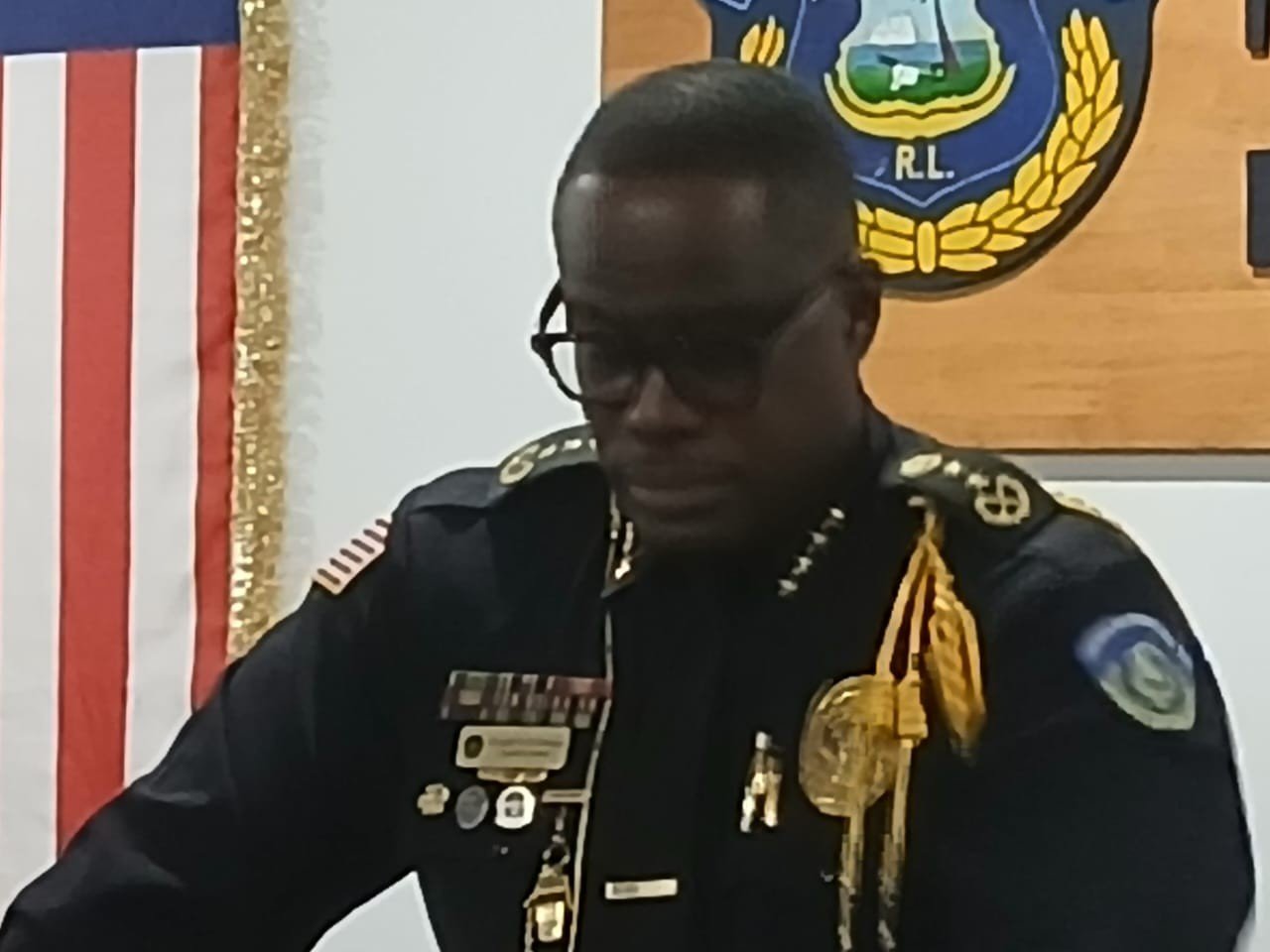
The disclosure was made on July 4, 2026 by the Inspector General of Police, Col. Gregory Coleman. He described the case as one of Liberia’s most significant narcotics investigations, saying it exposed a sophisticated transnational drug trafficking network that sought to use Liberia’s aviation and cargo system to transport cocaine abroad.
The cocaine shipment, concealed in six boxes falsely declared as containing Maggi cubes and lappas, was intercepted on June 7, 2026, after security personnel discovered inconsistencies in the cargo documentation, declared weight, and screening images. Laboratory testing later confirmed the substance to be approximately 237.6 kilograms of cocaine.
Those charged are Paul J. King, Operations Manager of Global Logistics Services (GLS), and Global Logistics Services (GLS) with multiple offenses under the Amended Controlled Drugs and Substance Act of 2023 and the Revised Penal Code of Liberia. The charges include unlicensed exportation, transportation, possession, and trafficking of controlled substances, as well as criminal conspiracy.
Other charged are; Michael U.S. Browne, also known as Rahim or Raheem Bah, in absentia. Investigators alleged that Browne organized the shipment, used front companies to conceal the operation, coordinated the falsely declared cargo, and attempted to recover the cocaine after it had been discovered.
Also charged in absentia is Oscar J. Browne, who investigators say scanned and cleared a similar shipment in May and later contacted colleagues in an effort to secure the release of the June shipment after authorities had already discovered the narcotics.
Another suspect, Emmanuel Kpah, has been accused of delivering the shipment and cash associated with the cargo transaction. Authorities also identified Usman Ali, believed to be the consignee based in the United Kingdom, as another key suspect in the operation.
All suspects face charges including unlicensed exportation, transportation, possession, illicit trafficking of controlled substances, criminal conspiracy, and criminal solicitation where applicable.
The Inspector General disclosed that some suspects remain outside Liberia or are in hiding. He said law enforcement agencies are pursuing them through arrest warrants, international law enforcement cooperation, extradition requests, and mutual legal assistance mechanisms.
Authorities further revealed that evidence showed attempts were made by members of the trafficking network to bribe security officers, retrieve the seized shipment, and interfere with the investigation following the discovery of the cocaine.
The Inspector General warned that investigations remain active and will expand to identify all financiers, organizers, facilitators, couriers, airport insiders, and foreign collaborators connected to the trafficking network.
He also cautioned that any public official, airport employee, security officer, or private company found to have knowingly participated in the scheme or attempted to obstruct the investigation would face the full force of the law.
According to the IGP, the seizure prompted President Joseph Boakai to order a Joint National Security Investigation led by the Ministry of Justice and involving the Liberia National Police (LNP), the Liberia Drug Enforcement Agency (LDEA), and other security institutions.
The investigation reviewed witness and suspect statements, cargo documentation, communication records, digital evidence, financial transactions, and forensic findings. Authorities concluded that the operation was not an isolated incident but part of a broader criminal enterprise operating through Liberia’s air cargo system.
Investigators also uncovered evidence of an earlier shipment in May 2026 that allegedly used the same methods, including false cargo declarations and similar routing, suggesting the existence of an organized trafficking network.
As part of the government’s response, officials are reviewing cargo screening procedures, chain-of-custody protocols, and security measures at Roberts International Airport to strengthen oversight and prevent similar incidents.
“Liberia cannot and will not become a safe transit corridor for transnational organized criminal organizations,” he declared.
While reaffirming that all accused persons remain presumed innocent until proven guilty in a court of competent jurisdiction, the Inspector General stressed that the investigation would continue until every individual connected to the trafficking network is brought to justice.
“This investigation will continue. This network will be pursued. And this case will not be buried,” the IGP concluded.
About The Author