
By: Emmanuel Tobotinho Quiah
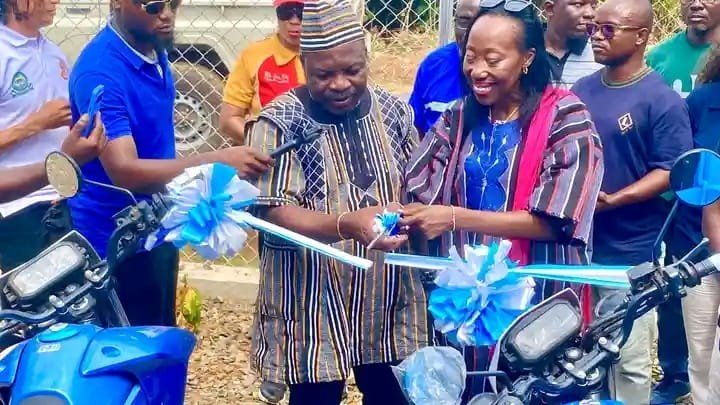
Monrovia-In a major step toward decentralizing fisheries governance and improving access to government services for coastal communities, the National Fisheries and Aquaculture Authority (NaFAA) has dedicated its first regional office in southeastern Liberia, with a commitment to strengthen fisheries administration and support local fishing communities across four counties.
The dedication ceremony, held Thursday, November 19, 2026, in Harper City, Maryland County, brought together government officials, representatives of the World Bank, fishermen, fishmongers, traditional leaders, and other stakeholders in the fisheries sector.
The establishment of the regional facility is expected to significantly reduce the difficulties fishing communities encounter in accessing government services, particularly those requiring travel to NaFAA’s national headquarters in Monrovia.
For years, fishermen and other fisheries operators in Maryland, Grand Kru, River Gee, and Sinoe counties have faced financial and logistical challenges in accessing essential services, including licensing, registration, technical assistance, and regulatory support.
However, with the opening of the Harper office, those services are expected to become more accessible, bringing fisheries administration closer to the people whose livelihoods depend on the sector.
Speaking during the dedication ceremony, NaFAA Director General J. Cyrus Saygbe Sr. described the facility as an important milestone in the Authority’s efforts to decentralize its operations and strengthen institutional presence across Liberia’s coastal regions.
He disclosed that the Harper regional office will serve as a central administrative and operational hub for Maryland, Grand Kru, River Gee, and Sinoe counties.
According to Saygbe, the facility has been equipped with modern administrative infrastructure, a digital monitoring system designed to help detect and prevent unlicensed fishing activities, Starlink internet connectivity, and a 32-kilovolt-ampere (kVA) solar power system to support reliable electricity.
The introduction of the digital monitoring system is expected to enhance surveillance and regulatory oversight, particularly in addressing illegal and unlicensed fishing activities that threaten the sustainability of Liberia’s marine resources.
Beyond the infrastructure, the NaFAA Director General announced plans to deploy 25 trained personnel across the southeastern region beginning January 2027.
The deployment, he explained, will strengthen the Authority’s operational capacity, improve service delivery, and ensure more effective monitoring and response to challenges affecting the fisheries value chain.
Saygbe further disclosed that the Harper facility represents the first of four major regional offices planned under NaFAA’s broader decentralization framework, signaling the Authority’s commitment to expanding its institutional presence beyond Monrovia.
Meanwhile, World Bank Country Manager for Liberia, Georgia Wallen, underscored the importance of investing in the fisheries sector as a means of protecting livelihoods, promoting inclusive economic growth, and creating opportunities for women and young people.
Wallen said the establishment of the regional office would make it easier for local fishing operators to access essential services, including obtaining fishing licenses, completing registration processes, and submitting complaints without undertaking costly journeys to Monrovia.
She emphasized that decentralizing fisheries services is not only about establishing physical offices but also about ensuring that communities have meaningful access to government institutions and opportunities within the country’s blue economy.
The World Bank Country Manager also stressed the need for continued investment in skills development through partnerships with educational institutions, noting that building local capacity is essential to ensuring that women and young people benefit from the growing opportunities in the fisheries sector.
She further called for stronger community participation in decisions affecting the industry, emphasizing that fishermen, fishmongers, and other local stakeholders must be actively involved in shaping policies and interventions that directly affect their livelihoods.
According to Wallen, improved fisheries governance, strengthened institutional capacity, and effective community engagement will help create an enabling environment for private-sector investment while contributing to the government’s ARREST Agenda for Inclusive Development.
For local fisheries stakeholders, the opening of the regional office represents a significant opportunity to overcome longstanding barriers to government support and institutional engagement.
James Logan, Secretary General of the Liberia Artisanal Fishermen Association, welcomed the initiative, describing it as a positive development for artisanal fishermen who have experienced difficulties accessing services from NaFAA’s national headquarters.
LoganLogan explained that having a regional office in Harper would reduce the financial and logistical burden associated with travelling to Monrovia whenever fishermen need assistance or must address regulatory matters.
He expressed optimism that the facility would improve communication between fisheries authorities and local operators while creating opportunities for fishermen to receive timely assistance and technical guidance.
Similarly, Eliza Smith, President of the Maryland Fish Women Association, commended the government, through NaFAA, for establishing the facility in Harper.
Smith described the initiative as an important step toward bringing fisheries governance closer to communities, particularly women whose economic activities and livelihoods are closely connected to the fisheries industry.
Her remarks highlighted the importance of ensuring that fishmongers and women operating within the fisheries value chain are included in government interventions, capacity-building programs, and other opportunities intended to improve the sector.
The dedication of the Harper regional office comes at a time when Liberia continues to explore opportunities within its blue economy, particularly through sustainable fisheries management, aquaculture development, and improved protection of marine resources.
The fisheries sector remains an important source of food, employment, and income for thousands of Liberians, especially residents of coastal communities.
However, challenges such as illegal fishing, limited access to institutional support, inadequate infrastructure, and financial constraints have continued to affect the growth and productivity of the sector.
The establishment of NaFAA’s regional presence is therefore expected to strengthen government-community relations, improve regulatory enforcement, and create better opportunities for local fisheries operators.
With the planned deployment of 25 trained personnel in January 2027, stakeholders are hopeful that the office will move beyond administrative functions to provide practical support, monitoring, and technical services across the four southeastern counties.
Thursday’s dedication also formed part of activities leading to the observance of World Fisheries Day 2026, celebrated under the theme: “Invest in Social Protection to Secure Equitable Blue Transformation in the Fisheries Sector.”
The theme emphasizes the importance of protecting the welfare of people who depend on fisheries while ensuring that the transformation of the sector benefits all stakeholders, particularly small-scale fishermen, fishmongers, women, and young people.
For southeastern Liberia, the opening of the Harper regional office represents more than the establishment of another government facility. It signals a move toward bringing public services closer to underserved communities and ensuring that fishermen and other fisheries operators have a stronger institutional presence to support their economic activities.
About The Author