
By Emmanuel Tobotinho Quiah
Monrovia-As Liberia gradually approaches the 2029 general and presidential elections, residents of Rock Town Community in Electoral District #1, Harper, Maryland County, are taking an unconventional approach to political participation by petitioning humanitarian advocate Mr. Dorbor Bedell to contest for the district’s Representative seat.
The initiative represents an emerging expression of grassroots political engagement, with ordinary citizens taking the lead in identifying and encouraging an individual they believe has the capacity to represent their interests at the national legislature.
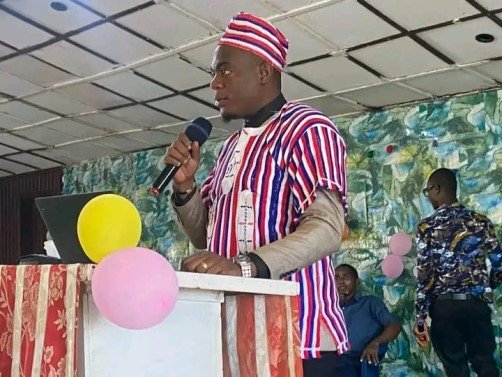
The petition was presented during a gathering at the Middle Town Hall, bringing together residents and representatives of the Klemonweh Chiefdom, including delegates from Little Wlebo, Rock Town, Middle Town, and Fishtown.
Among the community members who participated in the gathering were James Wion of Middle Town, Ma Esther of Rock Town, and Pa Amos Bedell of Native Wlebo, alongside other residents who expressed support for the initiative.
During the gathering, residents described Bedell as a son and brother whose humanitarian contributions and interventions across the district have demonstrated his concern for the welfare and development of ordinary citizens, despite not currently occupying any public position.
Members of the Klemonweh Chiefdom also expressed appreciation to the people of Rock Town for considering one of their own for the district’s highest legislative position. They acknowledged Bedell’s reported humanitarian contributions and expressed optimism about the development opportunities his potential leadership could bring to the chiefdom.
Speaking during the gathering, Mr. Bedell outlined several development commitments that he said would benefit communities across the chiefdom.
Among his commitments was an undertaking to facilitate access to electricity for Middle Town, an initiative that could improve living conditions, support small businesses, and create additional opportunities for residents.
He also pledged 50 scholarship opportunities at William V.S. Tubman University for students from the chiefdom, with 10 scholarships allocated to each of the five communities.
Additionally, Bedell committed to paying the school fees of junior and senior high school students attending schools within the respective communities, beginning with the next academic year.
The proposed educational interventions, if implemented, could provide financial relief to families, improve access to education, and create opportunities for young people seeking to advance their academic pursuits.
Beyond the petition itself, the Rock Town initiative introduces an interesting dimension to the political conversation ahead of Liberia’s 2029 general elections.
Traditionally, political parties and established political actors have played significant roles in identifying, endorsing, and presenting candidates for elective positions. However, the Rock Town initiative demonstrates how community members can independently initiate conversations about individuals they believe should seek public office.
Rather than waiting for political parties to announce their preferred candidates, residents are using their collective voices to encourage someone they consider capable of representing their interests.
The development also raises broader questions about the growing importance of citizen participation in candidate selection, political accountability, and grassroots democratic engagement.
Although the petition does not automatically translate into a formal declaration of candidacy or electoral endorsement across the district, it places Bedell’s potential political ambitions into public discussion ahead of the 2029 elections.
For residents of Rock Town and members of the Klemonweh Chiefdom, the initiative appears to be more than an expression of political support, it is also an effort to encourage leadership they believe could translate humanitarian service into broader legislative representation.
As Liberia moves closer to another electoral cycle, the Rock Town initiative could become an interesting development to watch in Maryland County’s evolving political landscape.
About The Author