
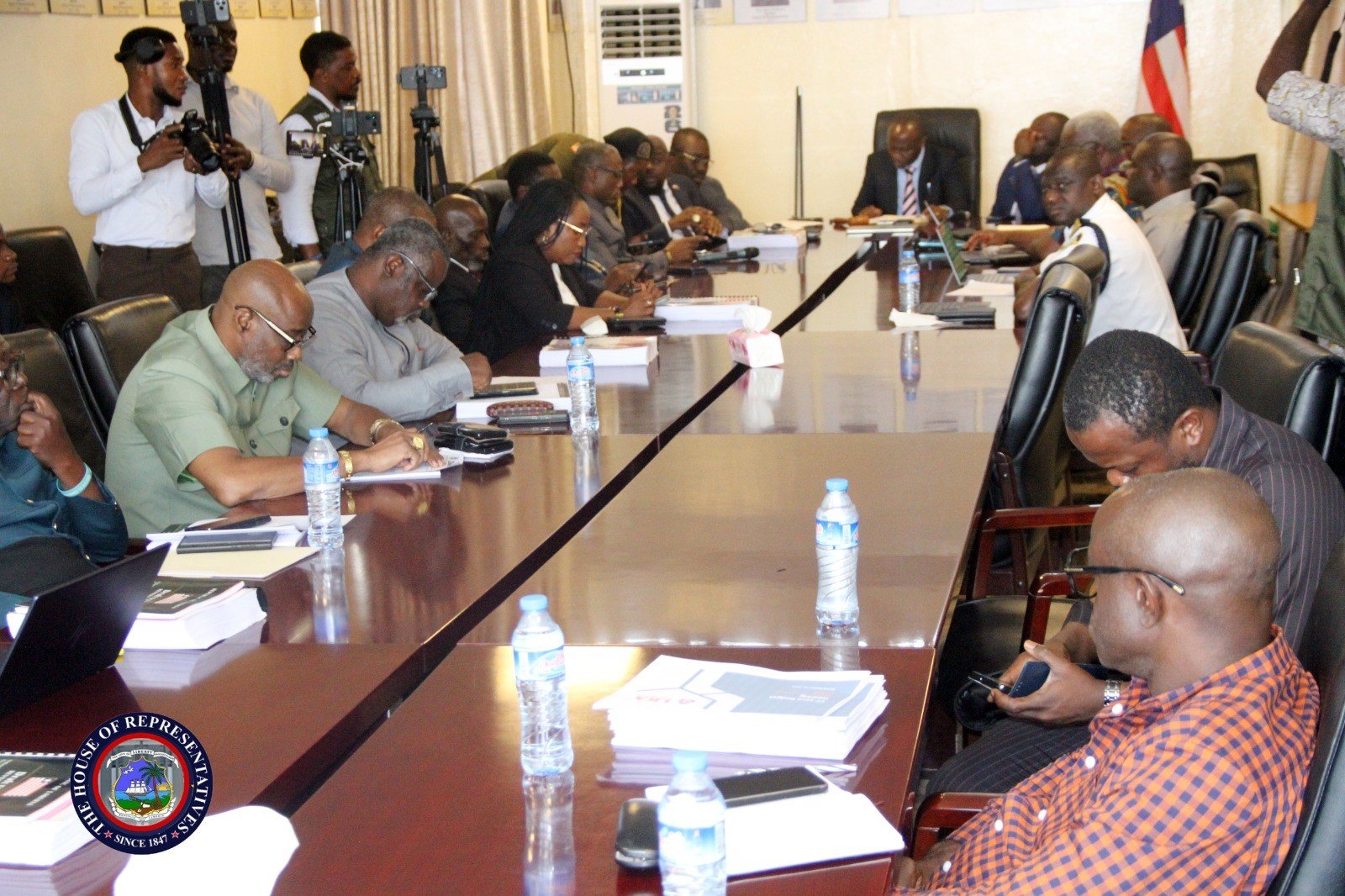
Monrovia-The House Joint Committee on Ways, Means, Finance and Budget, in collaboration with the Public Accounts Committee, has opened a public hearing on the revenue component of Liberia’s proposed Fiscal Year 2027 National Budget, with a focus on the credibility of revenue projections, domestic revenue mobilization, and measures to strengthen the country’s fiscal sustainability.
The hearing, held Monday, November 23, 2026, is expected to examine the government’s revenue estimates, the performance of domestic revenue collection in FY2026, and the strategies being proposed to finance the country’s development priorities in the coming fiscal year.
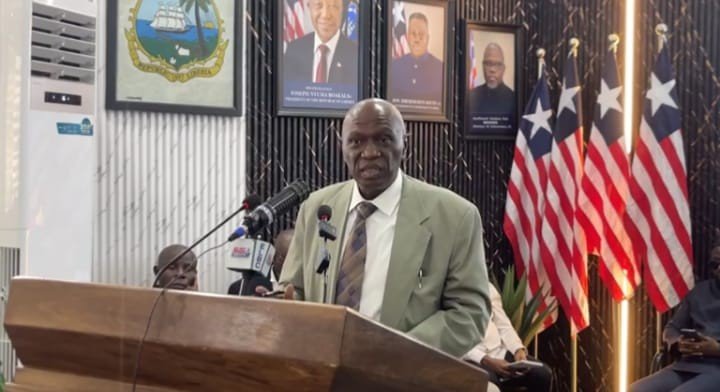
Speaking at the opening of the hearing, Chairman of the House Committee on Ways, Means, Finance and Budget, P. Mike Jurry, said the exercise was intended to determine whether the proposed revenue framework is realistic, equitable, achievable, and sufficient to support Liberia’s national development agenda.
Jurry emphasized that the government’s ability to provide public services, undertake development projects, and address national priorities depends largely on its capacity to mobilize and responsibly manage public resources.
He stressed that credible national budgeting must be built on realistic revenue projections, warning that ambitious collection targets alone would not guarantee the resources needed to finance government programs.
According to him, domestic revenue mobilization remains critical to Liberia’s fiscal sovereignty and long-term economic independence, particularly as the country seeks to reduce its dependence on external assistance and other financing sources.
The committee chairman called for stronger tax compliance, an expanded tax base, improved customs administration, reduced revenue leakages, and the gradual formalization of economic activities.
He also underscored the importance of using reliable data and technology to improve revenue administration and strengthen the government’s capacity to track and collect revenues.
Jurry further cautioned against placing an unfair burden on compliant taxpayers and legitimate businesses while allowing tax evasion, smuggling, under-declaration, and other forms of non-compliance to persist.
He said revenue collection must be fair and consistent with the laws of Liberia, adding that every eligible taxpayer and economic actor should contribute appropriately toward national development.
The chairman also called for stronger oversight of revenue generated from natural resources and other strategic economic sectors, urging government institutions and state-owned enterprises to meet their statutory financial obligations to the national budget.
He said no major source of public revenue should remain outside effective monitoring, assessment, collection, and accountability.
Addressing the Ministry of Finance and Development Planning, the Liberia Revenue Authority, and other relevant stakeholders, Jurry said the hearing provides an opportunity to explain the assumptions behind the FY2027 revenue estimates, outline strategies for achieving the proposed targets, and identify potential risks that could affect revenue performance.
The proposed FY2027 National Budget, valued at approximately US$1.54 billion, is described as the largest fiscal plan in Liberia’s history, representing an increase of more than 11 percent over the previous budget.
Jurry characterized the proposed budget as a demonstration of Liberia’s growing capacity to finance its development priorities, particularly following the reported achievement of surpassing the US$1 billion domestic revenue mark in 2026.
He said the proposed fiscal plan is expected to support investments in healthcare, education, infrastructure, and youth empowerment under the government’s ARREST Agenda for Inclusive Development.
However, the committee is expected to scrutinize the revenue estimates to determine whether the proposed targets are supported by realistic economic assumptions, institutional capacity, and effective collection strategies.
Among the key objectives of the hearing are examining the credibility and feasibility of the FY2027 revenue projections, assessing the methodologies used in preparing the estimates, and reviewing revenue performance for FY2026 against approved targets.
The committee will also evaluate the domestic revenue mobilization strategies of relevant institutions, identify weaknesses in revenue administration, and examine possible remedies for leakages, exemptions, concessions, and other practices that may undermine government revenue.
Additionally, lawmakers intend to assess the statutory revenue obligations of state-owned enterprises, identify opportunities to broaden the domestic revenue base, and develop evidence-based recommendations to guide legislative consideration and approval of the FY2027 National Budget.
Jurry said the discussions must go beyond the amount of revenue government intends to collect, stressing the need to establish the sources of revenue, the mechanisms for collection, the institutional measures required to enforce compliance, and the systems for monitoring and reporting performance.
He further noted that revenue mobilization must be accompanied by expenditure accountability, arguing that public confidence in the tax system depends largely on how government manages and utilizes the resources collected.
According to him, citizens are more likely to fulfill their tax obligations when they are confident that public funds are being managed transparently and used to provide essential services.
He called for stronger fiscal discipline, prudent expenditure management, and visible value for money to complement efforts aimed at improving revenue collection.
The chairman urged his colleagues and stakeholders to approach the hearing with rigor, independence, and an understanding of the economic challenges facing Liberians and businesses.
He clarified that the committee’s objective is not to endorse unrealistic revenue targets but to ensure the proposed framework is credible, sustainable, and capable of financing national priorities without undermining economic growth.
Jurry called for frank, evidence-based, and constructive discussions, urging participants to challenge assumptions, identify practical reforms, and make recommendations that would strengthen domestic revenue mobilization and Liberia’s public financial management reform agenda.
He maintained that Liberia’s development should increasingly depend on resources generated within the country, emphasizing the need to strengthen revenue collection, safeguard public funds, and ensure that resources are managed in the interest of citizens.
The hearing is expected to inform the Legislature’s review of the proposed FY2027 National Budget and help shape recommendations aimed at improving revenue performance, accountability, and fiscal sustainability.
Declaring the hearing officially open, Jurry expressed hope that the deliberations would produce practical recommendations and contribute to a stronger and more accountable public financial management system.
About The Author