
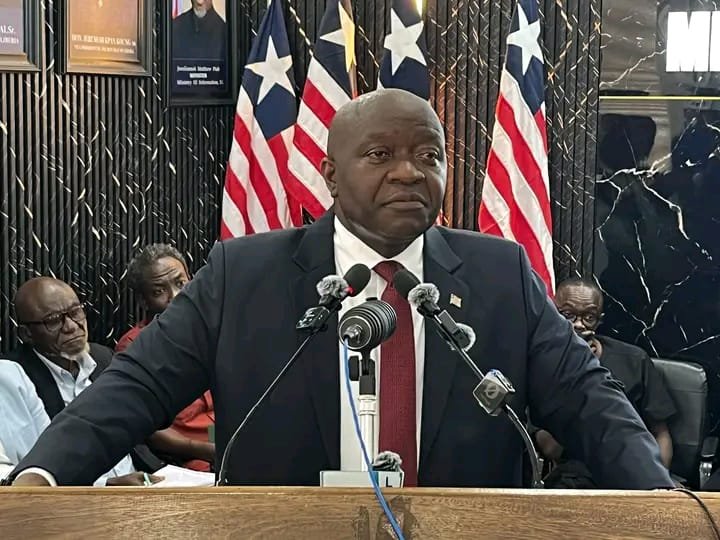
…Min.Nafguan Unveils Liberia’s Largest US$1.538-B National Budget, Targets Massive Development Under Arrest Agenda
By Benjamin Q. Z. Johnson
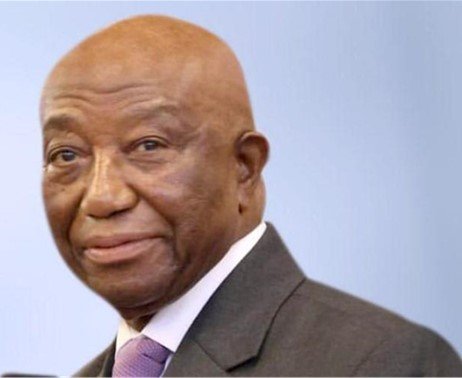
MONROVIA — Finance and Development Planning Minister Augustine Nafguan has unveiled Liberia’s proposed US$1.538 billion national budget for fiscal year 2027, describing it as the largest national budget in the country’s history and a major milestone in the government’s efforts to accelerate infrastructure development, improve public services, strengthen economic growth, and expand opportunities for ordinary Liberians.
The Proposed Draft National was
Submitted to the House of Representatives on Friday, November 6, 2026, on behalf of President Joseph Nyuma Boakai Sr., the proposed budget represents a significant increase from the approximately US$1.302 billion revised budget for fiscal year 2026.
Operating under the theme, “A Growing Budget for Bigger Impact: Accelerating the Implementation of the ARREST Agenda for Inclusive Development,” the proposed spending plan seeks to translate increased national resources into tangible development outcomes and improved living conditions for citizens across Liberia’s 15 counties.
Address the Nation Monday following the budget’s submission at the Minister Information Culture Affairs, Finance and Development Planning Minister Augustine K. Nafguan emphasized that the proposal reflects the government’s commitment to ensuring that every additional dollar generated and spent contributes meaningfully to national development.
He stressed that the document remains a draft and is subject to legislative scrutiny, public hearings, and approval before becoming law.
According to the Minister, the budget was prepared under President Boakai’s leadership through consultations with government institutions, development partners, local stakeholders, civil society organizations, and citizens through the government’s Open Budget Initiative.
He explained that several weeks of executive budget hearings enabled ministries and agencies to present their performance reports, identify operational challenges, and outline their priorities for 2027 and subsequent fiscal years.
Despite the substantial increase, Nafguan acknowledged that funding requests from government spending entities approached US$3 billion, significantly exceeding available resources.
He said the administration was therefore compelled to make difficult financial decisions while ensuring that limited resources are directed toward the country’s most pressing development priorities.
One of the most significant features of the proposed 2027 national budget is its heavy reliance on domestic revenue.
Minister Nafguan disclosed that approximately US$1.45 billion, representing about 94 percent of the proposed budget, is expected to come from domestic resources, including an estimated US$55 million carried forward from 2026.
The remaining six percent is expected from external budget support.
He credited the Liberia Revenue Authority, taxpayers, government institutions, and other stakeholders for contributing to the country’s improved domestic revenue performance.
The Minister disclosed that domestic revenue collections had surpassed US$1 billion by September 2026, marking a historic achievement for Liberia.
He said the government intends to sustain this performance through expanded economic activities, improved tax compliance, stronger revenue administration, and the proposed transition from the Goods and Services Tax (GST) to a Value Added Tax (VAT) system.
The proposal also identifies US$40 million as contingent revenue, meaning corresponding expenditures will only be released if the projected funds materialize.
Beyond the national budget, development partners are expected to provide approximately US$195.4 million in support of programs aligned with Liberia’s development priorities.
Healthcare is among the major beneficiaries of the proposed spending plan, with the Ministry of Health expected to receive approximately US$135.83 million, compared with US$110.9 million in the 2026 budget.
A major priority is the full operationalization of the new Redemption Hospital in 2027, including the provision of medical equipment, personnel, and other essential resources.
The proposal also includes US$5.3 million in additional support for improvements at the John F. Kennedy Medical Center, including initial funding for new facilities, cancer treatment capacity, dialysis services, and other critical medical equipment.
Other proposed health investments include:
– US$1.3 million for improvements at Jackson F. Doe Memorial Hospital.
– US$1.5 million for the ongoing renovation of C.H. Manning Hospital.
– US$800,000 to strengthen Liberia’s response to Hepatitis B.
– US$1.23 million as initial funding toward the construction of a National Children’s Referral Hospital.
These investments are intended to improve access to essential and specialized medical services while reducing the need for Liberians to travel abroad for certain treatments.
Education remains another major priority, with a proposed allocation of US$163.55 million, approximately US$20 million above the 2026 allocation.
The proposal includes an additional US$7 million to continue renovating, furnishing, and equipping the University of Liberia.
Other institutions expected to benefit include Grand Kru Technical College, Booker Washington Institute, and Mark D. Lee University, alongside support for schools under the Monrovia Consolidated School System.
The budget also proposes US$800,000 for a secure examination-printing facility for the West African Examinations Council and US$2.5 million for expanded school-feeding and school-health initiatives.
Minister Nafguan emphasized that improving the education sector requires more than increasing enrollment, highlighting the importance of adequately equipped classrooms, qualified teachers, improved learning conditions, and proper nutrition for students.
In a major public-sector reform initiative, the 2027 draft budget proposes compensation interventions expected to benefit more than 17,000 individuals through salary adjustments, recruitment, and the regularization of certain volunteer workers.
The initiative builds on the government’s phased salary harmonization review and compensation reforms introduced in 2025.
Under the proposed measures, qualified teachers in government schools, including institutions administered by the Ministry of Education and the Monrovia Consolidated School System, are expected to benefit from improved qualification-based minimum salary levels.
The proposal also includes salary adjustments for 358 health workers across 146 health facilities and offices.
Additionally, 1,934 police officers are expected to benefit from upward salary adjustments as the government begins aligning compensation with rank.
The Liberia Drug Enforcement Agency is also expected to benefit from a proposed 15 percent salary increase for 616 officers.
Other compensation measures include proposed monthly payments for directors, deputy directors, assistant directors, city mayors, and other public officials.
The Minister said the Civil Service Agency would provide further details regarding the implementation of the compensation package.
He acknowledged that government cannot resolve every salary disparity in one fiscal year but maintained that the administration remains committed to gradually improving conditions of service and ensuring fair compensation for public servants.
The proposed budget also addresses retirement security, particularly outstanding pension-related obligations involving the National Social Security and Welfare Corporation (NASSCORP).
Nafguan disclosed that the government has acknowledged nearly US$60 million in accumulated employee contributions and related obligations.
The 2027 proposal provides for the statutory six percent employer contribution while allowing the government to progressively address outstanding arrears through an amortization arrangement.
He emphasized that public servants who dedicate years of service to the country deserve the assurance that their retirement benefits will be available when they leave active service.
Infrastructure development remains central to the government’s economic transformation agenda.
The proposed budget allocates approximately US$142.56 million for infrastructure and basic services, including US$49.1 million through the National Road Fund.
The government intends to prioritize ongoing road projects and counterpart funding for major transportation corridors, including the Kpaai-Kamabin corridor, Fishtown to San Diego, and Fishtown to Ellicott.
The administration believes improved road connectivity will reduce transportation costs, facilitate agricultural trade, connect rural communities to markets, and improve access to schools and healthcare facilities.
Electricity expansion also receives significant attention, with US$40 million proposed for the Liberia Electricity Corporation.
The funding is intended to support electricity generation, network expansion, and improved revenue collection through smart-metering systems.
Rural renewable energy, water supply, sanitation, and climate-resilience initiatives are also included among the proposed development priorities.
Agriculture is expected to benefit from investments aimed at increasing domestic food production and strengthening agricultural value chains.
The proposed interventions include the operationalization of mechanization hubs, improved agricultural support services, and the recruitment of technical and extension personnel.
The government says these measures are designed to help farmers increase productivity, reduce dependence on imported food, and improve household incomes.
For young people, the proposed budget creates additional opportunities in skills development, internships, entrepreneurship, and sports.
The administration also plans to continue recruiting 1,400 young Liberians into the security sector, comprising 800 recruits for the Armed Forces of Liberia and 600 for the Liberia National Police.
Additionally, US$2 million is proposed for youth empowerment through the Boto Sato initiative.
Another US$3 million is earmarked for the Lone Star National Football Team, in fulfillment of a commitment President Boakai reportedly made two months earlier.
The proposal also includes US$650,000 to engage veteran Lone Star players in youth sports development.
The Ministry of Gender, Children and Social Protection is expected to receive a substantial increase in its allocation, with proposed funding rising by approximately 77 percent.
The increase is intended to strengthen social protection programs, responses to sexual and gender-based violence, safe-home initiatives, and assistance to vulnerable populations.
Additional support is proposed for rural women’s community farming initiatives and women-led enterprises.
The government says these interventions are designed to ensure that the benefits of economic growth extend to women, children, and disadvantaged communities.
Tourism is also receiving increased attention as a potential source of employment, investment, and economic diversification.
The proposed allocation to the Liberia National Tourism Authority is expected to rise from slightly above US$4 million to approximately US$7.72 million.
The funding will support tourism promotion and development at destinations including Providence Island and Robertsport.
The administration believes that strengthening tourism infrastructure and promoting Liberia’s natural and historical attractions could create additional opportunities for local businesses and communities.
Despite the increase in available resources, the government faces growing debt-service obligations.
According to Nafguan, debt servicing and related obligations are projected to rise from approximately US$232 million in the 2026 budget to US$275.5 million in 2027.
This represents an increase of approximately US$43.5 million, or nearly 19 percent.
The Minister explained that debt obligations constitute a significant claim on government revenue and must be honored to protect Liberia’s financial credibility.
The proposed budget includes US$12 million for servicing African Export-Import Bank financing secured in previous years for the Roberts International Airport road project.
The government is also expected to meet obligations to the World Bank, African Development Bank, commercial banks, local businesses, and other creditors.
Nafguan maintained that while borrowing has helped finance important development projects, the government must exercise caution and ensure that borrowed resources generate measurable economic benefits.
In a move aimed at strengthening transparency and public financial accountability, the proposed allocation for transparency and accountability institutions is expected to increase from approximately US$37.9 million in 2026 to US$49.13 million in 2027.
The General Auditing Commission is expected to receive support toward the construction of a new headquarters building, while the Liberia Anti-Corruption Commission is expected to benefit from expanded anti-corruption initiatives.
The government also plans to operationalize six additional county treasuries in 2027, bringing the total number of facilities to 10 and expanding financial service coverage across the country’s 15 counties.
The Minister emphasized that increased public expenditure must be accompanied by stronger oversight, transparency, and accountability.
Another significant policy proposal concerns reforms to government procurement procedures.
Nafguan disclosed that the Ministry of Finance and Development Planning is working with the Public Procurement and Concessions Commission to allow government spending entities to begin preliminary procurement activities before the start of the fiscal year.
Under the proposed arrangement, ministries and agencies with allocations for development projects may initiate bidding processes ahead of January 2027.
However, the continuation and conclusion of those procurement processes, including binding commitments, will remain contingent upon legislative approval of the relevant budget allocations.
The objective is to prevent unnecessary delays that often occur when government institutions wait until the budget is passed before beginning procurement procedures.
The General Services Agency is also expected to introduce new guidelines allowing spending entities to use up to 25 percent of their allocated transport-equipment budgets for new vehicles under specified standards.
The Minister clarified that the provision is optional and not a compulsory requirement for government institutions.
The proposed budget also outlines a transition toward a Value Added Tax system, which the government believes will modernize the country’s tax framework and bring Liberia closer to regional practices.
The proposal exempts petroleum products from VAT, although applicable taxes, fees, and levies will continue to apply.
The government says a nationwide public sensitization exercise will accompany the proposed tax reform, coordinated by the Liberia Revenue Authority and the Tax Policy Division of the Ministry of Finance.
Meanwhile, real economic growth is projected at 5.5 percent in 2026 and 5.1 percent in 2027.
The projections reflect expectations of continued economic activity while underscoring the importance of fiscal discipline, private-sector growth, and sustained investment.
As the proposed US$1.538 billion budget moves to the National Legislature for consideration, the Boakai administration is presenting it as a major financial instrument for accelerating the implementation of its ARREST Agenda for Inclusive Development.
However, beyond its historic size, the real test of the 2027 budget will be its implementation, particularly whether the proposed allocations translate into completed roads, functioning hospitals, improved schools, reliable electricity, better salaries, increased agricultural production, and meaningful opportunities for young Liberians.
For ordinary citizens, the success of the budget will not simply be measured by the billions approved by lawmakers, but by the visible improvements they experience in their communities and daily lives.
Minister Nafguan expressed appreciation to President Boakai, heads of spending entities, and the technical team at the Ministry of Finance and Development Planning for their contributions to preparing the proposed national spending plan.
He emphasized that the government’s responsibility is not merely to increase the size of the national budget, but to ensure that every additional dollar delivers greater value to the Liberian people.
The 2027 Draft National Budget now awaits legislative scrutiny, carrying the promise of a larger financial commitment and the expectation of greater development impact across Liberia.
About The Author