By Benjamin Q. Z. Johnson
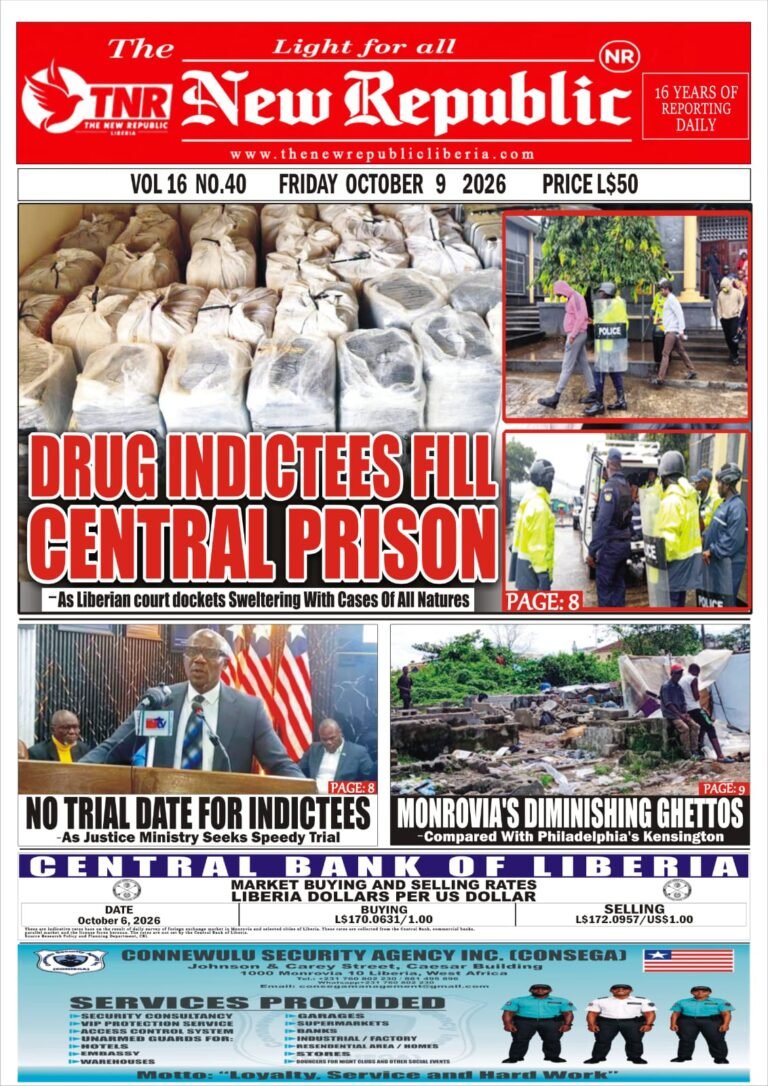
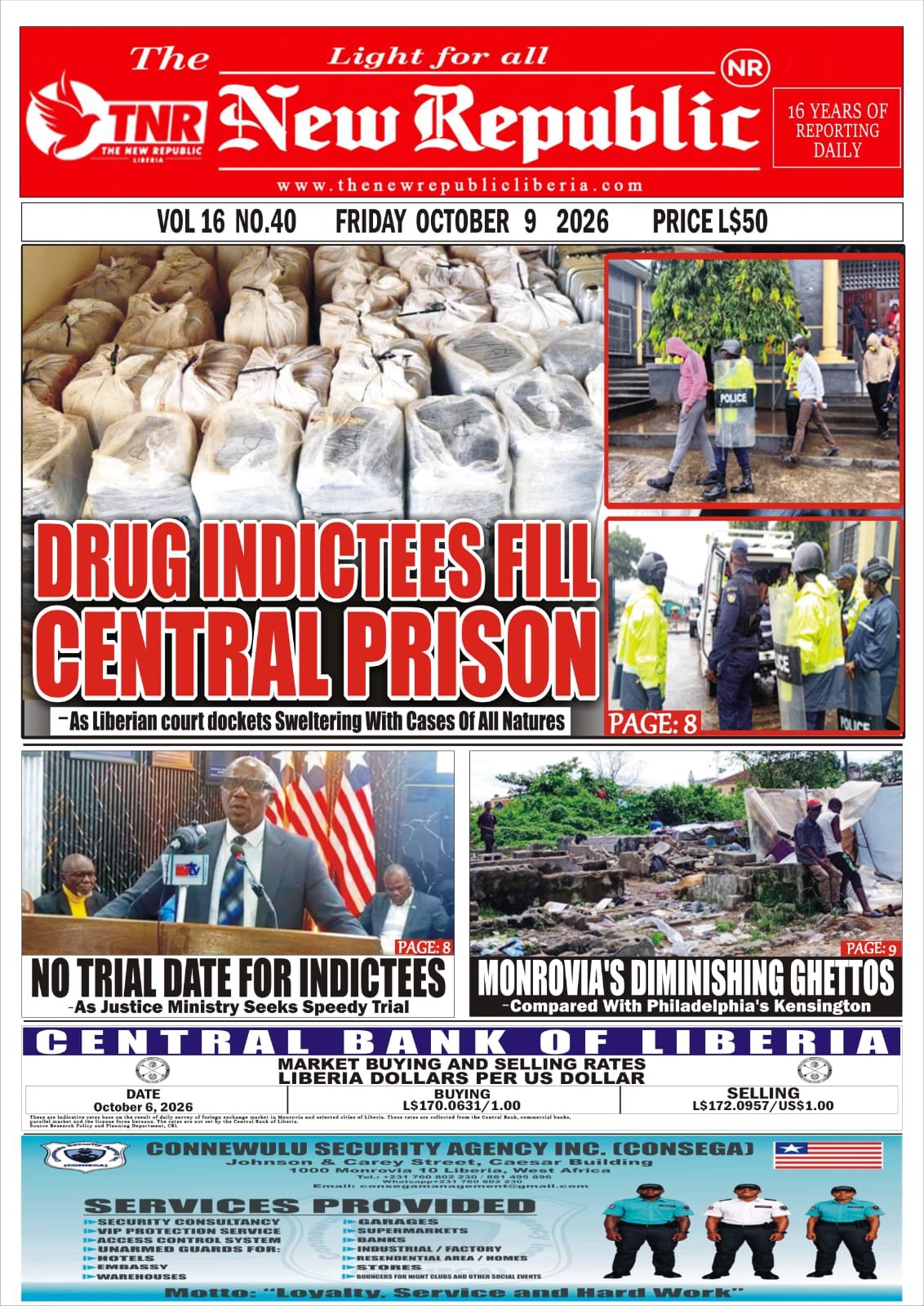
Monrovia- The Monrovia Central Prison, Liberia’s main referral prison and correctional facility, is bursting at its seams as it receives dozens of new prisoners, either accused or convicted of several crimes, with a significant number being drug-related indictees.
Though the exact number of those behind bars at the overcrowded facility for alleged drug-trafficking, sale, dealing and use could not be verified up to press time, sources say the recent government crackdown on drug cartels and networks has significantly increased the prison population.
The prison, built to hold just over 300 inmates, now holds more than four times that number, according to recent human rights reports, a situation that has been worsened by the latest wave of arrests linked to a major drug trafficking and money laundering scandal that has rocked the country.
That was the case Thursday when six of the 19 defendants indicted alongside former Vice President Jewel Howard-Taylor in a major drug trafficking and money laundering case were arrested, brought before Criminal Court “C” at the Temple of Justice, and subsequently transferred to the Monrovia Central Prison pending further judicial proceedings.
Among those arrested are Gerald Foley Smith, former Deputy Director for Administration of the National Security Agency (NSA); Jammel V. Jallah; Christian L. Nyantee; Cayce L. Nelson; Albenigo Janior; and Sekou Voulla – according to court sources.
According to our judicial reporter, Mark Quiah, former Deputy Director for Operations of the Liberia Civil Aviation Authority (LCAA) was reportedly arrested late Wednesday night, October 7, and taken to the Monrovia Central Prison, bringing the total number of reported arrests in the latest sweep to six.
He said the arrests followed a writ of arrest issued by Criminal Court “C” on October 7, 2026, directing Montserrado County Sheriff Major Austine Seinavula, or his deputy, to arrest the defendants named in the indictment and bring them before the court to answer to the allegations against them.
The defendants have not yet been arraigned on the charges, but were brought before the court pursuant to the writ and were subsequently remanded at the Monrovia Central Prison, where they are expected to remain pending further proceedings and any applicable decisions on their legal status, including bail applications.
The latest development is said to have marked a significant step in the prosecution of one of the biggest drug cases in Liberia’s history involving former senior government officials and other individuals accused of participating in an alleged international drug trafficking and money laundering network.
The indictment contains numerous grave criminal allegations, including unlicensed possession, importation and exportation of controlled drugs or substances, unlicensed sale, trading, administration, dispensation, delivery, distribution, dispatch in transit and transportation of controlled substances;Illicit trafficking, criminal conspiracy, criminal facilitation, criminal solicitation, money laundering, possession and sale of physical objects for lethal use; and possession of physical objects for lethal use.
The charges represent some of the most serious allegations currently before the Liberian courts and have placed several former government officials under heightened public and judicial scrutiny.
The writ of arrest, signed by J. Amos F. Gbowah, Clerk of Criminal Court “C,” commands the Montserrado County Sheriff to arrest the named defendants and “forthwith” bring them before the court to answer to the charges contained in the indictment.
According to the writ, the arrests stem from an indictment returned by the Montserrado County Grand Jury, which was duly selected, empaneled and sworn to investigate the alleged offenses. The court also instructed the sheriff to make an official return indicating how each writ was served.
The involvement of former senior officials from Liberia’s security and aviation sectors has added prominence and shock to the case.
Gerald Foley Smith previously served as Deputy Director for Administration at the National Security Agency, the country’s premier intelligence institution. Mark Quiah served as Deputy Director for Operations at the Liberia Civil Aviation Authority, the body that regulates airports and air traffic.
Their arrests, legal analysts say, raise troubling questions about how state security and aviation systems may have been exploited or compromised for drug movement, if the allegations are proven.
Former Vice President Jewel Howard-Taylor is also named among the 19 defendants, placing a former second-highest official of the country at the center of a prosecution involving allegations of drug-related offenses, illicit trafficking and money laundering.
She was previously arrested and detained at the Central Prison, but later released and confined to home detention after her lawyers prevailed on the court on compassionate grounds due to her poor health conditions.
Madam Taylor suffered high blood pressure and severe asthma at the Liberia National Police holding cell where she was detained following her arrest and subsequent charge in August in connection with alleged association with international drug cartel.
She has not yet been arrested and is reportedly out of the country in line with her formal indictment, though her lawyers have said she intends to submit herself to the court.
The case has attracted considerable public attention because of the identities of some of the accused and the gravity of the allegations.
It comes as President Joseph Boakai’s administration has declared a national emergency on drugs, calling kush and other narcotics a national security threat.
The influx of drug indictees comes at a time when the entire judicial system is overwhelmed. Court dockets across Montserrado County are sweltering with cases of all natures – land disputes, armed robbery, rape, corruption, and now complex narcotics conspiracies that require forensic evidence and international cooperation.
At the Monrovia Central Prison, conditions remain dire, with reports that cells holding five times their intended capacity, limited water, poor ventilation, and inadequate medical care, human rights groups have warned that adding dozens more high-profile pre-trial detainees without speeding up trials will worsen an already humanitarian concern.
However, judicial authorities say due process must take its course.
The allegations contained in the indictment have not been proven in court. All of the defendants are presumed innocent unless and until proven guilty by a court of competent jurisdiction.
They are also entitled to due process, legal representation and a fair trial in accordance with the Liberian Constitution and applicable laws.
The latest arrests are expected to be followed by additional court proceedings, including the defendants’ formal arraignment, bail hearings, and other preliminary legal processes, as Criminal Court “C”, Liberia’s specialized court for serious crimes, moves forward with the case.
About The Author