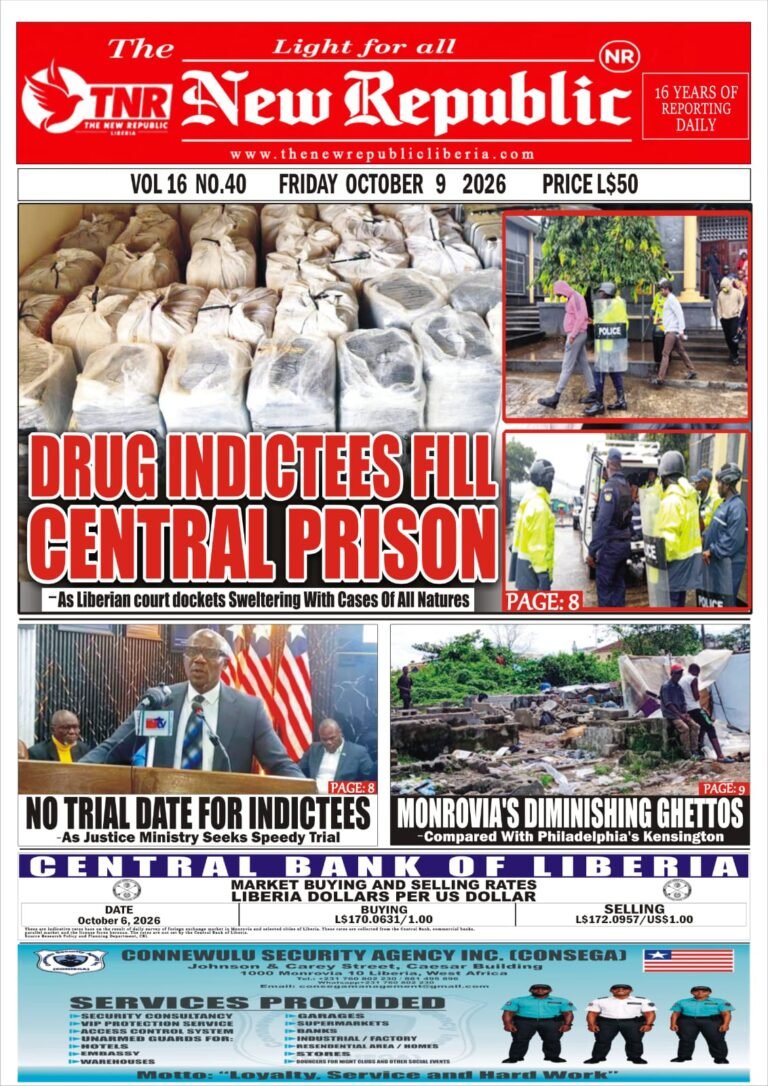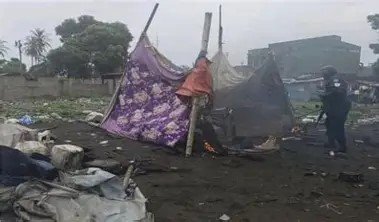
Monrovia-If you have ever watched viral videos from Kensington Avenue in Philadelphia, USA, where young Americans, zombies in the open, bend over, frozen, lost to fentanyl and tranq, you have seen Liberia’s future happening right now.
Those knowledgeable of the country’s drug plague continue to argue “Liberia is no exception. In fact, it may be worse.” Also, they are upbeat about the pressure ghettos are under from the Liberia Drug Enforcement Agency (LDEA), ensuring Monrovia is not swallowed up by roaming drug addicts.
Since the war which is blamed for the drug crisis, thousands of young people have preyed and perished in drugs, foretelling a dark crisis that would take years to confront and remedy. Streets and communities across Monrovia are piled up with young people who have lost complete control of their destinies due to drug addiction.
From Center Street, Duala, Red Light, Matadi Estate, Logan Town, Old Road, 72nd, the story is just the same, with young people regarded as “our brothers, our sisters, our classmates, our children,” sitting in filth, eyes sunken, skin scarred, picking from trash, talking alone, naked, mentally gone.
Associated with their surrounding and newly found attitudes, they call them “Zogos” and “Zogees,” the name that hides the truth. They are not seen as criminals, but casualties of a war that never really ended.
It is a crisis imposed on the nation as one of the ravages of the 14-year civil war in which young people were forcibly conscripted, drugged and used as killing machines.
Recall that between 1989 and 2003, warlords who needed children to kill without feeling gave them guns and they gave them drugs, including “bubbles,” “dugee,” marijuana laced with gunpowder and cocaine, heroin, crack, to make them brave, to make them numb.
War commanders from NPFL, ULIMO, INPFL, MODEL and others have testified to the fact that they drugged the children before battle.
Though the physical guns have since gone silent, the drugs and the addiction remain unabated. The boys who were 10 when they first smoked gunpowder are now 35, fathers themselves. But they never stopped smoking. And now their younger brothers, who never saw war, are smoking even more.
UN and LISGIS statistics are terrifying that Liberia has one of the youngest populations in the world, 63% under 25, and according to the Liberia Drug Enforcement Agency (LDEA), over 1 in 5 youths in urban Montserrado is using narcotic substances.
The country has more than 866 identified ghettos in Montserrado County alone, up from 342 in 2021.
But over time, the drug market has changed, as there is no longer just marijuana (called “grass” or “dubes”).
Today’s killers are synthetic and deadly, including Kush, regarded as the most common and most dangerous right now. It is described as a highly toxic synthetic cannabinoid, mixed with chemicals, formaldehyde, sometimes tramadol and even human bones. It is cheap, sold for L$100 per wrap, and it eats the brain, turning users into zombies within months.
The other is Ice (Crystal Meth) said to be imported from Nigeria and Sierra Leone, smoked in foil. There is also Heroin and Cocaine Crack, which is injected and smoked, especially in ghettos around Slipway and Vai Town.
Tramadol and Pharmaceuticals are also in the number with young people buying powerful painkillers from street pharmacists to get high.
One rehabilitation worker at a local NGO told this paper that “Kush is our fentanyl. In Philadelphia, they have fentanyl that stops your breathing. In Liberia, we have Kush that stops your future. The boy will be alive, but his brain is dead.”
According to several reports, drugs have become a global business, with thousands of dealers making billions of dollars out of it. From south to north America, the drugs market is real, and Liberia, with its weak porous borders, weak seaport, weak airport, and corrupt enforcement, has become a transshipment hub and a final market.
Last year, the LDEA and US Drug Enforcement Administration (DEA) seized over US$100 million worth of cocaine at the Freeport of Monrovia and Roberts International Airport. But experts say that is less than 10% of what enters.
Behind every ghetto is a big man, a dealer in a fine car, protected by police, who supplies the ghetto owner with drugs daily and collects thousands of US dollars weekly. “You can arrest the Zogo smoking. But until you arrest the big man bringing it in containers, you are mopping the floor while the tap is running,” a senior LDEA officer admitted anonymously.
Liberia has only one official government rehabilitation center, the Sonii Clinic, with less than 100 beds for a country of 5.3 million. Private rehab centers like Rescue Them, Cult Revival, and other faith-based centers are doing heroic work but are overwhelmed, underfunded, and often have to release recovering youths back into the same community where they got hooked because there is no reintegration program.
But the situation is said to be still challenging as families have given up, and mothers tie their sons with chains at home to stop them from going to ghettos. Fathers disown them.
The police round them up, shave their heads, jail them for two weeks, and release them, more hardened, more addicted.
The war on drugs is mostly a war of words, with press conferences, burning small quantities of marijuana in public, while the Kush continues to flow in every street corner.
Analysts said what happened in Philadelphia did not happen overnight. According to them, it took 20 years of OxyContin, then heroin, then fentanyl, then Tranq, before America admitted it was an epidemic.
It is estimated that Liberia does not have 20 years, yet the country is already losing a generation.
“Every young man in the ghetto is a former footballer, a former student, a former mechanic, a former brilliant child whose mother once dreamt he would become President,” said a community leader. “Now he is a ghost picking rubbish.”
“If Liberia does not declare drug addiction a National Public Health Emergency, with real money, real rehab centers in all 15 counties, real prosecution of big importers, and real jobs for young people, then in ten years, the country will not have enough sober young people to build it.”
He recalled how the civil war took our parents with bullets, adding that drugs are taking our children with wraps.
He also added there is no peace agreement that can stop it, except an action while hailing the government’s sustained efforts to diminish ghettos across the city. “Though it will take time, the efforts, the determination to end drug addiction is paving up,” he said.
About The Author