
By Stephanie M. Duncan
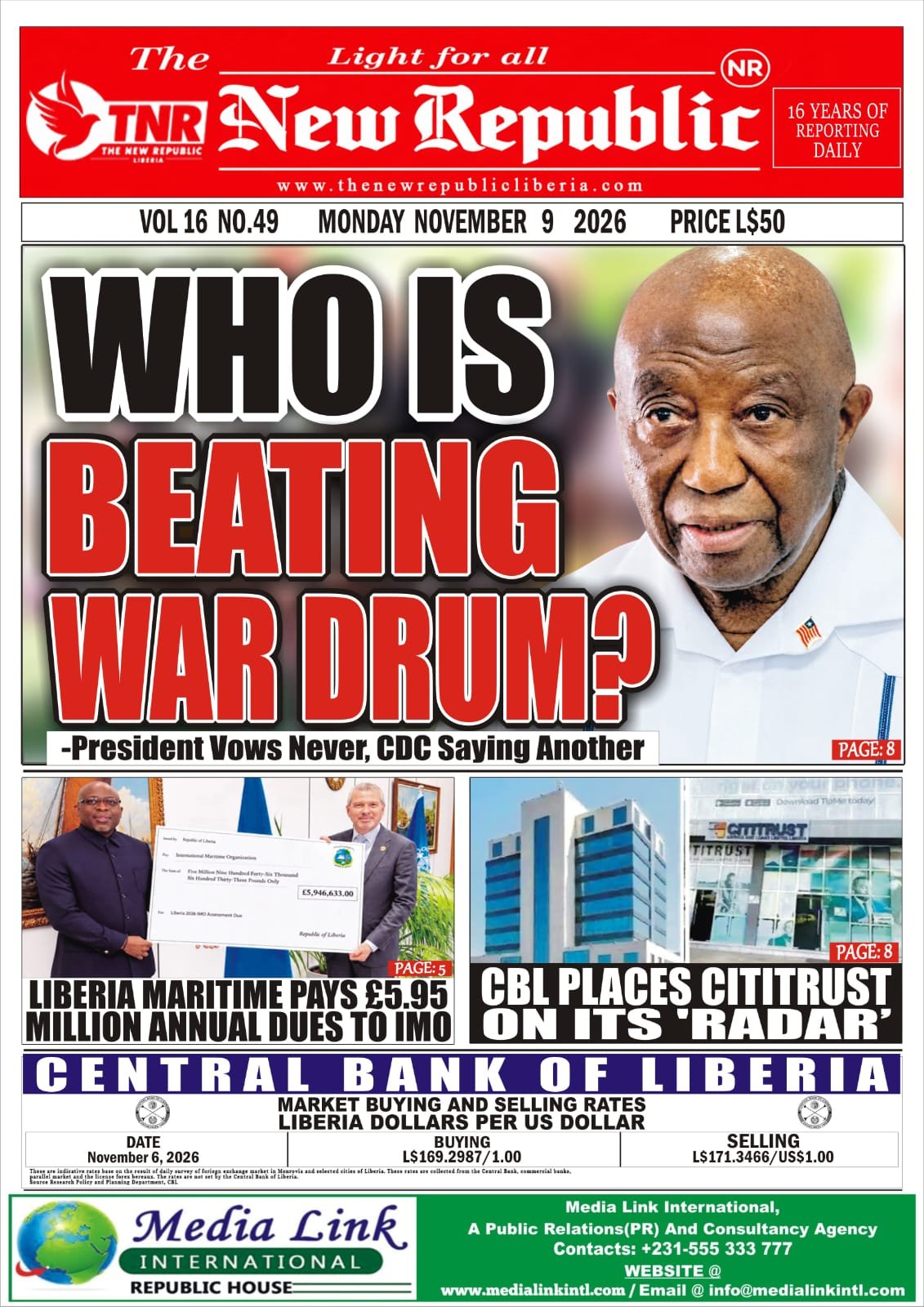
Monrovia-At the unveiling of the prototype of Liberia’s first Civil War Memorial Wall, President Joseph Nyuma Boakai vowed Liberia will never return to civil war, renewing calls for national healing, justice, reconciliation, and a collective commitment. But contrary to the President’s avowal, the opposition Congress for Democratic Change (CDC) thinks otherwise about war, insisting the ruling administration is planting seeds of war and will have one it they so desired.
The unveiling ceremony, held Friday, November 6, 2026, at the Executive Mansion in Monrovia, marked a significant step in Liberia’s efforts to preserve the memory of thousands of citizens who lost their lives during the country’s civil wars and recognize the suffering endured by survivors, families, and affected communities.
Held under the theme, “Honoring the Past, Celebrating Peace, and Inspiring the Next Generation,” the initiative is expected to move into its construction phase in mid-2027 on Bali Island in Monrovia.
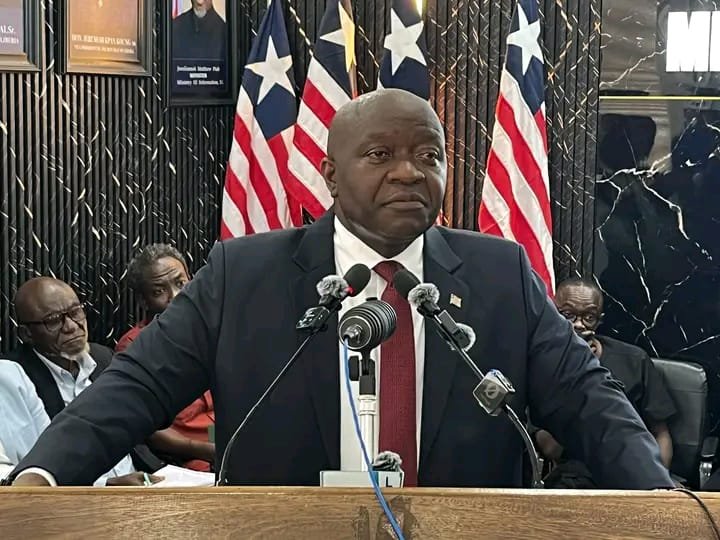
Addressing government officials, members of the diplomatic corps, traditional and religious leaders, representatives of international organizations, and families of victims and survivors, President Boakai described the memorial as more than a physical structure, saying it represents the nation’s willingness to confront its painful history with dignity, compassion, and honesty.
The President said the memorial would honor every Liberian whose life was lost during the civil conflicts, including mothers, fathers, children, relatives, friends, and countless others whose identities may never be known.
He assured families of victims that their loved ones would not be forgotten, emphasizing that the country must acknowledge their sacrifices and preserve their memories for generations to come.
For President Boakai, the memorial also serves as a reminder of the consequences of allowing grievances to develop into hatred and violence.
He urged Liberians, both at home and abroad, to take responsibility for building peace within their families, communities, and the country at large, stressing that the memorial must inspire citizens to reject division and embrace peaceful coexistence.
The Liberian leader further emphasized that remembrance must be accompanied by practical actions, including justice, unity, dialogue, and reconciliation, noting that a monument alone cannot heal a nation.
He also acknowledged the contributions of international partners and organizations that stood with Liberia during its years of conflict and have continued supporting the country’s recovery and peacebuilding efforts.
The memorial initiative is also linked to the work of the Liberia Peace, Reconciliation, and Memorial Museum, whose steering committee is expected to convene from November 16 to 18, 2026. The museum is intended to preserve Liberia’s historical experiences, promote civic education, and ensure that future generations understand the consequences of war.
But in sharp contrast to the President calling for national healing, unity and reconciliation, CDC keynote speaker, Paulita Wie spoke of what could happen in 2029, stating the party is offer war if the ruling Unity Party wants war.
Madam Wie, a party stalwart of the CDC and former official of government, accused the government of being evil, corrupt, demonic and wicked.
“Under Joseph Boakai as President, the government is corrupt; they are evil, they are wicked and they are a wicked government,” she said to thousands of partisans and well-wishers in Borpulo, Gbarpolu County.
Directly addressing former President George Weah, the CDC’s political leader who was absent at the occasion, Wie said the CDC will not accept ‘for the sake of peace in 2029,’ a phrase often used by the former head of state to dissuade Liberians and partisans from pursuing actions inimical of war and aggression in addressing national issues.
Most partisans do not support the former President for his ‘peaceful approach to national issues,’ and even criticized him for his ‘premature elections concession’ to the Unity Party in 2023.
Weah conceded defeat while the National Elections Commission (NEC) was still collecting and counting ballot papers – a move that angered his supporters and partisans.
Most party stalwarts denied being in the know of the former president’s decision, accusing him of seeking individual commendation over the interest of the party.
At the occasion intended to remember partisans who lost their lives during standoff with security agents in 2011, Madam Wie made it clear that “If the UP wants war, we will give them war. If they want peace, we will give them peace. We will reciprocate whatever they give us.”
Meanwhile, Foreign Minister Sara Beysolow Nyanti, in remarks highlighting Liberia’s forthcoming presidency of the United Nations Security Council, said the country’s painful experience with civil conflict places it in a unique position to contribute meaningfully to international peace and security.
Madam Nyanti recalled the important role played by the Economic Community of West African States (ECOWAS) in Liberia’s peace process, noting that the regional organization’s intervention laid the foundation for the United Nations Mission in Liberia (UNMIL).
She described the intervention of West African countries as an act of regional solidarity, emphasizing that neighboring countries stood with Liberia not merely as military and humanitarian partners but as members of one family responding to a crisis affecting their own.
According to her, Liberia’s experience with war, peacekeeping, humanitarian assistance, and the challenges associated with international interventions provides valuable lessons that the country can bring to the United Nations Security Council.
She said Liberia’s forthcoming Security Council presidency, under the theme “Towards a Just and Peaceful World,” should go beyond occupying a seat at the international body, stressing the need for meaningful participation in addressing global conflicts and protecting civilians.
Madam Nyanti also highlighted the importance of the Youth, Peace and Security Agenda, warning against circumstances that could push young people toward extremism, armed factions, and other activities capable of undermining national stability.
She commended the Minister of Youth and Sports, Cornelia W. Kruah, for her efforts in advancing the agenda, noting that empowering young people and creating opportunities for them to prosper in Liberia are essential to sustainable peace and development.
The Foreign Minister further stressed that Liberia’s painful history should serve as a basis for advocating justice, civilian protection, and the prevention of atrocities in other parts of the world.
For his part, Chairman of the ECOMOG Memorial Committee, Major General (Retired) Daniel Dee Ziankahn Jr., described the memorial as an important national initiative that would document significant historical events and preserve the country’s collective experiences.
He said the memorial would capture Liberia’s journey through conflict, peace, reconciliation, and nation-building, providing a historical record for research, education, tourism, and national reflection.
General Ziankahn noted that Liberia would be joining other countries, including Rwanda, South Africa, the United States, Japan, Ghana, and New Zealand, that have established recognized memorial sites to preserve important aspects of their national histories.
He also acknowledged the contributions of members of the National Memorial Committee and other individuals whose efforts have helped advance the initiative.
Meanwhile, a representative of the United Nations reaffirmed the organization’s commitment to supporting Liberia’s peacebuilding and reconciliation efforts, describing memorialization as an essential part of addressing the country’s painful past.
The UN representative observed that while forgiveness is important, many survivors continue to carry emotional wounds, while others remain concerned about justice and accountability.
The representative stressed that Liberia must strike a balance between addressing impunity, pursuing national reconciliation, and advancing development, adding that healing, peacebuilding, and justice remain essential to preventing a recurrence of the country’s civil conflicts.
The UN also acknowledged the collective efforts of the Liberian government, citizens, ECOWAS, and international partners in sustaining the peace the country enjoys today.
Other speakers at the ceremony included representatives of the Inter-Religious Council of Liberia, the Federation of Liberian Youths, and traditional leaders, who expressed support for the memorial initiative and called for continued efforts to strengthen national unity and peaceful coexistence.
The unveiling of the prototype represents another step in Liberia’s broader efforts to confront its past, preserve the memories of those affected by the civil wars, and inspire a generation committed to protecting the country’s hard-won peace.
About The Author