
By Jamesetta D Williams
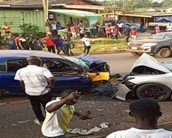
Liberia’s road safety situation is raising renewed concerns after the Liberia National Police (LNP) recorded 478 road traffic accidents, 71 deaths, and 309 injuries nationwide during the first quarter of 2026.
The figures, covering January through March, have intensified questions about the effectiveness of road safety enforcement, the condition and design of roads, driver and motorcycle operator behavior, and the government’s broader response to the growing number of traffic-related deaths.
According to the LNP, March recorded the highest number of crashes during the quarter, with 186 incidents, alongside the highest number of fatalities and injuries during the period under review.
The police report shows that car-to-car collisions and motorcycle-related incidents accounted for nearly 70 percent of recorded cases, while Montserrado County alone registered 279 accidents, representing more than 58 percent of the national total.
Nimba, River Gee, and Margibi counties followed among the areas reporting significant numbers of road crashes.
The latest figures come against the backdrop of an even higher annual total in 2025, when the LNP recorded 1,564 road traffic accidents, 236 deaths, and 992 injuries across Liberia.
With the number of crashes remaining high, questions are increasingly being raised about what measures are being taken by the government and relevant institutions to prevent accidents rather than respond to them after lives have already been lost.
The statistics raise questions about the level of coordination between the Liberia National Police, the Ministry of Public Works, the Ministry of Transport, local authorities, and other institutions responsible for road safety and infrastructure.
While police enforcement remains an important component of road safety, questions remain about whether enforcement alone is sufficient to address the country’s traffic problems.
The public may want to know what additional measures the government is implementing to reduce speeding, reckless driving, drunk driving, unsafe overtaking, overloading, motorcycle-related violations, and other behaviors that can contribute to road crashes.
There are also questions about road infrastructure, including the condition of major roads, road markings, traffic signs, street lighting, drainage systems, pedestrian crossings, speed-control measures, and the design of heavily used intersections.
The Ministry of Public Works plays an important role in the development and maintenance of the country’s road infrastructure. As Liberia continues to construct, rehabilitate, and expand roads, concerns remain about whether road-safety features are being adequately incorporated into these projects.
The question is not simply whether roads are being constructed, but whether they are being designed and maintained with the safety of motorists, pedestrians, commercial motorcyclists, cyclists, and other road users in mind.
Poor road surfaces, inadequate drainage, missing road markings, insufficient signage, dangerous curves, limited pedestrian facilities, and poorly controlled access points can create additional risks. However, determining whether any of these factors contributed to a particular crash requires investigation rather than assumption.
This raises an important question for the government: When public funds are spent constructing or rehabilitating roads, what portion of the planning and implementation process is dedicated to road safety?
The LNP continues to urge drivers, motorcyclists, tricycle operators, pedestrians, and other road users to comply with traffic regulations.
But with 478 crashes and 71 deaths in only three months, questions remain about whether existing enforcement measures are producing the desired results.
The police could face increasing pressure to explain how frequently traffic laws are being enforced, how many violations are recorded, whether repeat offenders are being held accountable, and what measures are being taken against dangerous driving.
There is also a need for stronger public education, particularly among commercial motorcycle and tricycle operators, who are heavily involved in Liberia’s transportation system and frequently operate in densely populated areas.
Behind the 71 deaths and 309 injuries are families who have lost breadwinners, children who have lost parents, workers who may no longer be able to earn an income, and victims facing medical expenses and long-term disabilities.
Road crashes also place additional pressure on hospitals, emergency responders, families, insurance providers, and the wider economy.
For a country already facing limited resources, preventing road crashes could therefore be less costly than responding to their consequences after they occur.
The latest figures raise a broader question about responsibility.
Is the problem primarily reckless driving, inadequate enforcement, poor road conditions, weak vehicle inspection, insufficient public education or a combination of all these factors?
The Liberia National Police has responsibility for traffic enforcement and public safety. The Ministry of Public Works has responsibilities related to road infrastructure. Other government agencies are responsible for transportation policy, vehicle regulation, licensing, and public awareness.
A coordinated approach may therefore be necessary if Liberia is to reverse the growing number of traffic-related deaths.
For now, the LNP is urging all road users to exercise greater caution and strictly follow traffic regulations.
But as the country records hundreds of crashes within just three months, the bigger challenge for government is to move beyond warnings and demonstrate what concrete measures are being taken to prevent the next crash, the next injury, and the next death.
The LNP says it remains committed to strengthening road safety measures and reducing traffic-related incidents nationwide.
The question now is whether enforcement, road construction, infrastructure planning, and public education can come together quickly enough to make Liberia’s roads safer.
About The Author