By Stephanie M. Duncan

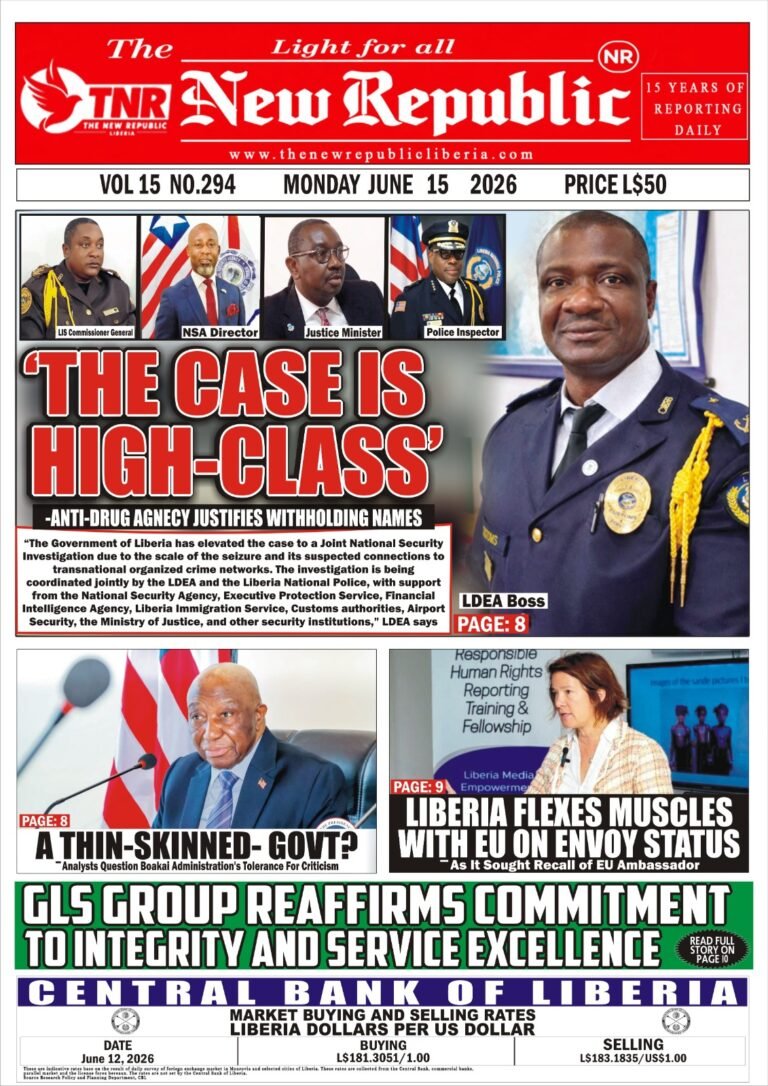
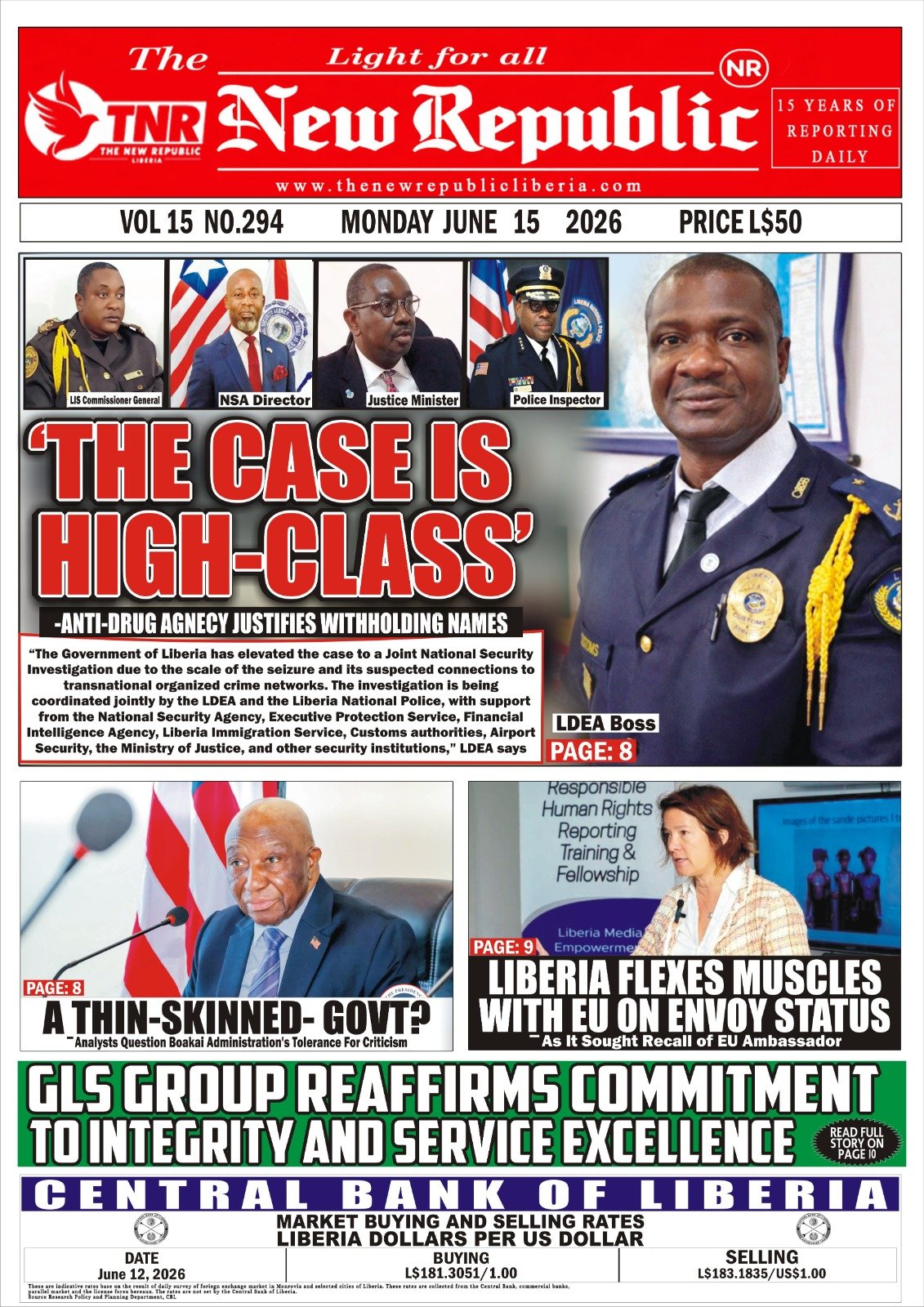
MONROVIA – There is no iota of doubt that the once cherished and mutually beneficial ties existing between Liberia and the European Union (EU) appears to be in a sunken mode, tacitly taking a rather frosty dive after the Liberian government made a formal request for the recall of EU’s Ambassador to Liberia, H.E. Nona Deprez.
The ‘shaking state’ of the partnership is tied to Liberia’s flexing of muscles over what it describes as a series of derogatory remarks and actions that have strained diplomatic relations and risked undermining investor confidence in the country.
In a letter dated March 6, 2026, addressed to the European Union’s High Representative for Foreign Affairs and Security Policy and Vice-President of the European Commission, Kaja Kallas, Liberia expressed deep concern over statements allegedly made by Ambassador Deprez regarding the country’s leadership and governance.
While reaffirming Liberia’s commitment to its longstanding partnership with the European Union, the government said comments attributed to the EU envoy misrepresented the functioning of the Liberian government and could negatively impact the country’s international reputation.
According to the communication, Ambassador Deprez allegedly told a prominent investor during the Liberia-EU Business Forum held in Brussels from February 24-25 that Vice President Jeremiah Kpan Koung was exercising authority beyond his constitutional responsibilities and was exerting influence over the country’s mining and energy sectors through the Minister of Mines and Energy.
The Liberian government also took issue with remarks reportedly made by the ambassador questioning the transparency of the presidency. The letter claims Ambassador Deprez repeatedly asserted that President Joseph Nyuma Boakai’s annual message lacked transparency because it did not include all energy projects undertaken by the Liberia Electricity Corporation.
Government officials reportedly clarified to the ambassador that presidential annual addresses do not typically include every government project or achievement. However, the government said she continued to advance the narrative to both officials and investors, portraying the administration as lacking transparency.
The Ministry of Foreign Affairs argued that such comments, particularly when made to investors and external stakeholders, could create inaccurate perceptions about governance in Liberia and discourage potential investment.
Further concerns were raised over an alleged statement by Ambassador Deprez suggesting that the recently concluded Liberia-EU Business Forum in Brussels would be the “first and last” event of its kind.
The government said the comment contradicted the views of other EU officials who regarded the forum as successful and expressed support for future editions, including a possible gathering in Monrovia.
Despite describing the ambassador’s conduct as serious enough to warrant consideration of declaring her persona non grata, the Liberian government said it chose not to pursue that option in order to preserve the strong relationship between Liberia and the European Union.
Instead, Monrovia formally requested that the EU recall Ambassador Deprez for consultations, instruct her to refrain from further engagements with Liberian officials and investors, and appoint a replacement without delay.
The government emphasized that such measures would help preserve the spirit of mutual respect that has long defined Liberia-EU relations and create an opportunity for renewed diplomatic engagement based on shared democratic values and cooperation.
The European Union had not publicly responded to the allegations at the time of publication.
About The Author