
By Stephanie M. Duncan
Monrovia-Not many Liberians, mainly those in the opposition community, will agree President Joseph Nyuma Boakai is on course when it comes to making a Liberia an oasis of peace, unity and national reconciliation largely considering ongoing political rancor.
They believe Liberia’s peace remains fragile, accusing the government of terrorizing opposition elements and using the court system.
But elements of the government, mainly cabinet members, see the President from a different world view and perspective as man of peace, a man whose role in Liberia’s peace process and contributions to the country’s diplomatic engagements are inconsequential.
Under his leadership, Liberia is on the verge of assuming the presidency of the United Nations Security Council in January 2027, a feat they believe unmasks his desire to push the country’s international standings beyond expectations.
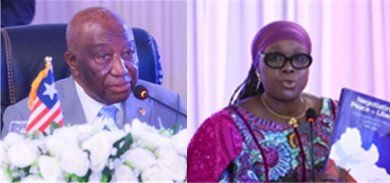
During a presidential dinner attended by members of the Cabinet, the diplomatic corps, representatives of international organizations, religious leaders, and other distinguished guests, the President was given a befitting honor and recognition.
The occasion also featured the presentation of a compendium documenting peace agreements signed throughout Liberia’s civil conflict, highlighting the country’s journey from war to peace.
Speaking at the event, Foreign Minister Sara Beysolow Nyanti said the decision to honor President Boakai was informed by his longstanding involvement in Liberia’s peace process and his leadership in advancing the country’s foreign relations.
Nyanti disclosed that President Boakai had played significant roles in several peace-related engagements, including serving as Ambassador-at-Large and Special Envoy, while noting that the Council of Chiefs was also established in his office.
She said the recognition was particularly significant as Liberia prepares to preside over the UN Security Council, describing the moment as an important chapter in the country’s diplomatic history.
According to her, the President has maintained a clear vision for Liberia’s international engagements, rebranding, and repositioning, which she said has helped guide the country’s diplomatic priorities.
Nyanti further described the compendium as a reflection of the collective experiences and decisions of Liberians throughout the country’s difficult journey toward peace.
She said Liberia’s history continues to be written through the contributions of its leaders and citizens, adding that future generations would recognize the significance of the country’s upcoming role at the UN Security Council.
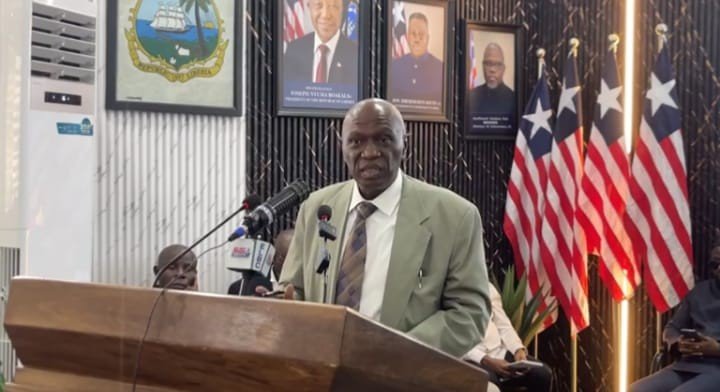
In his remarks, President Boakai expressed gratitude for the recognition, saying he had attended the presidential dinner without expecting to receive an honor.
Reflecting on Liberia’s civil conflict, the President recounted his personal experiences during the war, including the displacement of his family, the looting of his home, and the difficult circumstances he and other Liberians endured.
He recalled his involvement in regional engagements during the conflict, including trips to The Gambia, Nigeria, and Ghana, as well as his service under the administration of former President Amos C. Sawyer.
The President said Liberia’s journey to peace was marked by immense suffering and sacrifice, stressing that the country must never forget the contributions of regional leaders, peacekeepers, and international partners who helped end the conflict.
Describing the compendium as an important historical record, Boakai said the collection of peace agreements, from the Banjul Agreement of October 24, 1990, through the Abuja I and II agreements of 1995 and 1996, to the Accra Comprehensive Peace Agreement of August 18, 2003, represents more than negotiating documents.
He said the agreements serve as reminders of the lives lost, families displaced, and dreams interrupted during Liberia’s 14 years of civil conflict, while demonstrating the importance of dialogue in resolving national and regional disputes.
The President also acknowledged the contributions of former regional leaders, including Ibrahim Babangida of Nigeria, Dawda Jawara of The Gambia, Jerry John Rawlings of Ghana, and Lansana Conté of Guinea.
He commended ECOWAS, particularly Nigeria, for leading regional peacekeeping efforts and recognized the sacrifices of soldiers from West African countries who intervened to protect civilians and support peace negotiations.
Boakai also expressed appreciation to Ghana, Guinea, Sierra Leone, Côte d’Ivoire, Senegal, and Nigeria for supporting peace efforts and providing refuge to Liberians displaced by the conflict.
He further recognized the contributions of the United Nations, African Union, European Union, United States, China, United Kingdom, and other international partners in supporting mediation and post-conflict peace efforts.
The President also paid tribute to former African leaders and diplomats, including John Agyekum Kufuor, Joaquim Alberto Chissano, Thabo Mbeki, Olusegun Obasanjo, General Abdulsalami Abubakar, and Mohamed Ibn Chambas, for their roles in the diplomatic engagements that led to the Accra Comprehensive Peace Agreement.
He singled out the Interfaith Mediation Committee, now the Interreligious Council, for initiating efforts toward peace negotiations and establishing an early framework for subsequent peace agreements.
Addressing young diplomats and scholars, President Boakai urged them to regard the compendium not simply as a historical archive but as a call to preserve peace and prevent a recurrence of the country’s violent past.
He emphasized that everyone who reads or encounters the publication should become an advocate for peace, noting that understanding the cost of conflict is essential to protecting the peace Liberia currently enjoys.
The President also commended Foreign Minister Sara Beysolow Nyanti, the Gabriel Alfred Dennis Foreign Service Institute, its Senior Director General, Regina Goodrich, Dr. Iram Wia, and students of the Institute’s Conflict Resolution and Negotiation class for their contributions to the publication.
He concluded by calling for continued commitment to national peace and acknowledging the support of Liberia’s international partners, diplomatic corps, and citizens.
The event comes as Liberia prepares to assume the presidency of the United Nations Security Council, a development that will place the country in a significant position within the UN body responsible for maintaining international peace and security.
About The Author