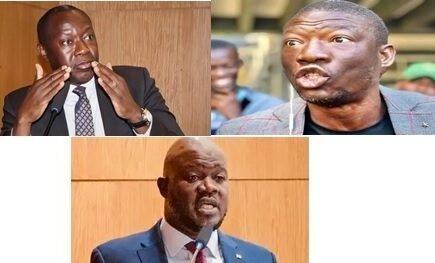
Last week, Liberia’s long-simmering tensions with neighboring Guinea over the Sorlumba border dispute flared again on the Senate floor, reigniting a familiar fight over sovereignty, military funding, and what can, or cannot, be said in public.
Observers following Liberian politics strongly believe the events that occurred at the Senate is a redux of the border dispute – that the situation which led to the expulsion of one lawmaker has returned, and so has the clash over how to talk about it.
The latest round of tension began after Senator Amara Konneh expressed concerns about the situation and support to the Armed Forces of Liberia, and even described it as “the first major external threat to our sovereignty” in recent years.
Observers believe the timing is critical as the United Nation’s peacekeeping capacity is strained globally, leaving small states like Liberia to rethink self-defense.
They said that context framed the Senate’s April 23, 2026 supplemental budget debate, and that with lawmakers weighing allocations for the Armed Forces of Liberia (AFL), the border became a budget issue.
Senator Konneh, in an effort to call on colleagues to the need to raise the budget of the AFL, provided comparative analysis of AFL’s numerical strength and logistical/equipment capacity visa-a-vice the Guinean army.
He said Guinean army was by afar equipped than the AFL that barely boasts of topnotch modern military equipment.
Senator Konneh’s comments drew sharp reaction from Senator Nya D. Twayen Jr., accusing him of praising the Guinean Army, and also disclosing privileged national security information from a closed-door meeting with President Joseph Boakai.
His reaction also had a flavor of rebuke of his colleague for “attempting to take credit for collective action.”
Greeted by rancorous tone from other Senators, the situation became more dramatic, taking “rope hauls bush and bush hauls rope” situation.
But sooner than later, Senator Konneh immediately took to social media to set the record straight.
Rejecting his colleague’s claims, he clarified that his March 19, 2026 statement praised President Boakai’s diplomatic leadership in handling the border crisis, not any foreign force.
He also said he called for reviving Mano River Union coordination mechanisms, citing his 2008–2016 experience managing Liberia’s MRU engagement under President Sirleaf.
“At no point did I praise, reference, or endorse any foreign military force,” he wrote.
His mention of the Guinean military’s size during the April 23 debate, he said, was public information used “to emphasize the need to pay attention to our military funding.”
He denied attending any meeting where he was given official classified details about Liberia’s military strength.
“I did not reveal any content from President Boakai’s meeting with the Senate. Every piece of information I referenced… is unclassified and publicly accessible.”
Why It’s a Redux
But Senators Konneh and Twayen war of words is not Liberia’s first border scare with Guinea, nor its first fight over how lawmakers discuss military capacity.
It can be recalled that Representative Yekeh Kolubah is separately facing expulsion proceedings for allegedly saying disputed border land “belongs to Guinea”.
According to experts, like Konneh, Kolubah’s case hinges on whether a lawmaker’s public remarks on sovereignty cross a legal line.
Both cite Article 62 and Article 20(a) of the Constitution on breach of duty and territorial integrity.
However, the Senate did approve a “marginal increase” for the AFL in the supplemental budget. The under-fire Sen. Konneh thanked colleagues, including Twayen, for their “relentless commitment to national security” but said more is needed.
He pledged to push for funding to “modernize equipment, improve military welfare, and expand force strength” to meet regional threats.
As the debate heats up, many recall Police IG Gregory Coleman warning that Guinean actors are amplifying Liberian lawmakers’ remarks, complicating negotiations.
Article 62 allows impeachment for “misconduct” and “gross breach of duty.”
The House is already testing that against Kolubah. The Senate clash shows the rule could chill debate on defense.
Also, Konneh’s call to revive Mano River Union mechanisms points to a diplomatic track, something the MRU, which includes Liberia, Guinea, Sierra Leone, Côte d’Ivoire, was exactly designed to manage .
It is unknown what is unfolding behind close-doors regarding how the entire is reading into Konneh’s comments, but as far the records are concerned, no sanctions have been proposed against him, neither are there official calls for disciplinary actions against him.
Observers say the redux is clear that Liberia’s border politics keep circling back to the same questions.
The question being asked in many corners is: what can lawmakers say about a rival’s army, and when does frank talk become a threat to the state?
One expert said the real issue is that sovereignty is being tested, and the budget is where Liberia answers.
About The Author