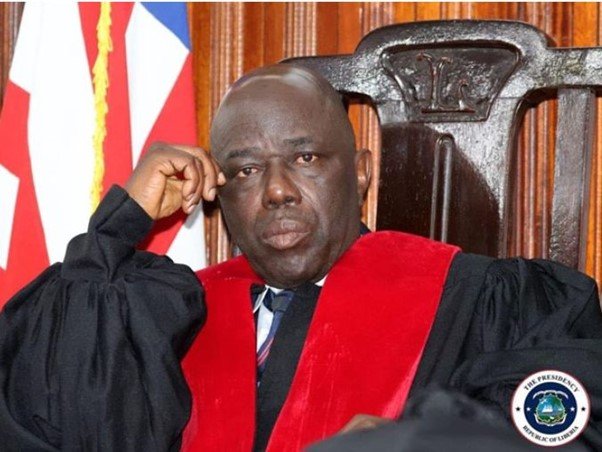
A bust weekend for Liberia’s judicial platform was without a stern warning issued by Chief Justice Yamie Quiqui Gbeisay to newly commissioned magistrates to resist what he called “corruption and political pressure.”
Political pressure in the judiciary is seen as one reasons Liberians do not have confidence and trust in the system.
Instead, the Chief Justice urged the magistrates to uphold integrity, courage, and impartiality as they assume one of the judiciary’s most critical responsibilities.
Speaking during graduation ceremony of the James A.A. Pierre Judicial Institute (JI) at the weekend, Chief Justice Gbeisay had fond words for the occasion, describing as historic because it marked the first graduation of judicial officers under his leadership of the Supreme Court.
He also told magistrates that they represent the “human face” of Liberia’s justice system, adding “This is both an honor and a solemn responsibility. People do not come to you looking for beautiful legal language. They come with real problems that affect their lives, families, and communities.”
The program was graced by Associate Justice Cllr. Jamesetta Wolokollie, Finance Minister Augustine Ngarfuan, Justice Oswald Tweh as well as other officials of government.
The James A.A. Pierre Judicial Institute, he said, was established to ensure that judicial officers are adequately trained before assuming office, stressing that the strength of Liberia’s courts depends on the competence and integrity of those who preside over them.
James A.A. Pierre served as Chief Justice of Liberia during the reign of late President William V.S. Tubman, reminiscing his comments that courts are only as strong as the men and women entrusted to administer justice, a philosophy that continues to guide the institute’s mission.
“Magistrates would be called upon to decide sensitive matters ranging from land disputes that divide families, debt cases affecting struggling market women, juvenile offenses, and cases involving victims of sexual violence,” he said, adding that how magistrates conduct themselves will determine public confidence in the judiciary.
The Chief Justice challenged the graduates to embrace three guiding principles throughout their judicial careers, saying “When you are patient, people believe in justice. When you are fair, people respect the law. When you are corrupt, people lose faith in all of us.”
“The certificate you receive today is not a license to guess,” he said. “Know your jurisdiction, understand the rules of evidence and procedure, and have the courage to apply the law even when it is unpopular. The gavel is not for friends or enemies—it is for justice.”
The Chief Justice encouraged newly commissioned magistrates to treat litigants respectfully, explain court decisions in simple language, and avoid unnecessary delays in adjudicating cases, saying “Do not delay cases for reward or in the hope of reward. Justice delayed is justice denied, and in the magistrate courts, delay destroys lives.”
The Chief Justice also emphasized personal integrity as the most valuable asset any judicial officer possesses, and warned magistrates would inevitably face attempts at bribery and political influence from powerful individuals, relatives, and other influential figures.
He said: “You will be tempted. Money will be offered; pressure will come from big men, from family, from VIPs. The law is your only master. Once you sell one judgment, you sell the whole judiciary. Protect your name and protect this institution.”
He used the occasion to lavish praises on the leadership of the Judicial Institute, headed by Associate Justice Jamesetta H. Wolokollie and the institute’s administration, saying that the institution is the “engine room” of Liberia’s judiciary.
About The Author