By Jamesetta D Williams
MONROVIA – The Executive Director of the Witness Protection Agency (WPA), Atty. Teklo Maxwell Grigsby, has confirmed that Global Logistics Services General Manager Paul King is under the agency’s protection after voluntarily returning to Liberia to cooperate with investigators probing the reported US$19 million drug case.
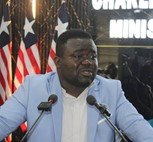
Speaking Thursday at the Ministry of Information’s regular press briefing, Grigsby said King’s cooperation forms part of the government’s efforts to uncover everyone connected to the alleged drug trafficking operation.
According to him, King accepted the government’s witness protection program after investigators determined that his testimony was relevant and material to the ongoing investigation.
Grigsby disclosed that during interviews with investigators, King identified Oscar Brown as the individual who allegedly delivered the drugs now at the center of the high-profile investigation.
He said Brown has since left Liberia and called on him to return voluntarily and cooperate with authorities before criminal charges are filed.
“We contacted Mr. Paul King, he provided his testimony, accepted witness protection, and returned to Liberia under the supervision of the Ministry of Justice because we want to get to the root of this case,” Grigsby said.
He explained that individuals who voluntarily provide credible information during the investigation stage may qualify for witness protection if their testimony significantly advances an investigation.
However, he noted that once formal criminal charges are filed, suspects generally no longer qualify for witness protection, although prosecutors may consider cooperation agreements where such testimony is essential to prosecuting more significant offenders.
Grigsby warned that those who refuse to cooperate with investigators should not assume they can evade justice simply by leaving Liberia. He said the government is prepared to pursue fugitives through international legal mechanisms, including extradition, mutual legal assistance treaties, and Interpol.
He encouraged anyone with credible information relating to the drug investigation to come forward immediately, stressing that the government remains committed to protecting witnesses whose safety may be threatened because of their cooperation.
During the question-and-answer session, Grigsby clarified that the Witness Protection Agency does not investigate crimes, make arrests, or prosecute suspects. Instead, its primary responsibility is to protect witnesses and whistleblowers whose testimony is considered important to criminal investigations and court proceedings.
“Our role is to create a safe environment where witnesses can provide testimony without fear of intimidation or harm,” he explained, adding that decisions regarding arrests and criminal charges rest solely with the Liberia National Police and the Ministry of Justice.
The WPA Director emphasized that Liberia’s criminal justice system operates under the constitutional principle that every accused person is presumed innocent until proven guilty in court. He urged the public to support ongoing investigations by voluntarily providing credible information that could help prosecutors build strong cases.
Grigsby also disclosed that the Witness Protection Agency, established under the 2022 Witness Protection Act, is still in its formative stage. Commissioned in November 2025, the agency is currently developing standard operating procedures with the Liberia National Police, the National Security Agency, the Ministry of Justice, and the Liberia Anti-Corruption Commission before expanding operations nationwide.
He announced that the agency would hold consultations with media organizations and civil society groups as part of efforts to strengthen both the Witness Protection Act and the Whistleblower Protection Act.
Among the proposed reforms is an increase in the financial reward for whistleblowers whose information leads to the recovery of stolen public assets. Under the current law, whistleblowers are entitled to five percent of recovered assets. Grigsby said the government is proposing to increase that reward to ten percent to encourage more citizens to report corruption.
He further revealed that the government is exploring a dedicated funding mechanism for the Witness Protection Program, including a proposal to allocate one cent from every gallon of petroleum products sold in Liberia to support witness protection activities.
According to him, the agency currently operates with a budget of about US$800,000 and a staff of 65 employees. Plans are underway to recruit approximately 45 additional protection officers, counselors, and other specialists next year as the institution expands its operations.
Grigsby noted that some witnesses currently under protection are being secured with the assistance of officers from the Liberia National Police and the National Security Agency while the WPA continues building its own operational capacity.
He concluded by encouraging Liberians to trust lawful institutions, report crime through the appropriate channels, and support government efforts to strengthen the rule of law.
“The government succeeds when citizens participate. If you have information that can help fight corruption, drug trafficking or other serious crimes, come forward. We are here to protect you,” Grigsby said.
About The Author