By Jamesetta D Williams
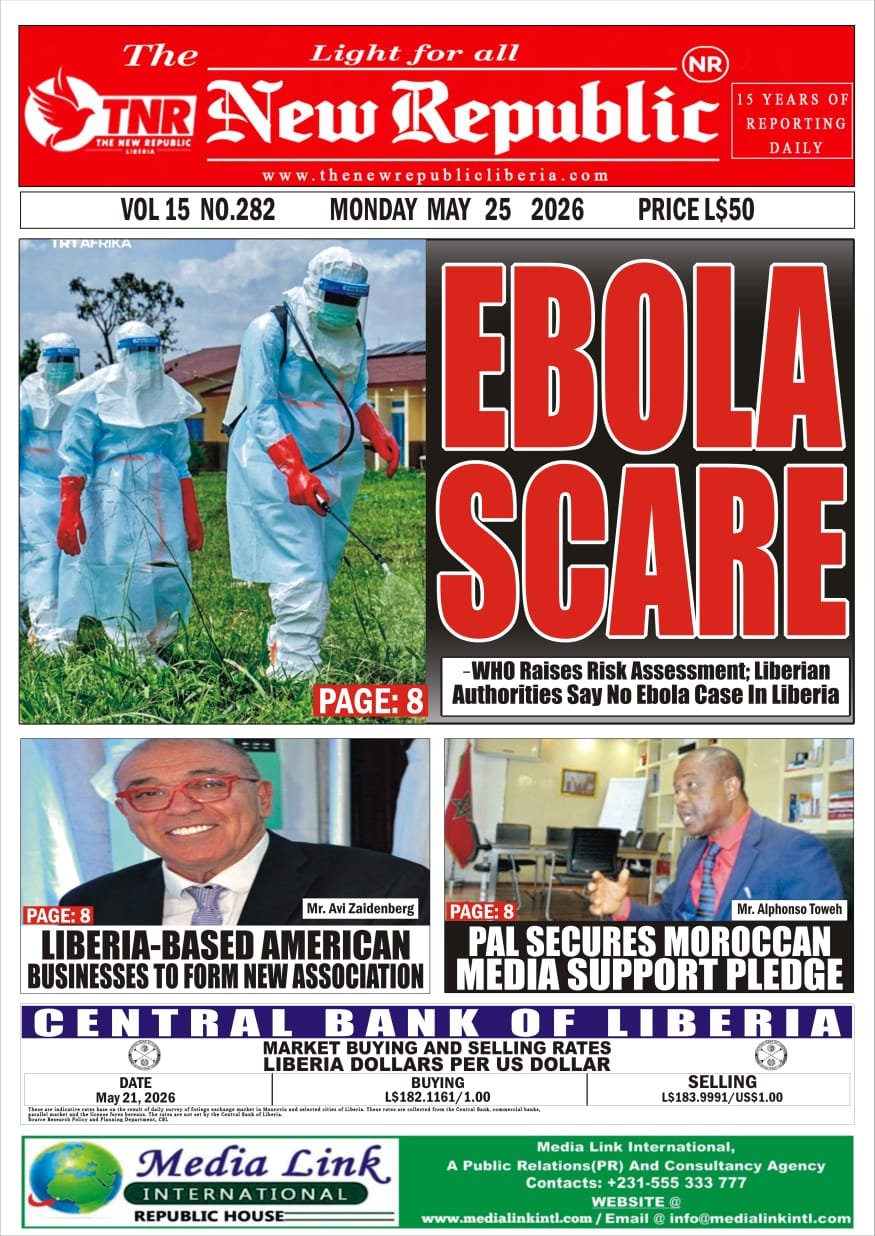
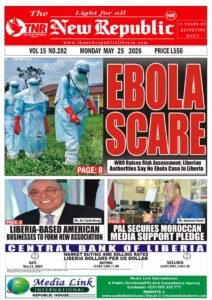
Monrovia – Liberians are reportedly grappling with what is being described as ‘Ebola scare’ as the deadly virus continues to rampage in the Democratic Republic of Congo (DRC), killing over 204 people, while the World Health Organization (WHO) has raised risk assessment “very high.”
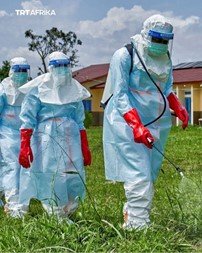
Liberian health authorities have allayed public fear, denying claims of a suspected Ebola case in the country, but equally urged the public to continue observing existing preventive measures.
The preventive health measures Liberians are urged to observe include regular handwashing, avoiding direct contact with bodily fluids of sick individuals, and promptly reporting suspected illnesses to health authorities.
In a statement issued at the weekend, Ministry of Health, National Public Health Institute of Liberia (NPHIL), and the John F. Kennedy Medical Center (JFKMC) said Liberia currently has no suspected, probable, or confirmed case of Ebola Virus Disease (EVD) amid growing concerns.
They dismissed reports circulating on social media claiming that Liberia had declared an Ebola outbreak, describing the information as false and misleading.
The clarification comes as officials in the DRC updated the Ebola death toll to 204 late Saturday, following reports that three Red Cross volunteers had also died from the disease, while neighboring Uganda confirmed three additional Ebola cases.
According to a statement from the DRC Ministry of Health, a total of 867 suspected Ebola cases have been recorded across three provinces of the country.
The latest figures mark a sharp increase from the previous World Health Organization (WHO) report released Friday, which placed the death toll at 177 from 750 suspected cases.
Health experts continue to express concern over the spread of the highly contagious disease across Central and East Africa.
The WHO has already declared the outbreak an international public health emergency due to the growing number of infections and deaths.
Despite the worsening regional situation, Liberian health authorities reassured citizens that there is currently no Ebola case in the country.
The Ministry of Health and NPHIL stressed that they remain the only official institutions responsible for reporting and communicating disease outbreak information in Liberia.
The institutions urged the public to remain calm and avoid spreading unverified reports capable of causing fear and confusion among citizens.
According to the statement, the Ministry of Health, in collaboration with NPHIL and its partners, continues to maintain surveillance and preparedness measures nationwide.
These include monitoring activities at health facilities and border entry points, conducting public awareness campaigns, and coordinating with international and regional health organizations, including the World Health Organization (WHO), the United States Centers for Disease Control and Prevention (US CDC), and the Africa Centres for Disease Control and Prevention (Africa CDC).
WHO raises Ebola risk
Meanwhile, the World Health Organization (WHO) has raised its risk assessment for the Bundibugyo strain of Ebola in the DRC to “very high” at the national level, warning of a heightened possibility of a broader outbreak.
The strain, for which there is currently no approved vaccine or treatment, was declared an emergency of international concern by the WHO on Sunday.
“We are now revising our risk assessment to very high at the national level, high at the regional level, and low at global level,” Reuters quoted WHO Director-General Tedros Adhanom Ghebreyesus as telling reporters.
The situation in Uganda remains stable, with two confirmed cases linked to travel from the DRC, including one fatality, Tedros said.
WHO warns Ebola outbreak could last longer than previous spread. “The potential of this virus spreading rapidly is high, very high, and that changed the whole dynamic,” Abdirahman Mahamud, WHO Director of Health Emergency Alert & Response Operations, told Reuters.
The WHO added that containment measures in Uganda, including intensive contact tracing and the cancellation of mass gatherings, appear to have helped limit further spread.
Tedros also confirmed that a US national working in the DRC has tested positive for Ebola and has been transferred to Germany for treatment. He added that another American with high-risk exposure has reportedly been moved to the Czech Republic.
“We are also aware of reports today about another American national with a high-risk contact who has been transferred to the Czech Republic,” he said.
Meanwhile, WHO Chief Scientist Sylvie Briand said the antiviral drug Obeldesivir, an experimental oral treatment originally developed for COVID-19 by Gilead Sciences, could be considered for use among Ebola contacts under strict protocols.
“This is a promising treatment drug, but it has still to be implemented under a very, very strict protocol,” Briand said.
About The Author