
By Stephanie M. Duncan
Monrovia-The Gompa Magisterial Court has sentenced former Gompa City Mayor Amos N.G. Suah to 30 days in prison for contempt of court following comments he allegedly made against the Judiciary.
Suah appeared before the court on Tuesday in response to a contempt summons arising from statements he reportedly made on the Day Break Gompa radio program.
The case is connected to a dispute over property demolitions in Ganta. During the controversy, Suah reportedly called for the impeachment of Chief Justice Yamie Quiqui Gbeisay and referred to the Chief Justice as his “secret enemy.”
According to the court, Suah’s statements had the potential to encourage members of the public to disregard or resist the authority of the Judiciary and to undermine public confidence in the administration of justice.
After hearing the matter, the Gompa Magisterial Court found Suah in contempt and sentenced him to 30 days in prison.
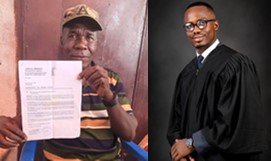
Meanwhile, a Liberian lawyer Atty. Jeremiah Samuel Dugbo I has raised concerns about freedom of expression following the sentencing of former Gompa City Mayor Amos N.G. Suah to 30 days in prison by the Gompa Magisterial Court.
Suah was sentenced Tuesday after appearing before the court in connection with a contempt summons over comments he reportedly made on the Day Break Gompa program.
The case reportedly stems from a dispute involving property demolitions in Ganta, with Chief Justice Yamie Quiqui Gbeisay allegedly accusing Suah of selling portions of the disputed land.
Suah reportedly rejected the allegation and called for the impeachment of the Chief Justice, whom he described as his “secret enemy.”
The court subsequently accused Suah of making statements capable of encouraging the public to resist the authority of the Judiciary and bringing the administration of justice into disrepute.
Reacting to the development, Atty. Dugbo expressed concern over what he sees as a growing restriction on public expression in Liberia.
“It started with Prophet Key, and to many, it seemed comical. But perhaps the joke was never really a joke,” Dugbo said.
He argued that restrictions on the expression of one person’s views could eventually affect others, warning that the issue should not be considered important only when it involves a particular individual.
“On and on we go, as the space for free expression grows smaller. Today, it is someone else’s voice being silenced; tomorrow, it could be yours,” Dugbo stated.
According to the lawyer, restrictions on free speech may occur gradually through individual actions and justifications that eventually establish precedents.
“The most dangerous attacks on free speech do not always arrive with a loud announcement. Sometimes, they come gradually: one restriction, one justification, one precedent at a time, until silence becomes the new normal,” he said.
Dugbo maintained that freedom of expression should be defended regardless of whether people agree with the views being expressed.
“Free speech means little if we defend it only when we agree with the speaker,” he added.
About The Author