SPECIAL KEYNOTE ADDRESS DELIVERED
BY
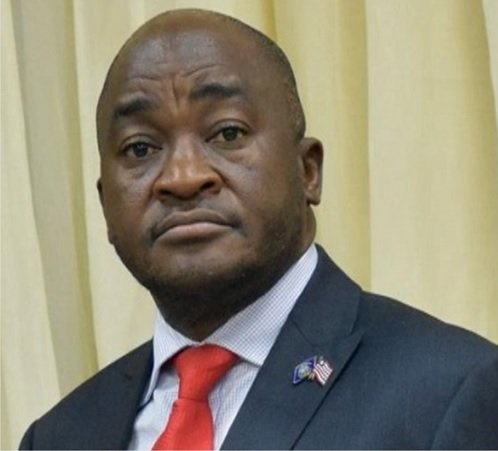
Monrovia-His Excellency Ambassador Dee-Maxwell Saah Kemayah, Sr.
Former Minister of Foreign Affairs & Dean of the Cabinet of the Republic of Liberia At The First International Peace Summit 2026 International Day of Peace – Monday, September 21, 2026 Peace In A Fractured World: Restoring Dialogue, Justice And Confidence In Institutions
His Excellency Ambassador Dr. Muhammad Shahid Amin Khan, World Chairman of Both the International Human Rights Commission and International Human Rights Commission Relief Fund Trust, Excellencies, distinguished diplomats, representatives of international organizations, government officials, members of civil society, ladies and gentlemen:
Let me first extend my profound thanks and appreciation to His Excellency Ambassador Dr. Muhammad Shahid Amin Khan, World Chairman of both the International Human Rights Commission and International Human Rights Commission Relief Fund Trust, and other organizers for the invitation and honor to serve as a Special Keynote Speaker for this First International Peace Summit 2026 as we commemorate the 2026 International Day of Peace.
Happy and Blessed International Day of Peace to all of you participating in this International Peace Summit 2026 and all of our brothers and sisters around the world!
Our gathering takes place at a consequential moment for the international community. Across regions; armed conflicts persist, geopolitical tensions are intensifying, humanitarian crises are deepening, and confidence in national and international institutions is being tested.
Against this background, the theme reflected in this Summit “One World, One Humanity, One Future” is both timely and compelling.
It reminds us that whatever our nationalities, political systems, strategic interests or historical experiences, humanity ultimately shares a common destiny.
Today, I submit that lasting peace requires Three (3) things above all; including: Credible Diplomacy, Justice Under The Rule Of Law, and Institutions in which people can place their confidence.
Diplomacy Must Remain Our First Line of Defense
Throughout my years in diplomacy and public service, one lesson has remained constant: it is always less costly to prevent a conflict than to resolve one, after it begins. Once armed conflict starts, positions harden. Trust disappears. Economies collapse. Infrastructure is destroyed. Populations are displaced. And grievances that might once have been negotiated can become generational wounds.
This is why diplomacy must never be treated merely as an emergency instrument activated after violence gets started.
Preventive Diplomacy
Diplomacy must be preventive. We must invest more seriously in early warning, preventive diplomacy, mediation, confidence-building measures, and sustained dialogue. There is sometimes a tendency to regard dialogue as weakness. It is not. Dialogue is not capitulation. Negotiation is not surrender. Diplomacy is not weakness.
Diplomacy is the disciplined search for alternatives to destruction. Even where parties fundamentally disagree, communication must remain possible. Indeed, it is precisely when relationships are most difficult that diplomatic channels are most necessary. The international community must therefore strengthen the mechanisms through which disputes can be addressed before they become wars.
Peace Must Be Built on Justice
But diplomacy alone cannot guarantee sustainable peace. Peace without justice is inherently fragile. Societies become unstable when citizens believe that laws are selectively applied, institutions serve particular interests, and/or political power determines who receives justice.
The principle of the rule of law must therefore remain central to peacebuilding. No individual should be above the law. But equally important, no individual should be denied the protection of the law. This principle becomes particularly important during changes of government.
Democratic elections and related processes must be free, fair, transparent and inclusive to engender peace. Democratic transitions should represent peaceful transfers of constitutional authority. They should never become opportunities for settling political scores. Former public officials must remain accountable for their actions. Where credible evidence of wrongdoing exists, the law must take its course. But accountability must be evidence-based, transparent, impartial, and consistent with due process. Otherwise, prosecution can be persecution in disguise.
And when political actors begin to believe that losing an election could mean losing their freedom through bogus charges and politically motivated legal processes, the stakes of political competition become dangerously high. A functioning democracy must therefore reject two extremes: impunity on one side and political persecution on the other. The answer to impunity is credible justice; not selective justice and political witch-hunt.
The Judiciary as an Institution of Peace
This brings us to the Judiciary. We often think of courts primarily as institutions of law. But courts are also institutions of peace. Why? Because courts provide an orderly alternative to confrontation.
Disputes can be transferred from the streets to the courtrooms. Where political institutions disagree over constitutional authority, they look to the courts to provide peaceful mechanisms for resolution. Where elections are contested, judicial institutions can prevent political disputes from escalating into violence and wars.
Judiciary therefore carries an extraordinary responsibility, which requires comprehensive support.
Such support to the Judiciary must be given priority, as it is an investment in national stability.
International Institutions Must Earn Confidence
The international system cannot effectively advocate for the rule of law domestically, while appearing inconsistent in its application internationally. International institutions must continuously demonstrate that established rules apply consistently, not simply when they coincide with the interests of powerful states.
Smaller states, developing countries, and vulnerable populations must have confidence that international laws protect them as meaningfully as such laws protect powerful actors. This is critical because perceived double standards weaken the credibility of the international rule-based order.
When similar conduct attracts different international responses, depending upon who commits it, confidence diminishes. When international laws are invoked selectively, skepticism grows. The answer is not to weaken international institutions. The answer is to strengthen their credibility through greater consistency, transparency, representation, and respect for international laws.
Liberia: A Brief Lesson from Experience
Permit me to briefly speak about my own country, Liberia.
Liberia knows the terrible cost of institutional collapse. After Fourteen (14) years of devastating civil conflict, we have spent more than Two (2) decades rebuilding a fragile peace. Yet today, troubling signs are emerging.
Political tensions are rising amid highly charged prosecutions of former Government officials. Questions surrounding the administration of justice and the politicization of accountability are deepening mistrust between the government and opposition. When political persecution and witch-hunt seem to be the emerging trend, rather than resolve political disputes, and citizens begin to doubt the impartiality of national institutions, with selective justice; the foundations of peace may be dangerously vulnerable.
The consequences could be profound. Politically, mistrust could harden political divisions and make future elections more confrontational. Socially, growing frustration could move grievances from institutions to the streets. From a security perspective, demonstrations could escalate into clashes, retaliation, and wider instability. In a post-conflict society, even isolated incidents can become dangerous when they occur in an atmosphere of deep mistrust.
Liberia must therefore recognize the warning signs. Conflict does not begin when a first gun is fired. It begins when trust dies, institutions lose credibility, political opponents become enemies, and citizens cease to believe that justice will protect them equally.
We have paid too high a price for peace to gamble with it again. Liberia must act before political tension becomes political crisis and before political crisis becomes national instability. We have traveled this road before. We know where it can lead.
Leadership Must Change the Political Temperature
There is another responsibility that cannot be delegated to institutions alone: responsible political leadership. Words spoken by leaders matter. Political rhetoric can lower tensions or inflame them.
Leaders must recognize that political opponents are not necessarily enemies of the state. Government and opposition may disagree profoundly, while remaining partners in the constitutional order. A healthy democracy requires a government to be capable of tolerating criticism and opposition, capable of challenging government within constitutional boundaries.
This principle applies internationally, as well. States will have competing interests. Governments will disagree over territory, security, trade, ideology, and foreign policy. But disagreement must not automatically lead to confrontation.
The ultimate test of statesmanship is not the ability to defeat every opponent. Sometimes, it is the ability to create sufficient common ground for former adversaries to coexist.
From Principles to Practice: An Agenda for Action
Excellencies, distinguished guests, ladies and gentlemen:
Peace requires architecture. It requires governments, regional organizations, international institutions, the Press or Media, civil society, and responsible political leaders to know, not only what we stand for, but also what we are prepared to do. Allow me, therefore, to suggest some practical steps.
First: Strengthening Preventive Diplomacy
Preventive diplomacy must begin before the crisis makes the news headlines of the local, national and international media outlets. Governments and international organizations should strengthen early-warning systems, capable of identifying political, economic, social, and security indicators of instability.
This means monitoring developments such as disputed elections, violations of the rule of law, inflammatory political rhetoric, restrictions on civic space, breakdowns in constitutional processes, communal tensions, and sudden deterioration in relations between and amongst political actors. But early warning is useful, only when it leads to early action.
Regional and international organizations should therefore maintain standing mediation teams that can be deployed rapidly when tensions begin to rise. These teams should include experienced diplomats, constitutional experts, mediators, women leaders, youth representatives, and respected representatives of civil society.
We should also establish confidential channels of communication between governments and political parties before crises escalate. A telephone call made at the right moment can sometimes prevent a crisis that would otherwise require years of international intervention.
Governments, for their part, should make greater use of confidence-building measures: regular cross-party consultations, parliamentary dialogues, military-to-military communications, where appropriate, and regional diplomatic consultations. The objective is simple: Do not wait for the fire before building the fire brigade.
Second: Protecting the Independence of Institutions
Peace cannot survive where institutions are captured by political interests. The independence of the judiciary, electoral bodies and authorities, parliaments or legislatures, public accountability institutions, and other constitutional bodies must therefore be protected through both law and practice.
Governments should ensure that appointments to key independent institutions are based upon transparent, merit-based, and publicly understood procedures. Terms of office should be clearly established.
Removal from office should require lawful procedures rather than political convenience. Institutions must also receive adequate and predictable resources so that financial dependence does not become a substitute for political independence. International and regional organizations can assist by providing technical support, institutional assessments, judicial training, election assistance, and mechanisms for sharing best practices.
But international assistance should strengthen national institutions rather than permanently substitute for them. There is another important responsibility: institutional restraint. Political leaders must resist the temptation to use every available legal or administrative instrument against their opponents, simply because the law technically permits it. The spirit of constitutional democracy requires more than legality. It requires restraint and consideration of expediency.
Third: Upholding the Rule of Law Consistently
The rule of law must be visible in practice. Governments should strengthen independent prosecutorial and judicial institutions, improve access to legal representation, reduce delays in the administration of justice, and ensure that citizens can challenge abuses of public authority through lawful procedures.
Accountability mechanisms should apply consistently to those who hold power and those who have left power. Where allegations of corruption, abuse of office, or other wrongdoing arise, investigations should be conducted according to established legal procedures and based upon credible evidence.
At the same time, every accused person must retain fundamental protection, including due process and the presumption of innocence. This balance is essential. Justice must be firm enough to confront impunity and restrained enough to prevent injustice.
International bodies can support this objective by providing judicial cooperation, legal expertise, anti-corruption assistance, and capacity-building programs. They can also help governments develop stronger systems for assets declaration, procurement transparency, public financial management, and independent oversight. The goal should not simply be to punish wrongdoing after it occurs. It should be to construct institutions that make wrongdoing more difficult to commit and easier to detect.
Fourth: Preserving Dialogue Even Among Adversaries
Dialogue must become a permanent feature of political life, not an emergency measure reserved for moments of crisis. Governments should institutionalize national dialogue mechanisms that bring together government, opposition parties, civil society, business leaders, youth, women, traditional authorities, and other relevant stakeholders.
Such mechanisms should not replace constitutional institutions. Rather, they should provide additional channels through which disagreements can be addressed before they become confrontations. Regional organizations can establish mediation panels composed of respected former heads of state, senior diplomats, jurists, and other trusted figures who can intervene discreetly when requested.
International organizations can provide neutral venues where adversaries can meet without the immediate pressure of public political confrontation. And political parties themselves must accept responsibility. They should establish internal mechanisms for resolving disputes, committing to nonviolent political competition, and communicate clearly that electoral disagreement does not justify violence.
There is also a role for the media. Responsible journalism should provide citizens with facts rather than deliberately intensifying political divisions. Social media platforms and technology companies, where relevant, should be encouraged to cooperate with governments and civil society in addressing coordinated disinformation and incitement, while respecting, and absolutely not compromising legitimate freedom of expression.
The principle should be clear: Governments must take the lead, and keep talking to those with whom they disagree, precisely, because disagreement is unavoidable.
Fifth: Restoring Confidence in Multilateralism
Finally, if multilateralism is to retain public confidence, international institutions must demonstrate that they are responsive, representative, transparent, and capable of delivering results.
International organizations should strengthen mechanisms for consultation with smaller states and developing countries. The voices of countries that are often affected by international decisions, but have limited influence over them, must be heard more effectively.
Regional organizations should receive stronger support because many crises are first understood, and sometimes, best resolved by neighboring countries. International institutions should also communicate more clearly with the public. Citizens should be able to understand what international organizations do, how decisions are made, how resources are used, and what results have been achieved.
Transparency is therefore not merely an administrative virtue. It is a foundation of legitimacy. Multilateral institutions must also demonstrate effectiveness. When an international organization announces a peace initiative, humanitarian program, election-support mission, or development partnership, there should be clear objectives, measurable outcomes, and mechanisms for public accountability.
Governments must contribute, as well. States cannot demand strong international institutions, while refusing to support them politically, financially, and diplomatically. Multilateralism requires commitment. It requires countries to accept that cooperation sometimes means making compromises for the sake of a larger common interest.
Conclusion
Excellencies, distinguished ladies and gentlemen:
The pursuit of peace is not an event. It is a continuous responsibility.
Peace is preserved when governments exercise power responsibly.
Peace is preserved when opposition is respected.
Peace is preserved when courts are independent.
Peace is preserved when justice is impartial.
Peace is preserved when diplomacy remains open, even in moments of profound disagreement.
And peace is preserved when the international community applies the principles it advocates for with credibility and consistency.
Our challenge, therefore, is not simply to end the wars already underway.
Our greater responsibility is to build national and international systems, capable of preventing the next conflict.
Let us choose dialogue before, and over confrontation.
Let us choose diplomacy before, and over escalation.
Let us choose justice over vengeance.
Let us choose institutions over personalities.
Let us choose cooperation over isolation.
And above all, let us recognize that lasting peace cannot be imposed by force alone. It must be built through trust, protected by justice, sustained through dialogue, and anchored in institutions that command the confidence of the people they serve.
That is how we give practical meaning to the declaration:
One World.
One Humanity.
One Future.
I Thank You.
About The Author