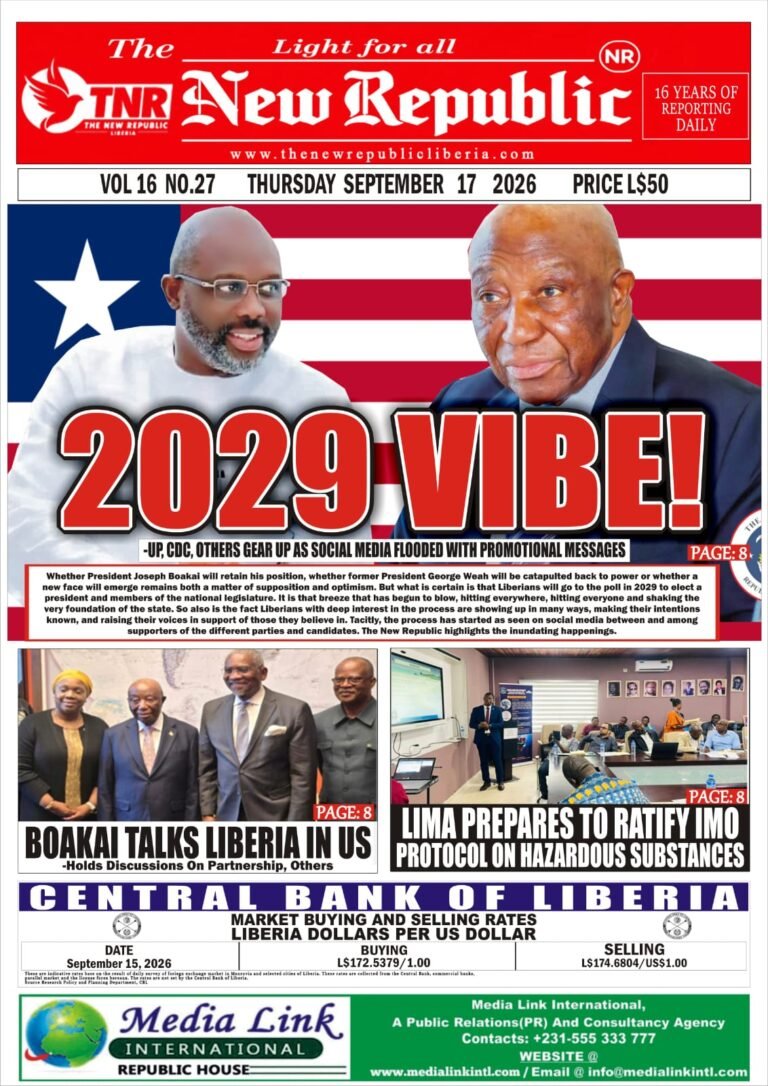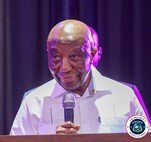
Monrovia- President Joseph Nyuma Boakai Sr. has urged Liberian journalists to tell the country’s story with truth, balance, dignity and confidence, while continuing to investigate, criticize and hold government accountable.
Speaking Saturday, September 12, 2026, at the Second Annual Presidential Media Dinner held at the EJS Ministerial Complex in Congo Town, President Boakai said positive reporting should not mean ignoring Liberia’s challenges or abandoning the media’s responsibility to question government.
“I encourage you to stay positive about Liberia,” Boakai told media leaders and practitioners, stressing that being positive does not mean overlooking the country’s problems.
He said journalists should report the challenges facing Liberia while also highlighting the country’s resilience, progress, people and possibilities.
According to President Boakai, the way Liberia tells its story can influence how the international community views the country, including how it assesses Liberia’s potential and interest in investing in the nation.
“When we tell Liberia’s story with truth, balance, dignity, and confidence,” he said, “we help the world understand not only where Liberia is today, but where Liberia can go.”
The President, however, cautioned journalists against reporting in ways that could damage Liberia’s opportunities internationally, while emphasizing his confidence in the Liberian media’s ability to accurately present the country to the world.
He described journalists as more than reporters, saying they are documenting Liberia’s history, shaping national conversations, informing citizens and preserving the experiences of the country.
President Boakai also reaffirmed his administration’s commitment to freedom of expression, access to information and an independent, free and professional media, referencing the government’s continued commitment to the principles of the Table Mountain Declaration.
He said government must remain open, accessible and responsive, while the media must uphold accuracy, fairness, professionalism and the public interest.
Under the ARREST Agenda for Inclusive Development, President Boakai encouraged journalists to view his administration as a partner rather than an institution to be feared.
He also assured the media that his government would not regard the Fourth Estate as an institution to be “muzzled or controlled.”
Boakai acknowledged that government and the media would not always agree, but said disagreements are a normal part of democracy and should not undermine their shared responsibility to Liberia.
“We may not always agree. And in a democracy, we should not always agree,” he said, adding that both government and the media must remain committed to the country they serve.
The President called for stronger relations between government and the Fourth Estate based on mutual respect, openness, professionalism and a shared commitment to the Liberian people.
He said government must remain accessible and responsive, while journalists must continue to inform, educate, question and hold public officials accountable.
The President also used the occasion to extend condolences to the Liberia Broadcasting System and the family, colleagues and friends of Charles Johnson, an ELBC journalist and radio announcer who recently died.
Boakai described Johnson’s years of broadcasting service as a reminder that journalism is not only a profession but also a form of public service.
The Second Annual Presidential Media Dinner was held one year after the inaugural dinner, which President Boakai said was founded on the conviction that a strong democracy requires a free, responsible, professional and vibrant media.
He concluded by calling for continued honest conversations, credible journalism and the free exchange of ideas, urging Liberians to “Think Liberia, Love Liberia, and together Build Liberia.”
About The Author