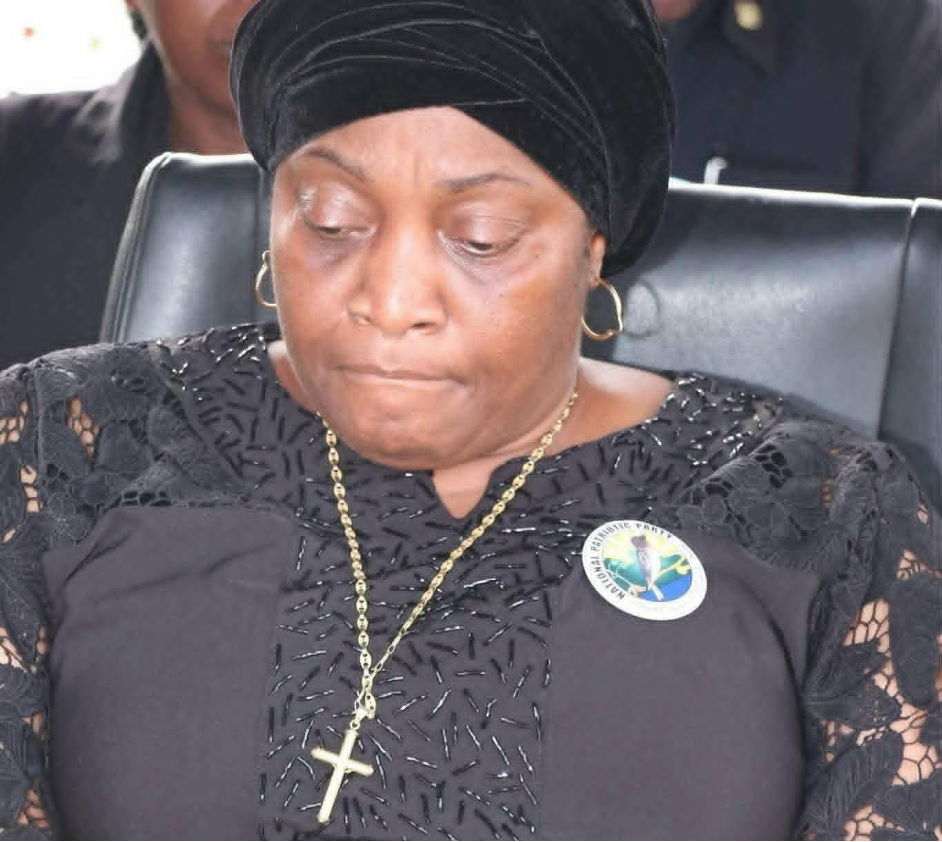
Judge rejects ex-VP’s ex post facto argument, cites alleged conduct continuing into August 2026
By Benjamin Q. Z. Johnson
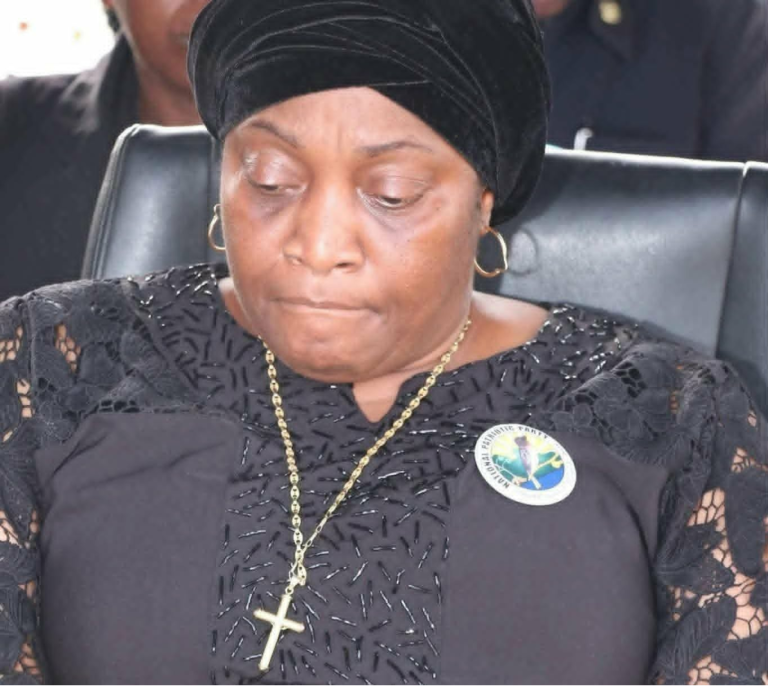
MONROVIA-Criminal Court “C” has denied former Vice President Jewel Howard Taylor’s motion for bail, rejecting her defense’s argument that the prosecution is based exclusively on alleged conduct from 2021 and 2022, before the enactment of Liberia’s 2023 Controlled Drugs and Substances Act.
Assigned Circuit Judge Ousman F. Feika handed down the ruling on Thursday, September 24, 2026, finding that allegations contained in the government’s writ of arrest indicate that the alleged conduct involving Taylor continued into August 2026.
The ruling leaves Taylor subject to the court’s existing restrictions as she faces prosecution on multiple drug-related and financial charges.
Taylor is charged with alleged importation of controlled drugs; unlicensed exportation of controlled drugs and substances; unlicensed sales, trading in transit and transportation of controlled substances; abuse of office; illicit trafficking; criminal conspiracy; criminal facilitation; criminal solicitation; money laundering; and aiding the consummation of a crime.
The government announced the charges following Taylor’s arrest at Roberts International Airport on August 19, 2026.
Taylor’s legal team had asked Judge Feika to release her on personal recognizance or, alternatively, admit her to bail under a bond guaranteeing her appearance throughout the proceedings.
A central argument advanced by the defense was that the conduct attributed to Taylor allegedly occurred in 2021 and 2022, before the 2023 Controlled Drugs and Substances Act came into force.
The defense argued that applying the later statute to conduct allegedly committed before its enactment would violate Liberia’s constitutional prohibition against ex post facto laws.
The bail motion also challenged the government’s position that the offenses charged are grave and subject to restrictions on bail under the 2023 drug law.
Judge Feika, however, rejected the contention that the allegations against Taylor were limited to conduct occurring before the enactment of the 2023 law.
In his ruling, Judge Feika pointed to allegations contained in the government’s writ of arrest indicating that Taylor’s alleged relationship with members of a transnational cocaine network continued beyond 2021 and 2022 and into August 2026.
The court cited an allegation that Taylor received US$15,000 in August 2026, following earlier alleged financial transactions involving US$45,000 and US$75,000.
According to allegations contained in the writ, Taylor allegedly received US$45,000 while in Dubai and later received US$75,000 through an alleged associate in connection with the Jewel Star Fish Foundation. The writ further alleges that she subsequently received US$15,000 in August 2026.
The allegations remain matters to be established or disproven through the judicial process.
Judge Feika relied on the alleged continuing conduct in rejecting the defense’s contention that the prosecution is based solely on activities predating the 2023 legislation.
The court reasoned that where an alleged offense involves a continuing course of conduct, the offense may be considered committed when the last alleged act occurs or when the accused terminates the alleged complicity.
In reaching his decision, Judge Feika relied on Section 4.6 of Liberia’s Criminal Procedure Law, which addresses offenses involving a continuing course of conduct.
The court also referenced Liberia’s anti-money laundering framework, under which illicit drug trafficking is recognized as a predicate offense for money laundering.
The Ministry of Justice had opposed Taylor’s bail request, maintaining that the charges are grave and that the 2023 Controlled Drugs and Substances Act imposes restrictions on bail in serious drug cases.
The government has charged Taylor under provisions of the 2023 drug law, along with provisions of the Penal Law and Liberia’s anti-money laundering legislation.
While denying Taylor’s bail request, Judge Feika’s ruling does not constitute a finding that she committed the crimes charged.
The defense retains the right to challenge at trial whether the prosecution can prove each element of the offenses, including the alleged continuing conduct, the source and nature of the alleged funds, Taylor’s alleged relationship with other defendants, and the required criminal intent.
The prosecution, for its part, must establish the allegations through admissible evidence and satisfy the applicable burden of proof.
Taylor has denied the allegations against her.
The bail ruling follows Judge Feika’s earlier decision permitting Taylor to leave the Monrovia Central Prison on medical grounds under strict conditions.
The September 4 ruling placed her under court-supervised residential detention, restricting her movement and travel.
She was ordered to surrender her travel documents to the Sheriff of Criminal Court “C” and remain at her designated residence except when authorized by the court or attending approved medical appointments.
The court also ordered 24-hour police security at her residence and imposed additional conditions governing her movement and visitors.
The medical release did not terminate the criminal proceedings, constitute an acquittal, or otherwise dispose of the charges against her.
Taylor therefore remains subject to the court’s existing conditions while the prosecution proceeds.
The denial of bail marks another significant stage in a case that has attracted considerable public and political attention.
Taylor’s defense had earlier withdrawn its request for a preliminary examination and shifted its focus to the legality of her continued detention, her entitlement to bail, and the applicability of the 2023 Controlled Drugs and Substances Act.
The latest ruling does not finally resolve every constitutional or evidentiary issue raised by the defense. Instead, Judge Feika’s decision addresses the defense’s argument that the prosecution is based on conduct predating the 2023 law, finding that the allegations before the court include an alleged continuing course of conduct extending into August 2026.
The criminal proceedings will therefore continue, with Taylor remaining under court-imposed restrictions while the prosecution pursues the charges against her.
Taylor remains presumed innocent unless and until the prosecution proves the charges against her in accordance with Liberian law.
About The Author