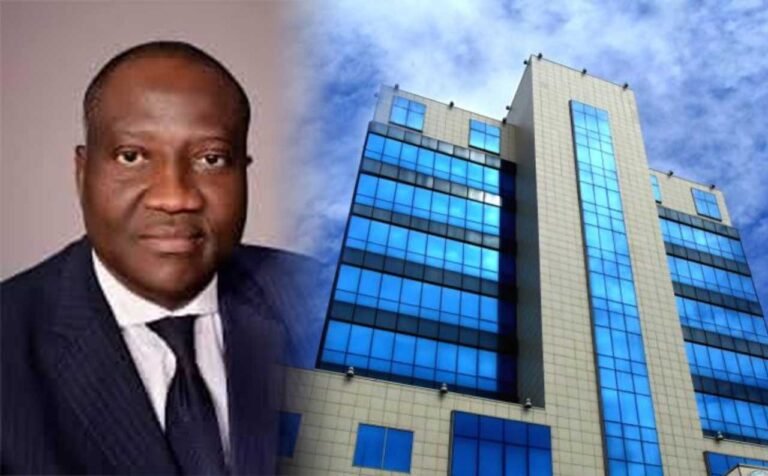

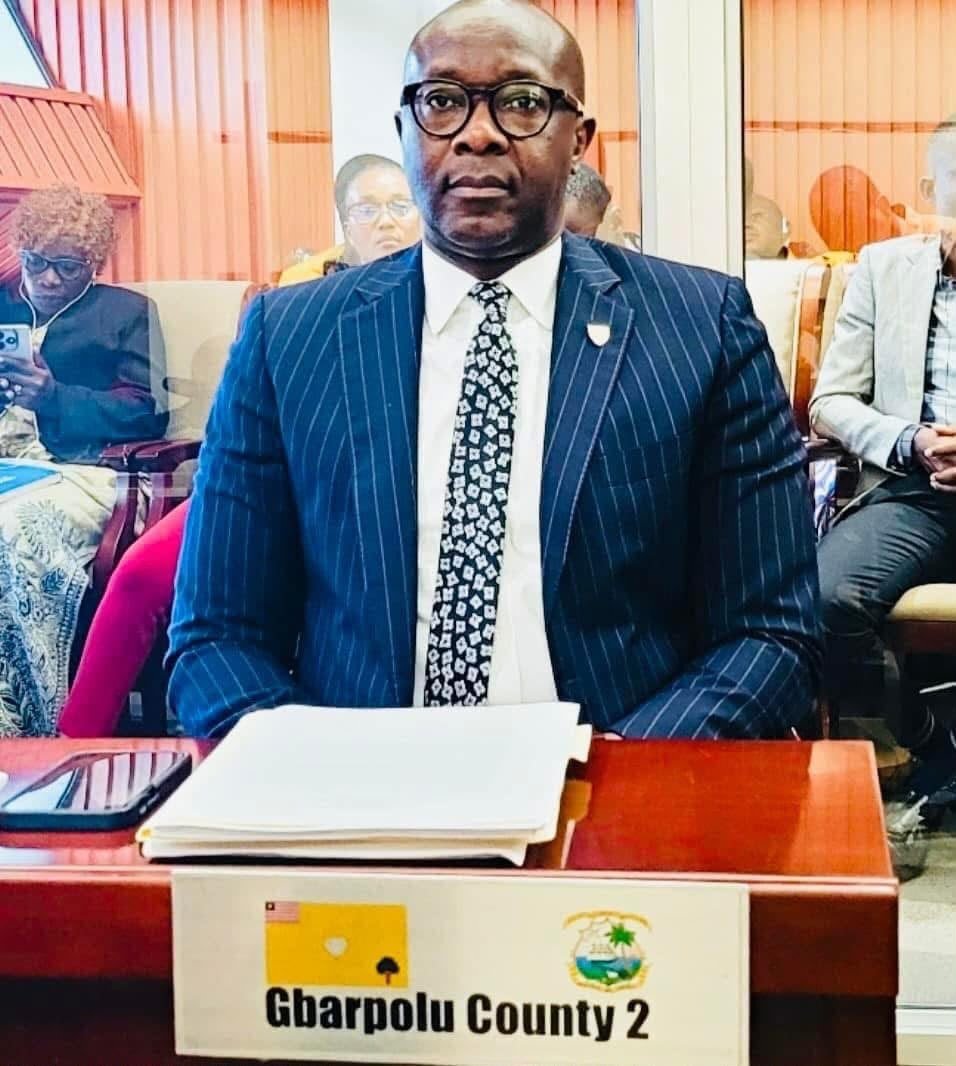
Monrovia-Gbarpolu County Senator Amara M. Konneh has challenged the development priorities of President Joseph Nyuma Boakai’s proposed US$1.539 billion national budget for Fiscal Year 2027, warning that the government’s plan to collect more revenue is not matched by adequate investment in the sectors and communities most in need.
Konneh argues that while the proposed budget increases by US$236.25 million over the current fiscal year, the additional resources are largely directed toward government operations, with comparatively little going toward new development projects.
His concerns extend to rising tax projections, limited agricultural funding, inadequate support for county-level development and questions about allocations for hospitals, schools and other public services.
The senator presented his assessment after reviewing the 845-page draft budget, which proposes a total resource envelope of US$1.539 billion, compared with the estimated US$1.303 billion for FY2026.
A member of the Senate Committee on Public Accounts and Audits, Konneh said the Legislature must look beyond the headline budget figure and determine whether the proposed spending will produce measurable improvements in the lives of Liberians.
One of his major concerns is the government’s projected revenue collection.
The draft anticipates tax revenue of US$1.072 billion, an increase of US$225 million, while non-tax revenue is expected to decline by US$164 million. Konneh said the resulting increase in core domestic revenue is approximately US$61 million, or 4.7 percent.
He questioned the basis for some of the projected increases, particularly the 49.3 percent rise in import taxes, from US$280.8 million to US$419.4 million, and the 46.4 percent increase in taxes on goods and services.
He also raised concerns about the proposed VAT arrangements, mobile money fees and penalties associated with electronic receipts, arguing that the government must demonstrate that its revenue measures will not place an excessive burden on households, traders and businesses.
For Konneh, the more important question is how additional revenue will translate into development.
Of the US$236.25 million increase in the proposed budget, he said only US$16.44 million is reflected in additional Public Sector Investment Projects (PSIP), representing approximately seven percent of the overall increase.
He estimated that nearly 79 cents of every dollar would go toward government operations and debt servicing, compared with about 21 cents for development investment.
He also questioned increased spending on intelligence services, foreign travel, fuel, food and catering, including a proposed US$7.28 million increase for intelligence services.
Health and education allocations under scrutiny
Although the proposed allocations for health and education have increased, Konneh said the spending plans do not adequately address some of the most pressing challenges facing the two sectors.
The health budget rises from US$110.9 million to US$135.8 million. However, he questioned whether the increase will sufficiently support hospitals and frontline health facilities.
He said compensation increases appear concentrated at the Ministry of Health rather than being adequately distributed to major referral hospitals, including John F. Kennedy Medical Center, Phebe Hospital and Jackson F. Doe Memorial Hospital.
He also pointed to a relatively small increase of approximately US$1 million for laboratory consumables, drugs and medical supplies, while subsidies for some clinics remain unchanged.
In education, the proposed allocation increases from US$143.6 million to US$163.5 million. But Konneh said funding for educational materials, supplies and stationery for counties is projected to fall by approximately US$200,000.
He acknowledged the proposed teacher salary adjustments, which provide for monthly salaries of US$650 for master’s degree holders, US$400 for bachelor’s degree holders and US$200 for C-Certificate holders.
However, he questioned the absence of corresponding compensation increases for teachers at Booker Washington Institute and multilateral schools.
Konneh also wants the government to explain allocations classified as “Unspecified” in the budget, including US$4.5 million under Health, US$1.1 million under Education and US$1 million under Agriculture.
He said lawmakers should establish how the funds will be used and which institutions will be responsible for their management.
Konneh described the proposed allocation for agriculture as inadequate, particularly at a time when Liberia continues to face high food prices and dependence on imported food.
He said agriculture receives approximately 1.2 percent of the proposed national budget, despite the sector recording 2.6 percent growth in 2025, according to World Bank figures.
He also cited domestic food inflation of 11.1 percent, as reported by the Central Bank of Liberia, to emphasize the need for stronger investment in local food production.
The senator is proposing a gradual increase in agriculture’s share of the national budget to 10 percent over two years, with greater support for farmers, agricultural extension services, storage facilities, research and feeder roads.
He similarly questioned the limited resources allocated to county development outside road construction.
According to his analysis, approximately US$11.2 million is earmarked for county development through the District Development Fund, County Development Fund and County Service Complexes. These allocations comprise US$5.9 million, US$2.8 million and US$2.5 million, respectively.
This compares with more than US$106 million allocated to roads.
While recognizing the importance of road infrastructure, Konneh argued that counties also require investments in schools, clinics, markets, water facilities and agricultural infrastructure.
He proposed increasing county development funding outside roads to at least US$30 million, which would provide approximately US$2 million for each of Liberia’s 15 counties.
Konneh used Gbarpolu County to illustrate what he considers the uneven distribution of development resources.
He identified approximately US$2.55 million in clearly stated allocations for the county: US$806,667 for Local Government, US$1.37 million for Health and US$376,072 for Education.
However, he said US$1.2 million of the health allocation is designated for Emirates Hospital, also known as the Western Region Referral Hospital.
That leaves approximately US$170,000 for 12 health centers serving six districts. Based on his calculation, each facility would receive about US$14,166 annually, or approximately US$1,180 monthly.
He questioned whether that amount would adequately support health services across the county.
The senator also said none of the 194 projects listed under the proposed US$328.5 million PSIP portfolio specifically identifies Gbarpolu with a corresponding financial allocation.
Although the budget references projects such as a power plant, the Tubmanburg-Bopolu power line and the Dakorta and Kpayekwelleh bridges, he said the financial details and budget codes require clarification.
He further highlighted Bopolu City Streets, which is listed for completion in 2027 but has no allocation in the proposed FY2027 budget, despite receiving US$2 million in FY2026.
According to Konneh, funds approved for the project during the current fiscal year have not yet been disbursed.
Beyond the national budget, Konneh called for a broader examination of the resources available to the government.
He estimates the public resource envelope at approximately US$1.736 billion when the proposed US$1.539 billion budget is combined with US$197 million in off-budget grants and loans.
The estimate does not include more than US$356 million in revenues generated by State-Owned Enterprises.
He said lawmakers should examine how these resources are managed and whether they are producing meaningful development outcomes.
The senator also raised questions about the accounting treatment of VAT refunds under the proposed transition to the new tax system.
He wants the government to clarify whether refunds will be deducted from gross VAT collections to determine net revenue and how the treatment will affect expenditure, the fiscal deficit and the credibility of the budget.
Calls for rigorous legislative review
Despite his criticism, Konneh said his assessment is not a final judgment on the proposed budget. He maintained that he wants the spending plan to succeed but believes its priorities must be examined carefully before approval.
He said the upcoming legislative hearings should establish the actual costs of proposed projects, the implementation status of projects funded in FY2026 and the timelines for completing outstanding works.
He also called for equal scrutiny of allocations to all 15 counties, insisting that public resources must be distributed fairly and used to deliver tangible results.
For Konneh, the ultimate measure of the budget should be whether it improves access to healthcare and education, increases domestic food production, expands employment opportunities and delivers essential infrastructure to communities across Liberia.
“We will proceed on that basis, working with our colleagues in the Legislature and engaging our friends in the Executive constructively but rigorously,” he said.
About The Author