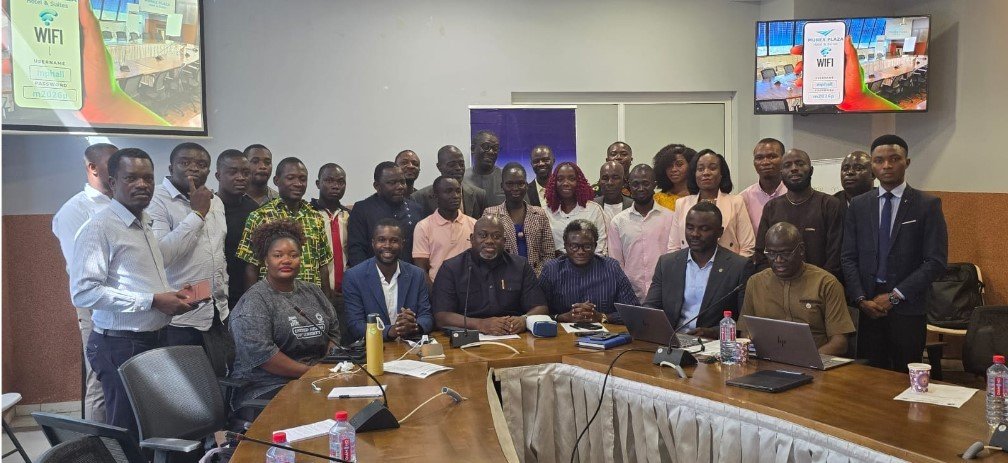
MONROVIA–The Liberia Electricity Regulatory Commission [LERC] on Thursday convened a media engagement workshop aimed at improving public understanding of the country’s electricity sector and strengthening collaboration between the commission and journalists.
The workshop, titled “Tracking the Implementation of Liberia’s Electricity Sector Reforms,” held at MUREX PLAZA brought together media practitioners to discuss regulatory processes, consumer rights, and the commission’s efforts to increase transparency in the sector.
Opening the session, LERC Board Chair, Claude J. Katta said the engagement was intended to create awareness among journalists about how the electricity sector operates and how the commission monitors service delivery, tariffs, and consumer complaints.
“This workshop is intended to create awareness and equip journalists on the electricity sector,” Mr. Katta said. “We look forward to working closely with the media on the work of the commission, including remedies when there are disagreements or unsatisfactory service.”
He highlighted ongoing efforts to make LERC’s processes more accessible, noting that documentation and some services are being moved online.
“We believe in transparency when it comes to documentation,” the Board Chair told participants. “Are you not paying for a website or a register that is online? Our processing can go online. Everything will be discussed today. They are online, but this is our way of testing.”
The commission said digitizing processes would help reduce delays, improve record-keeping, and make it easier for the public to track regulatory decisions and complaints.
He also emphasized that the media plays a critical role in educating the public about electricity service, consumer rights, and responsibilities. Accurate reporting, they said, helps build confidence in the sector and reduces misinformation around service costs, outages, and customer issues.
“The media can continue to assist the commission by accurately reporting and encouraging discussion,” the LERC official said. “When you work together, we can build a reliable and sustainable sector for the benefit of all Liberians.”
LERC reaffirmed its commitment to providing timely and transparent information through the media, and called on journalists to participate actively in the workshop by asking questions and seeking clarification on the commission’s work.
The Commission said it would continue to strengthen engagement with the media as part of broader efforts to reform and expand Liberia’s electricity sector. Officials expressed appreciation to media partners for their support over the years and urged continued collaboration to increase public awareness of electricity services nationwide.
The workshop concluded with a call for balanced and factual reporting to ensure accurate information reaches the public on issues affecting Liberia’s power sector.
Also speaking at the workshop, Press Union of Liberia (PUL) President Julius Kanubah called on journalists to make the energy sector a priority in their reporting, saying public access to electricity depends heavily on informed media coverage and accountability.
Speaking Wednesday at the opening of a one-day training on “Tracking the Implementation of Liberia’s Electricity Regulatory Framework” at MUREX Plaza in Sinkor,
Tge PUL President said the energy sector constitutes a matter of public interest that demands more quality and investigative journalism.
“As many of you know, the PUL is the umbrella organization representing journalists and media institutions in Liberia,” the speaker said.
“Strengthening the capacity of journalists and advancing the welfare of journalists are also core mandate areas of the PUL. This is why every time we are invited to a training program involving journalists, we are always honored and excited to form a part.”
The training was organized by the Liberia Electricity Regulatory Commission [LERC], established in 2015 to regulate the country’s energy sector.
PUL congratulated LERC for convening the session, noting that the commission’s work directly affects the availability, accessibility, affordability, and utility of energy in Liberia.
“The work of the LERC cannot be performed adequately without public information,” the PUL speaker said.
“It is impossible for the LERC to speak with or engage every Liberian citizen and non-Liberian about its work and policy decision making which impacts access to energy. Hence, the role and influence of the media is critical to creating public awareness through information dissemination.”
According to LERC, the training is intended to create awareness and inform journalists about the commission’s operating framework and the current state of the sector.
PUL urged journalists to focus on producing quality stories on energy and to engage in investigative reporting to hold both actors and users of the sector accountable.
“If our daily survival and sustainability depend on access to energy, then we ought as journalists to focus on providing quality information by increasing the quality of stories on the energy sector,” the President said.
PUL expressed confidence that the training would lead to increased reporting on energy issues in the coming days.
The event brought together journalists and media professionals from across the media landscape.
About The Author