Monrovia-Liberia’s Ministry of Agriculture is seeking to attract more than US$300 million in agricultural investments as the government steps up efforts to expand production, improve mechanization, and create new markets for Liberian agricultural products.
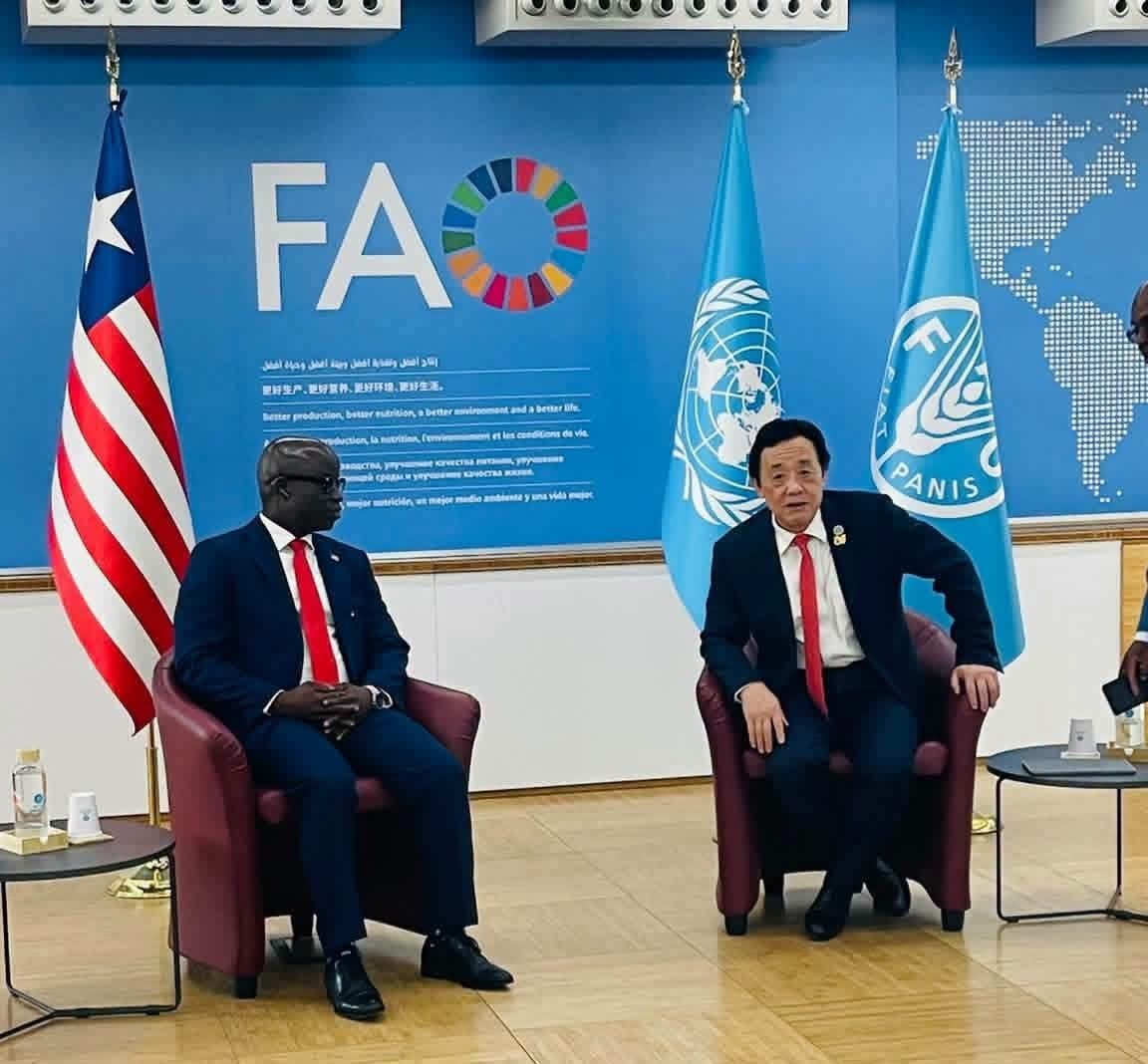
Agriculture Minister Dr. J. Alexander Nuetah made the disclosure during high-level discussions with the Director-General of the Food and Agriculture Organization of the United Nations (FAO), Dr. QU Dongyu, at FAO headquarters in Rome, Italy.
The meeting took place on the sidelines of the 2026 World Food Forum, where Nuetah is leading a high-level Liberian delegation to strengthen partnerships and advance the country’s agricultural development agenda.
According to the Ministry of Agriculture, Liberia plans to showcase an agricultural investment portfolio valued at more than US$300 million on October 14 under FAO’s Hand-in-Hand Initiative.
The initiative is intended to connect countries with potential investors and development partners to support agricultural transformation, increase production, and improve market opportunities.
The proposed investment portfolio is expected to attract private-sector participation in agricultural production, processing, value addition, and other activities across the country’s agricultural value chain.
During the discussions, Nuetah also highlighted efforts to revive Liberia’s coffee industry and expand international markets for Liberica coffee, a variety associated with the country’s agricultural heritage.
The meeting explored opportunities to connect Liberian coffee producers with major European coffee companies, including Illy and Lavazza, while also examining potential market opportunities in China.
Nuetah called for additional FAO support to expand coffee production, improve processing capacity, and establish Liberica coffee as a recognizable brand in international markets.
Expanding coffee production and processing could create opportunities for farmers, traders, and local businesses while increasing the value of agricultural products produced in Liberia.
The government’s approach also seeks to strengthen the connection between local producers and international buyers, allowing Liberian farmers to access broader markets for their products.
Agricultural mechanization was another major issue discussed during the meeting, with Nuetah seeking FAO support for a proposed US$1.5 million South-South Cooperation initiative.
The proposed initiative aims to strengthen mechanization services and improve farmers’ access to agricultural machinery.
According to the Ministry of Agriculture, 13 mechanization hubs have already been established across six counties, while more than 300 pieces of agricultural equipment have been received through cooperation with China.
The government intends to extend mechanization services to the remaining nine counties to increase access to equipment and improve agricultural productivity nationwide.
Mechanization is expected to help farmers reduce the physical demands of farm work, improve efficiency, and increase production.
Nuetah’s discussions with the FAO Director-General also focused on developing local skills to support the expansion of mechanized farming.
Dongyu welcomed the initiative and highlighted opportunities for technical cooperation, including training young Liberians to operate, maintain, and manage agricultural machinery.
Such training could help develop a skilled workforce capable of supporting agricultural operations and maintaining equipment across the country.
For his part, Dongyu expressed support for Liberia’s agricultural investment ambitions and highlighted opportunities to connect the country with international investors and development finance institutions.
The discussions emphasized the importance of partnerships in mobilizing the resources, technology, and expertise needed to strengthen Liberia’s agricultural sector.
The government believes that increased investment, improved farm mechanization, and expanded access to international markets could help create jobs, improve rural livelihoods, and strengthen food security.
The engagement also reflects Liberia’s efforts to attract more private investment while building partnerships with international institutions to support agricultural development.
Through its discussions with FAO, the Ministry of Agriculture is seeking to position the sector as a stronger contributor to economic growth, employment, and national development.
The success of these efforts will depend on the ability to secure the proposed investments, expand mechanization services, strengthen local processing, and establish reliable markets for Liberian agricultural products.
About The Author