
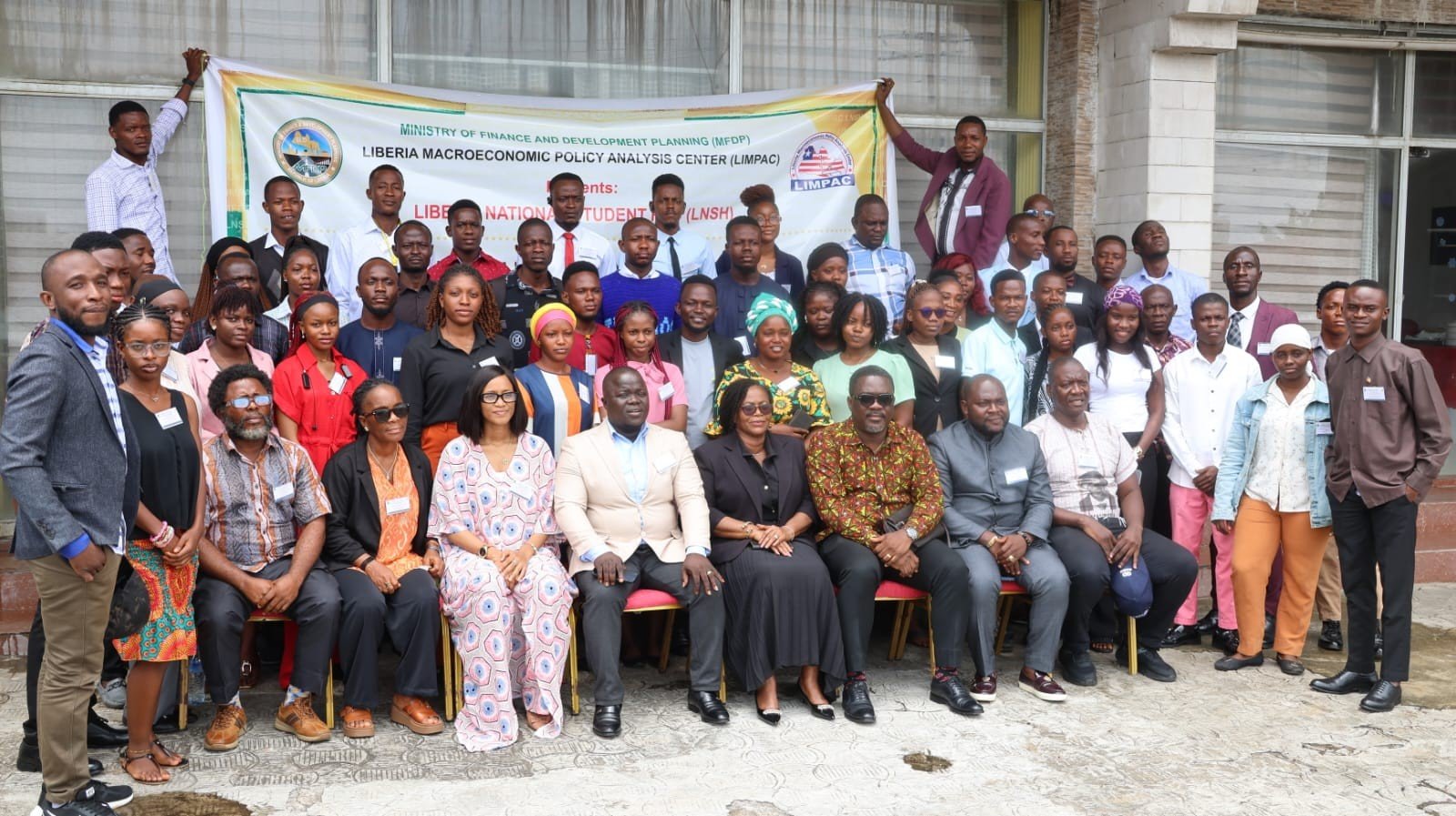
Monrovia-The Liberia Macroeconomic Policy Analysis Center (LIMPAC) of the Ministry of Finance and Development Planning (MFDP) has begun a five-day capacity-building training for students and faculty members from several universities in Monrovia.
The training, which commenced Monday under the theme “Empowering Students for Professional Excellence,” is part of the Liberia National Students Hub, an initiative launched in May to build the capacity of more than 500 students in economic research, macroeconomic analysis and policy leadership.
The initiative was officially launched at the University of Liberia through stakeholder panel discussions that focused on revenue mobilization and youth unemployment.
The latest phase of the program moves from discussions to practical training, with participants expected to gain skills that can be applied to academic research, policy development and professional work.
During the five-day training, participants will receive instruction in research methods using SPSS statistical software, artificial intelligence (AI) for research, policy brief and factsheet development, report writing and effective communication.
Assistant Minister for External Resource and Debt Management at the MFDP, Alice Williams, said the training represents an important step in preparing young Liberians to contribute to national development.
“Today, we are taking the next step, moving from dialogue to capacity building, and from identifying challenges to developing the skills needed to address them,” Williams said during the opening ceremony.
She said the program aims to train 500 college students while establishing a network of young researchers and innovators.
Williams also said the initiative is expected to expand beyond Monrovia and eventually reach all 15 counties, giving more Liberian students access to professional development opportunities.
“Our ambition is to train 500 students and create a network of young researchers and innovators. We envision taking this initiative to all 15 counties, ensuring every Liberian student has access to opportunities for professional development,” she said.
Earlier, LIMPAC Executive Director Dr. P. Padolo Moye emphasized the importance of helping students transform research and data into useful information for policymakers and the public.
He said the challenges facing Liberia and other countries require not only strong research and analysis, but also the ability to communicate findings in ways that can support decision-making.
“The most pressing challenges of our time demand not only rigorous analysis but also the ability to translate that analysis into language that informs decisions, shapes policies, and improves lives,” Moye said.
According to Moye, the training is also intended to help students move away from relying mainly on assumptions or intuition and instead use credible data and research to reach conclusions.
The program will expose participants to statistical tools, emerging technologies and practical communication methods that can help them conduct and present research more effectively.
The second phase of the Liberia National Students Hub forms part of the government’s broader effort to develop young professionals with skills in research, evidence-based policymaking and leadership.
Through the initiative, LIMPAC and the MFDP are seeking to build a network of students who can contribute to national discussions by producing credible research and providing information that can support policy decisions.
The training is expected to continue throughout the five-day period, with participants engaging in practical sessions focused on research, data analysis, policy communication and professional development.
The organizers say the long-term goal is to expand the initiative across Liberia and create more opportunities for students to develop skills that can contribute to the country’s economic and social development.
About The Author