

By Jamesetta D. Williams
The Ministry of Health (MOH) is expanding routine childhood vaccination services beyond traditional clinic hours and into markets and major transportation hubs as part of efforts to close immunization gaps among children in densely populated communities across Montserrado County.
Through the Expanded Programme on Immunization (EPI), the Ministry is preparing to implement the Urban Immunization Strategy (UIS) 2026–2027, which targets communities experiencing low vaccination coverage, high dropout rates and an increasing number of zero-dose and under-immunized children.
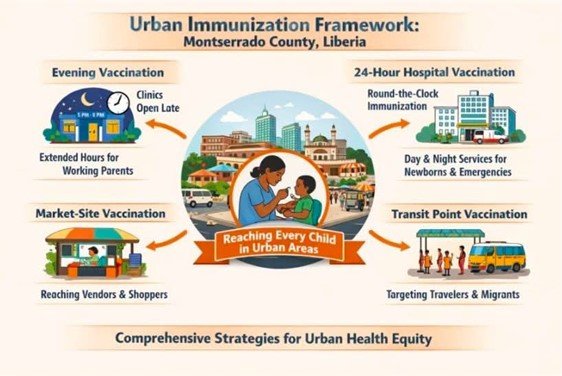
The strategy is designed to make vaccination services more accessible to caregivers who may face difficulties visiting health facilities during regular working hours.
As part of the initiative, selected health facilities will extend vaccination services into the evening, operating from 4:00 p.m. to 9:00 p.m.
The Ministry said the extended hours are intended to accommodate working parents, caregivers and other residents who are unable to access routine immunization services during the day.
In addition to extended clinic hours, vaccination services will be taken closer to communities through outreach activities in markets and major transportation hubs, bringing services to locations where large numbers of people gather daily.
The initial implementation of the Urban Immunization Strategy will focus exclusively on Montserrado County, with the Ministry citing funding limitations as the reason for the county-specific approach.
According to the Ministry, concentrating resources in Montserrado will allow the government and its partners to target communities facing some of the country’s most significant urban immunization challenges.
The initiative comes as health authorities continue efforts to ensure that children receive routine vaccines on schedule and prevent children from being missed by the national immunization program.
The Ministry of Health, through the EPI and its partners, is expected to use the strategy to identify and reach children who have never received a routine vaccine, as well as those who have started but not completed their recommended vaccination schedules.
The expanded approach is expected to improve access to immunization services and contribute to reducing the number of zero-dose and under-immunized children in urban communities.
About The Author