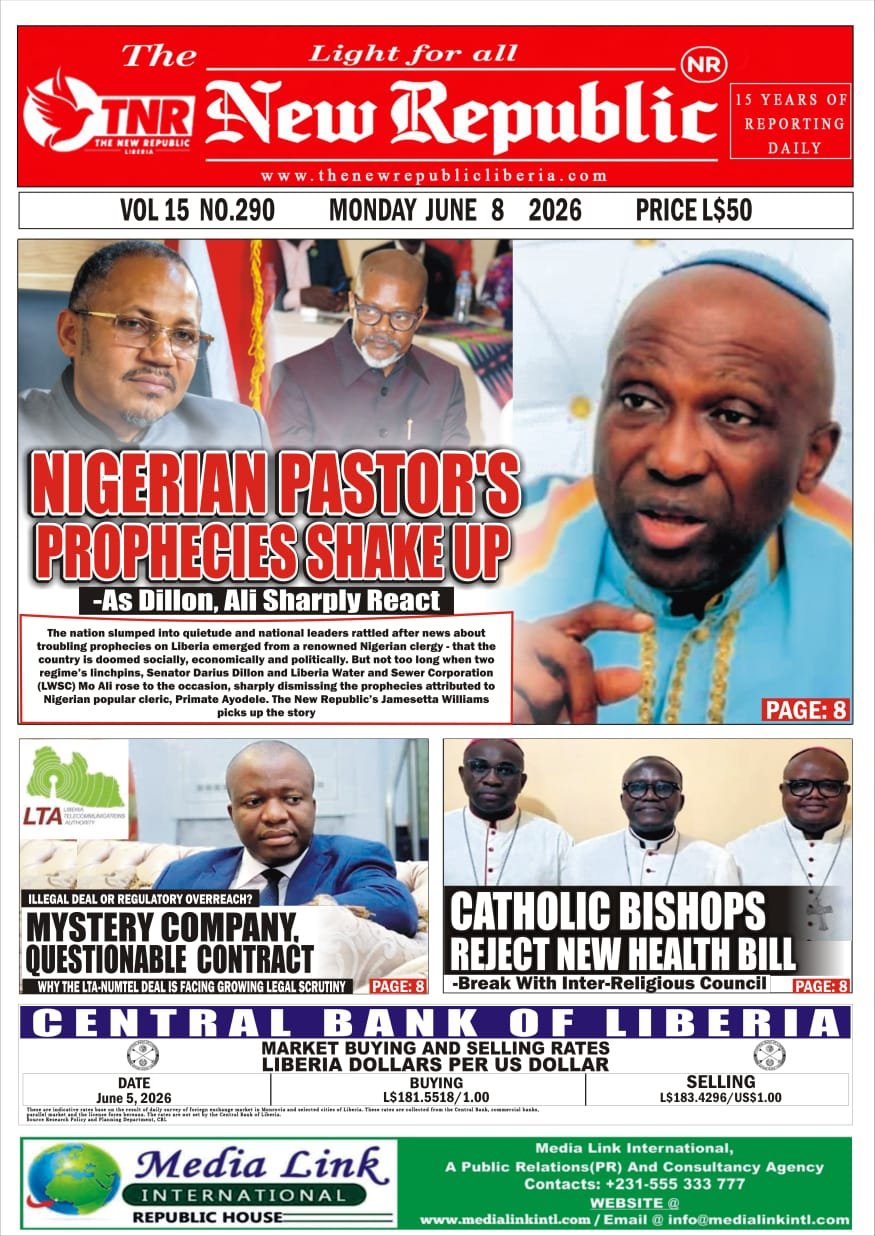
MONROVIA – The nation slumped into quietude and national leaders rattled after news about troubling prophecies on Liberia emerged from a renowned Nigerian clergy – that the country is doomed socially, economically and politically. But not too long when two regime’s linchpins, Senator Darius Dillon and Liberia Water and Sewer Corporation (LWSC) Mo Ali rose to the occasion, sharply dismissing the prophecies attributed to Nigerian popular cleric, Primate Ayodele. The New Republic’s Jamesetta Williams picks up the story
By Jamesetta D Williams
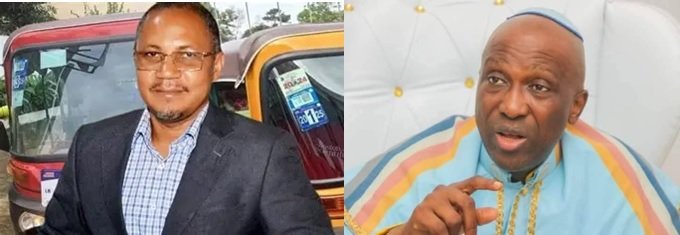
The ruling Unity Party appears to be shaken by stunning prophecies revealed by a renowned Nigerian preacher, Primate Ayodele, head of the INRI Evangelical Spiritual Church based in Lagos, Nigeria.
Hours after the highly-viral video, two proponents of the government, Senator Darius Dillon and Mo Ali reacted very poignantly to the prophecies about the state of Liberia in months and years to come.
Without waiting for the manifestations of the prophecies – if they will come to pass or not – the two UP proponents did not hide their indignation and oppugnation in the way that left many Liberians wondering if those prophecies are fake and false, without any iota of veracity.
It can be recalled that Primate Ayodele, who heads the INRI Evangelical Spiritual Church in Lagos, Nigeria, recently declared that Liberia would face growing confusion, economic challenges, and a potential crisis extending through 2029.
Commenting on Liberia’s current political and economic situation, the cleric said “Liberia, your President is confused, the economy of the country is confused, and everything about the country is confused. Confusion from now to 2029. Liberia is going to face crisis. Liberia is going to be hot next year.”
The prophecy has generated significant debate across social media and political circles in Liberia, drawing reactions from both supporters and critics.
Reacting to the prophecies, Senator and Ali strongly criticized Nigerian preacher following his latest prophecy predicting instability and economic hardship for Liberia.
Senator Dillon particularly questioned the credibility and motives behind the Nigerian pastor’s repeated predictions concerning Liberia.
Writing on social media, Dillon said he had initially paid attention to the cleric’s forecasts but became less concerned after reviewing several of the pastor’s previous predictions regarding Liberia, including those made during the 2023 presidential elections.
According to him, many of those predictions failed to materialize.
The senator further alleged that the preacher appears to have close ties with former President , suggesting that his prophecies may be influenced by personal and political preferences.
“From all the videos and photos I have seen about that ‘Man of God,’ it is clear he loves former President Weah. They are good friends and political partners,” Dillon wrote.
He added that the cleric’s apparent dislike for President raises questions about the objectivity of his pronouncements regarding Liberia’s future.
Referencing scripture, Dillon argued that prophecies not inspired by God would ultimately prove meaningless, stating that words spoken falsely in God’s name amount to “so so breeze.”
For his part, Mo Ali dismissed the pastor’s prediction in stronger terms, describing the Nigerian cleric as a “zogo”—a local term often used to refer to individuals perceived as unreliable or lacking credibility.
“Here is the Nigerian zogo pretending to be a pastor,” Ali wrote, rejecting the prophecy outright.
The exchange highlights the growing skepticism among some Liberian political figures regarding foreign religious predictions about the country’s political future.
While prophetic declarations often attract public attention, critics argue that such pronouncements should be measured against their accuracy and track record.
As debate continues, supporters of the Boakai administration maintain that Liberia’s future will be shaped by governance, policy implementation, and the collective efforts of its citizens rather than prophetic forecasts.
About The Author