
Monrovia-Liberian economist Samuel Jackson is not the person he had been since the death of his wife early this year – a situation that has eventually landed in the hands of the court.
Jackson, a critic of the government, is facing charges of manslaughter in connection to his alleged role in the uncharacteristic passing of his South African wife.
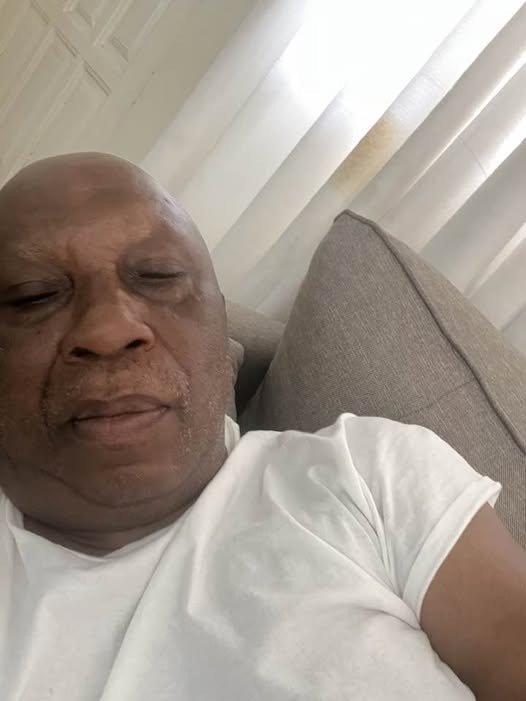
But in addition to the court charges for which he is barred from leaving the country, his health condition is said to be appalling and needing urgent medical attention. Such medical attention is said to be manageable only outside the country, as the situation is said to be above Liberian hospitals and doctors.
Tons of appeals on his behalf have since been pouring from all over the place, including ordinary Liberians and stakeholders, but the government remains adamant, seen as unprepared to grant him the required medical reprieve.
Amid the situation of his health status, Jackson is not keeping cool or silent, sharply reacting to everything he deems unworthy and unpleasant of his person and contributions to nation and humanity, mainly the death of his wife.
What he is trying to achieve remains a conjecture, but he is consistently flooding social media with tantalizing, bemoaning and memorable posts of his knowledge, connections, national service, among others. These socalled historical accounts are yet to be substantiated or discounted by others who may have knowledge of some of the events.
He has spoken of his role in the civil war, connection to former President Charles Taylor, now jailed in Great Britain, and the latest being revered constitutional lawyer Cllr. Pearl Brown Bull.
According to him, he provided protection for her following the 1980 Coup.
“Far from superficiality, Varfley, I was one of those that protected many of the aristocratic ‘Congau people’ in the aftermath of the coup, in 1980, with veteran old lawyer ‘Pearl Brown Bull and Richard Tolbert’ as no exception,” says Samuel Jackson.
“I am not a Congau man nor was I beneficiary of their exploits in bad governance. I hailed from a Bassa family as the only child. I don’t have no brother or sister, but had to accept that loneliness up to now. So I have always had the spirit and fortitude of helping people and struggling for perfection in all aspects of my life.”
In an apparent reaction to a commenter or poster, he unraveled his role in allegedly saving the life of renowned constitutional lawyer, Cllr. Pearl Brown Bull.
“Coming to the story, Varfley, when the coup took place, Cllr. Brown who is older than me, was a charming beautiful lady and powerful lawyer. I saw her being harassed and susceptible to arrest, rape or death, which led to my swift intervention. Although, not a military man, but as a ‘Progressive’, with the leveraging power, I helped save her life, something she talks about all the times. It was a manifestation of our courage and determination to infuse sanity in governance,” he wrote on social media.
“In fact, my house in Airfield Shortcut at the time became a fortress in housing and hiding ‘Congau people’ who were being sought after by the Doe men. Hon. ‘Richard Tolbert’ can relate as one of those that I rescued from the transgressions of the overzealous Doe forces. Men, women and children were fed and kept in secret places as tension went down while others escaped to other countries. Unlike the demonization, I am a believer in God and he is my protector.”
By divulging the information, he said it is not form of bragging, adding “I loved my wife even in death.”
According to him, he and his wife had good times together from the time he married her up to now in the freezer.
He further said: “I am not rich, but self-sufficient and financially disciplined in being able to care for myself as a product of banking, finance and management from some of the best schools in America and London.”
“Again, ‘I have a heart of camel in enduring hardship and helping people with the Brown episode as a historical case in point’,” says Samuel Jackson.
These information are for historical purposes from a man who is a cancer patient susceptible to death. He is telling things that may not be said in death which is inevitable.
For his supporters, the posts are not just nostalgia. They are a plea – that a man who says he once risked his life to save others in 1980 should not be left to die without mercy in 2026, while awaiting trial.
For the state, the case remains before the court, and travel is restricted until the law takes its course.
Between those two positions – justice and mercy – Samuel Jackson waits, flipping pages of memories, and appealing for a chance to seek treatment before it is too late.
About The Author