By Jamesetta D Williams
Political rhetoric between the ruling Unity Party (UP) and officials aligned with the opposition Coalition for Democratic Change (CDC) has intensified following a series of public statements from key political actors reflecting deepening partisan divisions ahead of future elections.
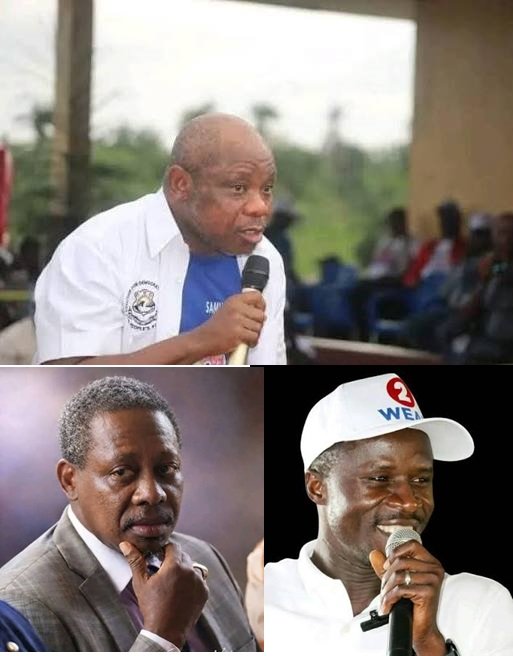
Sekou Kalasco Damaro, aide to former President George Weah, sharply criticized what he described as deceptive political practices, warning that such actions cannot sustain national governance.
Quoting a popular saying, Damaro stated: “The breeze that disgraces the chicken comes from behind,” adding that while elections may be won through deception, governing a country requires truth and accountability.
He cautioned that “sooner or later, the truth emerges,” describing the current political climate as a reflection of that reality.
In a separate remark, former Finance and Development Planning Minister Samuel D. Tweah Jr., speaking from the southeastern region of Liberia, suggested that ongoing government projects being commissioned by the Unity Party administration are being credited unfairly.
Tweah argued that the current administration is “cutting the ribbon on what we worked for,” insisting that the achievements belong to the CDC government. He further added politically charged remarks indicating confidence in the return of former President George Weah to power.
Meanwhile, CDC-aligned former Representative Moses Acarus Gray also weighed in, accusing the ruling Unity Party of political anxiety over the opposition’s mobilization capacity.
Gray claimed that the CDC has demonstrated strong grassroots support despite being out of power, stating that the party can mobilize its base “instantaneously” even without its presidential flag bearer. He further asserted confidence that the CDC would secure an outright victory in the 2029 elections.
“The hard fact: UP is jittery because the Mighty CDC has demonstrated that even in the absence of its flag bearer it can mobilize its base instantly,” Gray said, predicting what he described as a first-round victory for the opposition in 2029.
The exchange of statements underscores growing political tension between Liberia’s major political actors, as competing narratives over governance achievements, political legitimacy, and future electoral prospects continue to dominate public discourse.
Observers note that such exchanges reflect a broader struggle for political influence as parties reposition themselves ahead of upcoming national political contests.
About The Author