By Stephanie M. Duncan
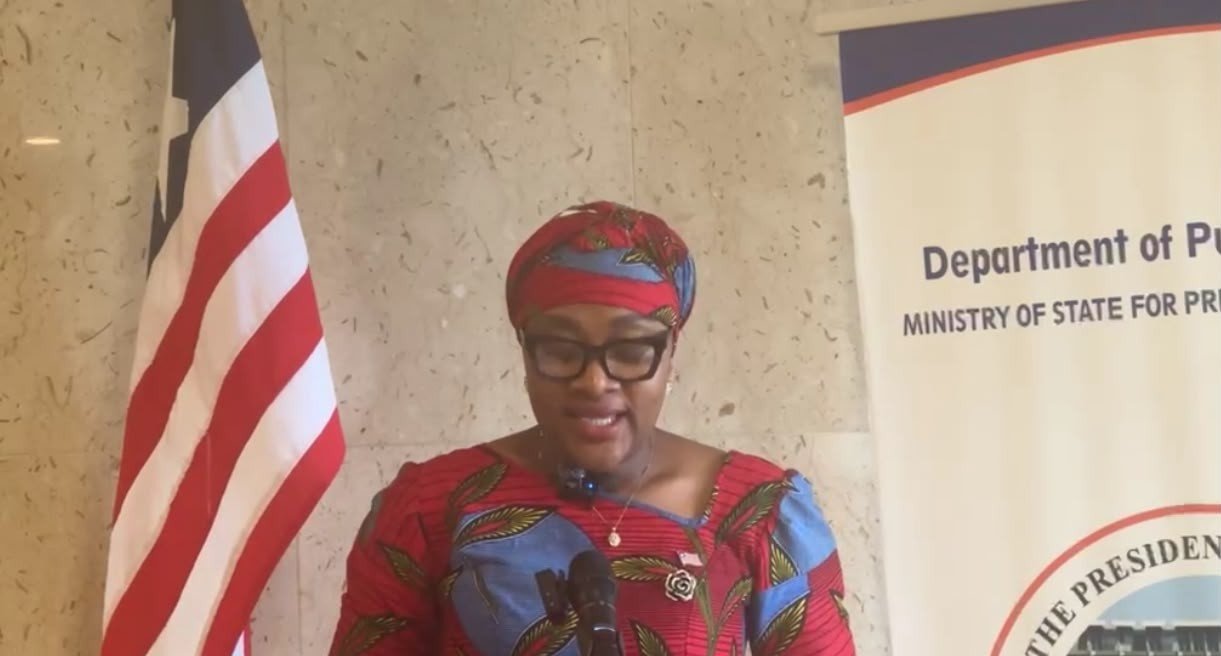
Presidential Press Secretary Atty. Kula Fofana has defended President Joseph Nyuma Boakai’s decision to reassign the leadership of the Ministry of Justice, saying the move falls squarely within the President’s constitutional authority.
Atty. Fofana said the President has the power to appoint, remove, dismiss, reassign or realign members of his administration at any point during his presidency.
She explained that presidential appointees serve at the will and pleasure of the President, who may retain them in office, relieve them of their duties or assign them to other responsibilities as he deems appropriate.
According to the Presidential Press Secretary, the decision to change the leadership at the Ministry of Justice, particularly the positions of Minister of Justice and Solicitor General, is intended to bring in a new team.
“The fact that you are appointed by the President means that you serve at his will and pleasure,” Atty. Fofana said, stressing that the President is constitutionally authorized to determine who serves in his administration.
She said the outgoing leadership has been given a one-week transition period to ensure a smooth handover to the incoming team.
Atty. Fofana explained that during the transition period, the current Minister of Justice remains in office and continues to handle legal matters involving the government until the one-week period expires.
She said the transition is particularly important given the number of ongoing court cases and other matters concerning the rule of law.
The outgoing officials are expected to prepare turnover notes and reports and assist the incoming team in becoming familiar with the operations of the Ministry of Justice.
Atty. Fofana also provided an explanation of the constitutional process for filling positions that require confirmation by the Liberian Senate.
She said the process generally involves nomination, Senate confirmation, appointment and commissioning.
According to her, after the President nominates an individual, the nomination is transmitted to the Senate, where the nominee undergoes a confirmation process. Once confirmed, the Senate communicates its decision to the President, who formally appoints the individual.
The newly appointed official is subsequently commissioned, completing the process for assuming the position.
She further explained that when the Legislature is in recess, the President may make a recess appointment to ensure continuity in government until the Legislature returns and the required confirmation process can take place.
Atty. Fofana said the one-week transition at the Justice Ministry is therefore designed to provide continuity while the new leadership prepares to assume its responsibilities.
She clarified that during the transition, official correspondence intended for the Minister of Justice should continue to be addressed to the current minister. After the transition period, correspondence should be directed to the designated Acting Minister of Justice, Counselor Bettie Lamin Blama.
About The Author