MONROVIA–The Independent Information Commission (IIC), in partnership with the Center for Transparency and Accountability in Liberia (CENTAL), intensifies efforts to promote compliance with the country’s Freedom of Information Act of 2010.
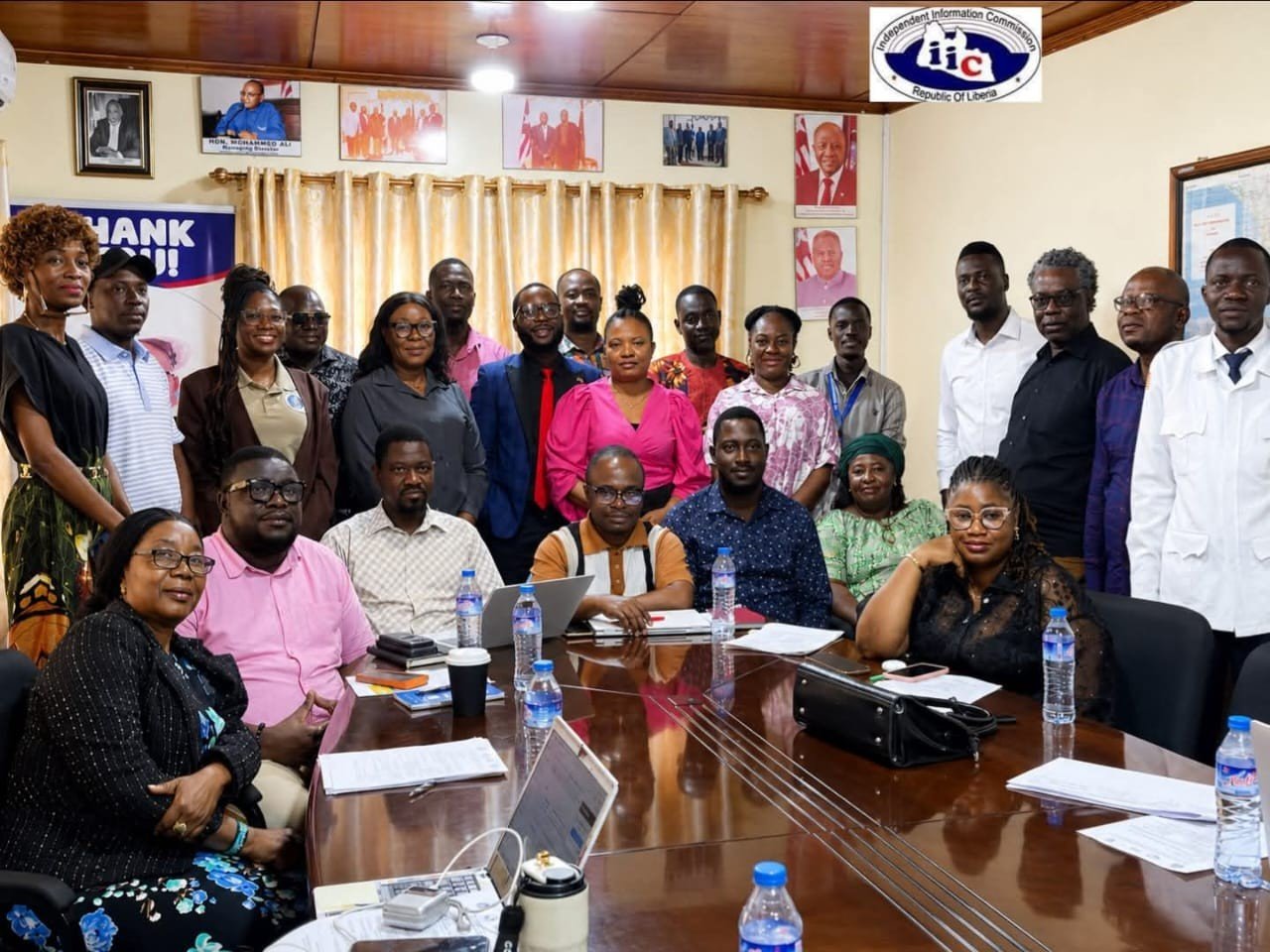
The latest phase of the initiative, conducted from August 11 to September 2, 2026, brought awareness, compliance, integrity-building and anti-corruption engagements to key public institutions, including the National Identification Registry (NIR), Liberia Institute of Statistics and Geo-Information Services (LISGIS), Liberia Agency for Community Empowerment (LACE) and Liberia Water and Sewer Corporation (LWSC).
The initiative is designed to move public institutions beyond simply knowing the Freedom of Information Law toward putting its provisions into practical use, strengthening citizens’ access to government-held information and improving public confidence in state institutions.
Hon. Lorpu P. Page, Executive Director and Head of Secretariat of the IIC, stressed that compliance with the Freedom of Information Act must become an institutional responsibility rather than a task assigned to a single officer or department.
She urged participating institutions to use the engagements to strengthen internal systems, improve service delivery and promote a culture of openness, noting that effective access to information can help build stronger relationships between government and citizens.
Acting Outreach Director of the IIC, Mr. Jutomue Doetein, provided participants with a detailed overview of Liberia’s legal framework on freedom of information, including the Commission’s mandate, the principles of the FOI Act, procedures for requesting information and the lawful exemptions under which information may be withheld.
He emphasized that citizens do not need to demonstrate a personal interest or provide reasons for requesting public information.
He also explained that searching for and providing information is free, while reasonable reproduction costs may be charged to requesters.
The compliance component was led by Mr. Armah Boimah Johnson, Acting Compliance Director of the IIC, who outlined the practical responsibilities of public institutions under the FOI Law.
His presentation focused on the appointment and effective operation of Public Information Officers (PIOs), Internal Information Request Review Bodies (IIRRBs), proactive disclosure, records management, FOI request handling and annual reporting.
Johnson encouraged government institutions to make important information available proactively instead of waiting for citizens to submit individual requests.
Such information, he said, should include enabling laws, policies, strategic plans, budgets, procurement contracts, expenditure reports, annual reports and procedures and costs for public services.
According to the IIC, proactive disclosure can reduce barriers to information, promote transparency and give citizens, journalists, civil society organizations and other stakeholders greater opportunities to monitor public spending, government decisions and institutional performance.
The anti-corruption component was delivered by CENTAL Program Officer Mr. Siafa S. Kamara, who addressed participants on stakeholder roles and responsibilities in combating corruption.
The discussion examined corruption risks in procurement, employment, financial management, asset management and administration, while highlighting practices such as bribery, favoritism, conflicts of interest, kickbacks, extortion, illicit enrichment and bid rigging.
IIC and CENTAL underscored that freedom of information and anti-corruption efforts are closely connected. Greater access to public records can enable citizens and oversight actors to examine government expenditures, contracts, policies and decisions, thereby helping expose risks and strengthen accountability.
The engagements also placed strong emphasis on records management, with institutions encouraged to maintain organized records, FOI request registers and systems capable of supporting timely responses and annual reporting.
Officials from the participating institutions welcomed the initiative and expressed their commitment to improving compliance with the Freedom of Information Act.
The current campaign builds on previous IIC engagements with numerous public institutions, including the National Transit Authority, NASSCORP, LIPO, Bureau of State Enterprises, Ministry of Public Works, Civil Service Agency, Ministry of Labor.
Ministry of Commerce, Ministry of Education, Ministry of Agriculture, Internal Audit Agency, Liberia Petroleum Refining Company, National Fisheries and Aquaculture Authority, National Port Authority, National Investment Commission, Liberia National Fire Service, Liberia Revenue Authority and Liberia National Police, among others.
The IIC says the broader objective is to establish functional information-access systems across government, including qualified Public Information Officers, effective Internal Review Bodies, proactive disclosure mechanisms, improved records management, FOI request registers and timely reporting.
The Commission is scheduled to continue the compliance campaign with the Liberia Immigration Service on September 8, the Liberia Electricity Corporation on September 9 and the Food Authority of Liberia on September 10, 2026.
Through its partnership with CENTAL, the IIC is positioning access to information as an important pillar of transparency, accountability, integrity and good governance, with the ultimate goal of making Liberia’s legal right to information more practical, accessible and meaningful to citizens.
About The Author