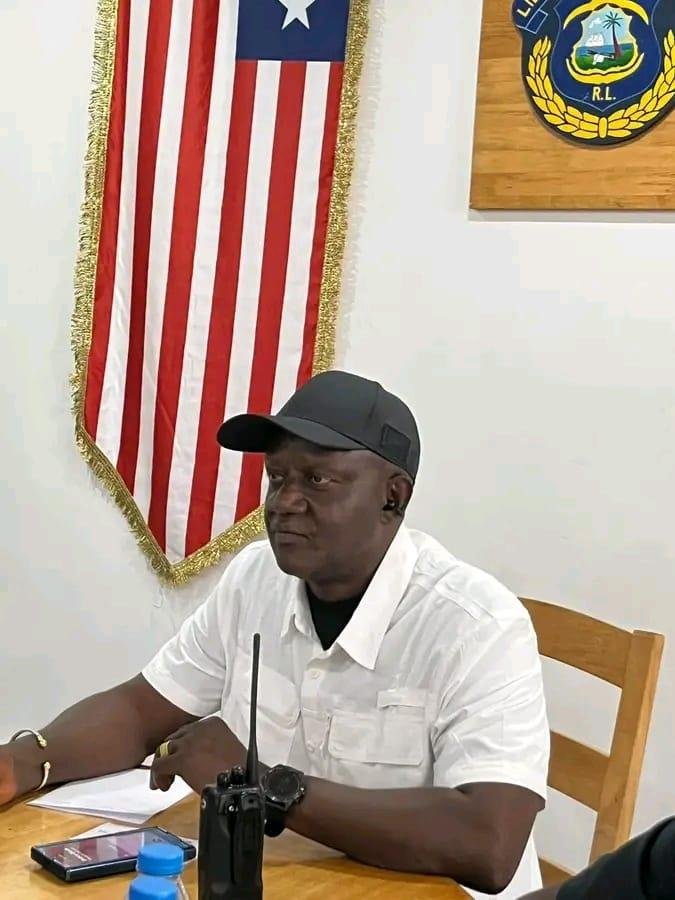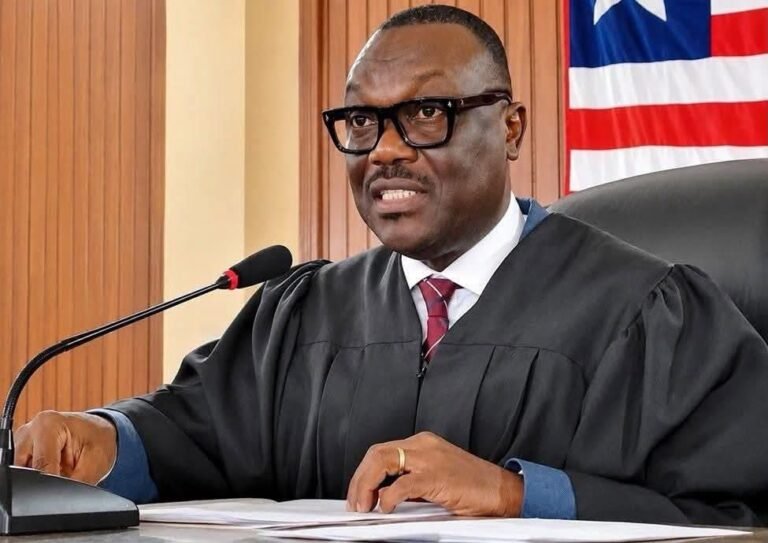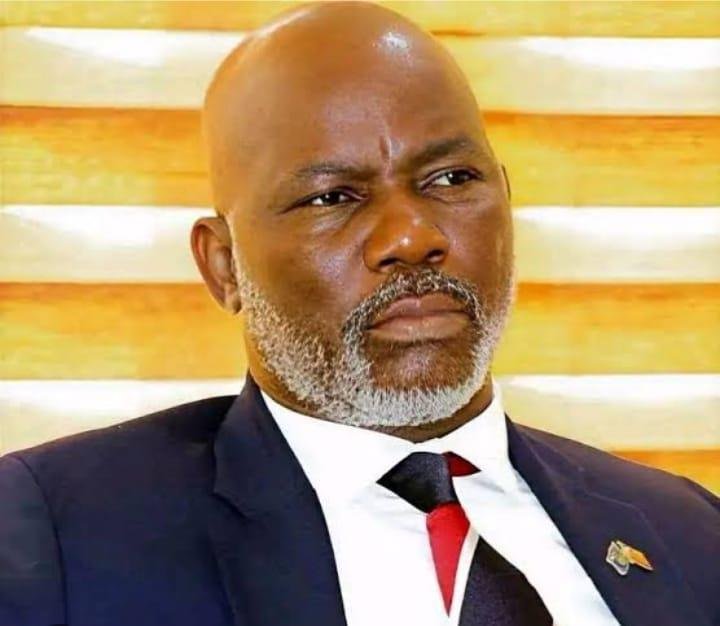

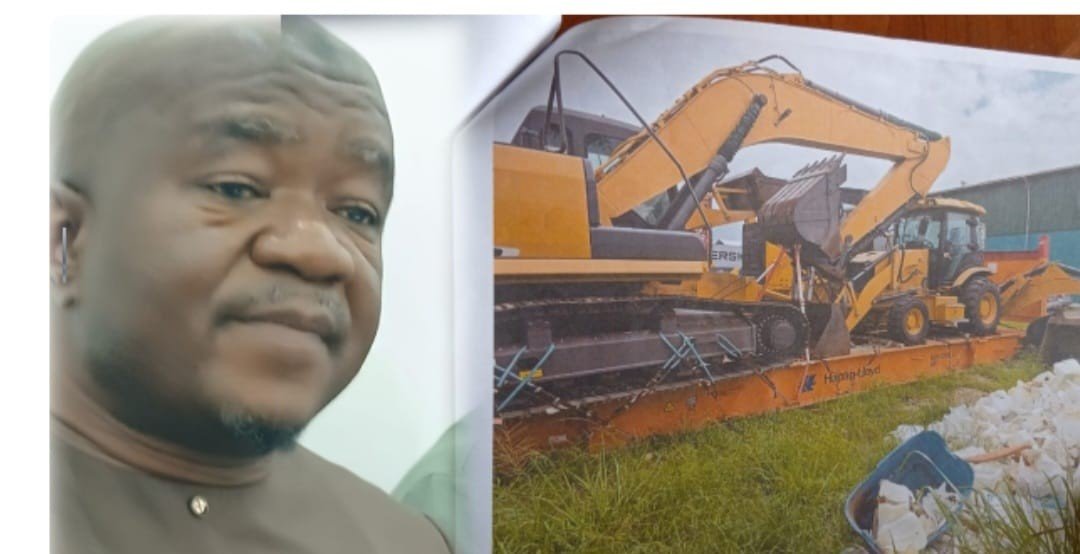
Defendant Omaru Sheriff
By Benjamin Q Z Johnson
Monrovia-The legal battle surrounding the controversial procurement of earth-moving equipment for Gbarpolu County has taken a new turn, with Omaru Sheriff, General Manager of City Lion Incorporated, seeking to extricate himself personally from a corruption indictment that has placed him alongside current and former county officials.
But Sheriffs’s attempt to distance himself from the criminal proceedings is facing stiff resistance from the Liberia Anti-Corruption Commission, LACC, which argued that his position as head of the company does not shield him from individual criminal responsibility for transactions prosecutors allege facilitated the loss of government revenue and the misuse of public resources.
The dispute unfolded Monday, November 23, at the 16th Judicial Circuit Court in Gbarpolu County, where Sheriffs’s legal team presented a motion seeking to have his name dropped from the amended indictment in his individual capacity, while allowing City Lion Incorporated to remain as a corporate defendant.
The motion, filed on November 20, rests principally on the argument that City Lion is a legally incorporated entity with a personality separate from its management and that Sheriff cannot automatically be held personally liable for obligations or alleged contractual breaches attributed to the company.
However, the prosecution, represented by Cllr. Jimmy Saah Bombo of the Central Law Offices associating with the LACC, on Monday, objected to the motion, questioning both the legal foundation of the motion and the attempt to revisit an issue the court had previously decided.
The confrontation has placed Sheriff at the center of a broader accountability question, as to whether the alleged irregularities surrounding the procurement, importation, clearance and delivery of the Gbarpolu County machines can be treated merely as corporate contractual failures or whether individual decisions by those involved warrant criminal prosecution.
The Corporate Shield: Sheriffs’s Attempt To Seperate Himself From.City Lion
In his motion, Sheriff argued that City Lion Incorporated is the contracting party in the transactions under investigation and should therefore bear responsibility for any alleged contractual violations attributed to the company.
According to the filing, paragraph nine of the amended indictment alleged that on October 30, 2023, Gbarpolu County entered into three separate sales contracts with City Lion, represented by Sheriff, for the procurement and supply of one bulldozer, one excavator and one motor grader equipped with a ripper.
The motion further cites paragraph 11 of the indictment, which identifies three payments totaling LRD80,750,000 made to City Lion for the equipment.
Sheriff argued that the payments were made to the corporation rather than to him personally and that the amended indictment itself acknowledged the existence of the machinery at the Freeport of Monrovia following information supplied by the vendor.
His lawyer, Cllr. T. Sensee Sewah contend that the prosecution has not sufficiently distinguished between alleged corporate contractual defaults and criminal conduct personally attributable to his client.
To support that position, the defense invokes Section 2.5 of Liberia’s Associations Law, which addresses the separate legal personality of incorporated entities and their capacity to sue and be sued in their own names.
The defense also relied on Section 14.3 of the Criminal Procedure Law, arguing that an indictment must contain a clear and definite statement of the essential facts constituting the alleged offenses.
Citing John K. Perkins v. Republic of Liberia, 23 LLR 352 (1974), the defense maintains that simply identifying Sheriff as a corporate officer and associating him with the transaction does not establish the individual criminal responsibility alleged by the prosecution.
The motion therefore requested the court to remove Sheriff from the amended indictment as an individual defendant, without terminating the prosecution against City Lion Incorporated.
But the argument has encountered a fundamental objection from the state.
LACC Says Sheriff Cannot Use City Lion To Escape Personal Liability
Cllr.Jimmy Saah Bombo, representig the LACC, rejected the defense’s attempt to have Sheriff removed, arguing that the legal grounds being advanced are insufficient to reopen an issue already addressed by the court.
The LACC lawyer argued that the doctrine of res judicata and collateral estoppel cannot be invoked to secure a different outcome through a repeated application after the court had previously ruled against Sheriffs’s attempt to be dropped from the proceedings.
According to Bombo, the court had already considered a similar motion involving Sheriff and rejected it.
He argued that entertaining another application seeking substantially the same relief would put the court in the position of contradicting its earlier decision.
The prosecution also challenged the defense’s reliance on misjoinder, arguing that the doctrine, as presented by the defense, is applicable to civil proceedings and cannot be used in the manner proposed to remove an accused person from a criminal indictment.
More significantly, Bombo argued that City Lion’s separate incorporation does not extinguish the possibility of individual criminal liability for actions allegedly undertaken by its General Manager.
The prosecution’s position is that the allegations against Sheriff go beyond his mere designation as a corporate officer.
Bombo specifically raised the issue of an alleged US$6,400 payment involving Sheriff and Gbarpolu County Superintendent Sam K. Zinnah.
According to the LACC lawyer, it was not City Lion Incorporated that allegedly handed the money to the Superintendent, but Sheriff personally.
He argued that the payment was allegedly made in connection with the inclusion of two additional earth-moving machines beyond the three machines covered by the government’s duty-free arrangement.
Bombo maintained that tax evasion cannot simply be attributed to a corporation in circumstances where an individual allegedly undertook the relevant transaction and facilitated the avoidance of government revenue.
The prosecution’s argument is that the alleged payment, if established, could expose Sheriff to individual criminal liability beyond whatever contractual obligations City Lion may have had.
The Yellow Machines controversy raised another important question about the procurement arrangement. The apparent difference between the five machines reportedly expected and the three machines specifically covered by the October 30, 2023 contracts.
The amended indictment identified three machines under the sales agreements between Gbarpolu County and City Lion, a bulldozer, an excavator and a motor grader with ripper.
However, the controversy has also involved references to five earth-moving machines, with Superintendent Zinnah maintaining that only three were procured under the county’s arrangement so far.
That distinction is important because the LACC’s allegations concerning the additional two machines appear to involve a separate dispute over customs duties, tax exemptions, and the alleged handling of public money.
The documents submitted by Superintendent Zinnah to the LACC provide a more detailed account of how the machines reportedly became entangled in port charges, customs clearance, and an auction process at the Freeport of Monrovia.
According to the Superintendent’s submission, the three machines procured for Gbarpolu County arrived at the Freeport of Monrovia on May 6 and May 23, 2024.
The submission alleged, that City Lion failed to clear the equipment within the required period, resulting in the machines remaining at the port for more than 90 days and eventually being declared abandoned.
The machines were subsequently moved into an auction process, with the National Port Authority reportedly issuing a public auction notice on October 22, 2024.
In a letter dated October 5, 2024, City Lion reportedly informed the county that the NPA had agreed to release the three machines in the county’s favor.
The Superintendent’s account further stated that Gbarpolu County eventually took possession of the three machines after they were offloaded and assembled at the port.
But, the clearance process has become one of the most contentious aspects of the investigation.
The US$6,400 Question
Who Paid, Who Received And Why?
One of the most consequential allegations emerging from the court proceedings concerns US$6,400 reportedly paid in connection with the handling and clearance of the machines.
In his submission to the LACC, Superintendent Zinnah said Brown’s Trucking Handling Services Enterprise was engaged to offload, assemble, and load the machines onto transport vehicles at a cost of US$7,500.
The Superintendent’s account alleged that City Lion paid US$6,400 in two installments, US$2,500 to Randall Clarence and US$3,900 to Lucia Massaquoi.
However, the submission said the company failed to pay the full amount, leaving a balance of US$1,100, which Zinnah claimed he personally paid to the service provider.
The account also contains a more serious allegation concerning the handling of the additional two machines.
However, Bombo told the court that the LACC considers the alleged US$6,400 payment to the Superintendent, a critical component of its case against Sheriff.
According to the prosecution, the additional two machines were not covered by the duty-free privileges granted for the three machines intended for Gbarpolu County.
The LACC alleged that the money was paid directly to the Superintendent rather than to the Liberia Revenue Authority, LRA, thereby facilitating the alleged avoidance of legitimate government taxes.
The prosecution further contended that the alleged arrangement could constitute a deliberate attempt to deprive government of revenue while facilitating other alleged offenses under the indictment.
The distinction is critical, the prosecution is not merely questioning whether City Lion delivered equipment under its contract. It is also, examining whether individuals involved in the transactions allegedly facilitated the movement or clearance of machinery outside the approved tax-exemption arrangement.
If established, the allegation could weaken Sheriffs’s argument that his involvement was limited to acting as a representative of a corporate entity.
However, the prosecution must still establish the alleged payment, its purpose, the identity of the recipient, and the applicable tax obligations through admissible evidence.
The Superintendent’s submission also raised questions about the duty-free documentation used in connection with the machinery.
According to Zinnah, an approved duty-free letter from the Ministry of Internal Affairs contained information that City Lion allegedly knew was inaccurate, including the inclusion of two additional machines on the bill of lading.
The submission alleged that the additional machinery was included in documentation in a manner intended to deprive the government of legitimate tax revenue.
It further questions how City Lion could subsequently claim to have paid customs duties when the relevant documents allegedly showed that the machines had benefited from a duty-free arrangement.
The documents also reference communications involving City Lion’s clearing broker, Amadu S. Mulbah, who reportedly complained about aspects of the clearance process.
In a November 22, 2024 communication, Mulbah reportedly raised concerns about the handling of the machines and the county’s involvement in the clearance process.
The Superintendent’s account alleged that the broker’s complaints presented inconsistencies with City Lion’s subsequent position concerning the transactions.
These issues now place the LRA, the Ministry of Internal Affairs, the National Port Authority, the county administration and City Lion’s representatives under scrutiny.
The central concern is whether the duty-free privileges were properly obtained and applied, whether additional machinery was improperly included, and who authorized or benefited from any alleged irregularities.
A Wider Corruption Case Involving Current And Former County Officials
Sheriff is not the only person facing prosecution in the matter.
The amended indictment names six defendants, including:
Sam K. Zinnah, Current Superintendent of Gbarpolu County, Omaru Sheriff, General Manager of City Lion Incorporated, J. Keyah Saah, Former Superintendent of Gbarpolu County, Anthony Yorkor, Former Fiscal Superintendent, Robert Benda, Former Chairperson of the Gbarpolu Project Management Committee and
City Lion Incorporated, Corporate defendant.
The defendants face allegations including economic sabotage, involving alleged fraud against the Internal Revenue of Liberia, misuse of public money, property or records, theft or illegal disbursement and expenditure of public money, illegal compensation for assistance in government matters, theft of property, criminal facilitation, criminal conspiracy, violations of the Public Procurement and Concessions Commission, PPCC and Public Financial Management, PFM laws, criminal solicitation and tax evasion.
The breadth of the charges suggests that the LACC’s investigation extends beyond the physical procurement of machinery to the financial and administrative decisions surrounding the transaction.
It also raised questions about the respective responsibilities of the county administration, its procurement and financial management structures, the former county leadership, and the private company engaged to supply the equipment.
The prosecution will ultimately have to establish the individual roles of the defendants rather than rely solely on their official positions or association with the transaction.
Following arguments from both sides, Judge Zuballah A. Kizeku of the Sixteenth Judicial Circuit Court reserved ruling on Sheriffs’s motion.
The court is expected to rule on Wednesday, November 26, according to the proceedings reported Monday.
The decision could determine whether Sheriff remains personally exposed to the criminal charges alongside City Lion Incorporated or whether the prosecution will be required to proceed against him on a different legal footing.
But even if the court grants the motion, the big questions surrounding the alleged US$6,400 transaction, the duty-free documentation, and the handling of the machinery would not automatically disappear.
The prosecution has maintained that the allegations against Sheriff involve conduct allegedly undertaken in his individual capacity, making his personal participation a central issue in the case.
For Gbarpolu County residents, however, the dispute goes beyond whether one businessman can be separated from a criminal indictment.
It concerns the procurement and management of public assets, the protection of government revenue, and whether public officials and private contractors can be held accountable when public procurement arrangements are alleged to have been compromised.
The Yellow Machines saga now presents a test of both corporate accountability and individual criminal responsibility.
For Sheriff and City Lion, the courtroom battle is increasingly about whether the company’s separate legal personality can protect its General Manager from personal prosecution.
For the LACC, the challenge is to prove that the alleged transactions were not simply corporate or administrative failures, but criminal acts involving identifiable individuals.
And for the people of Gbarpolu, the fundamental concern remained, what exactly was procured, what was paid, what was delivered, and who should ultimately be held accountable.
About The Author