
By Benjamin Q. Z. Johnson
Monrovia-Senate Pro-Tempore Nyonblee Karngar-Lawrence has called on women across Liberia’s political parties to embrace unity, collaboration, and collective leadership, declaring that the success of one woman in politics should be celebrated as a victory for all women.
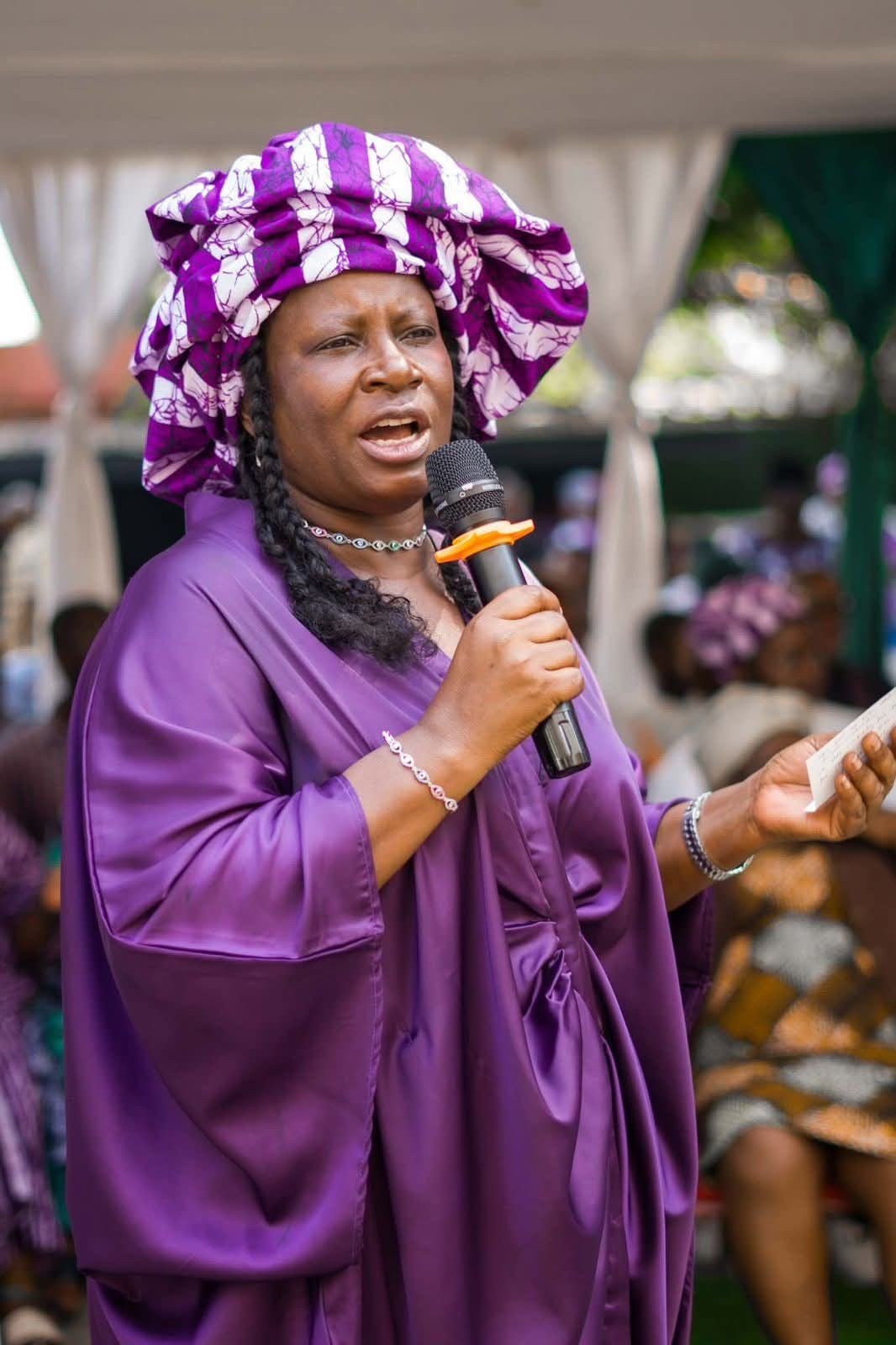
Speaking recently at the Fourth General Convention and Elections of the Coalition of Political Parties of Women in Liberia (COPPWIL), convened by Sister Aid Liberia (SALI) Inc., the Senate Pro-Tempore pledged her support toward revitalizing the organization and strengthening women’s participation in Liberia’s political and electoral processes.
Addressing delegates, political leaders, international partners, and women representatives from across the country, Karngar-Lawrence emphasized that women aspiring to leadership positions must overcome political divisions and work together to achieve meaningful representation.
She introduced a renewed slogan for the organization: “Women, we move forward together,” stressing that collective action remains essential to advancing women’s political aspirations.
According to her, women cannot achieve their desired level of political recognition and influence if they remain divided along party lines.
“If we are women aspiring for leadership, aspiring to sit at the table, if we don’t do it together, we will not reach where we want to be,” she told the gathering.
The Senate Pro-Tempore observed that while political parties and their male counterparts have established structures for collective engagement, women must equally demonstrate the capacity to organize across political affiliations in pursuit of shared national interests.
She described COPPWIL as an important platform that reflects women’s willingness to unite beyond partisan differences and contribute to Liberia’s democratic development.
Karngar-Lawrence further noted that women are leaders, decision-makers, and influencers whose contributions are essential to improving healthcare, education, security, and other critical sectors of national development.
She maintained that the organization has an important legacy established by its founding members and must now be strengthened to become a more effective voice for women in politics.
In what could provide renewed momentum for the organization, the Senate Pro-Tempore assured COPPWIL members that her support would go beyond public encouragement, promising practical assistance to the incoming leadership.
“As the President Pro-Tempore, because a woman is sitting at that table, I want to say to COPPWIL that you will not just have my moral support; you will have the support that you need to start the process that will revive the organization,” she declared.
She disclosed that the nature of the support would be announced during her first meeting with the leadership elected at the convention.
The Senate Pro-Tempore also emphasized the need to decentralize COPPWIL’s activities and support structures, ensuring that women outside Montserrado County benefit from the organization’s programs and initiatives.
She stressed that the organization’s impact must be felt throughout Liberia, rather than being concentrated in Monrovia.
The Senate Pro-Tempore’s pledge comes at a critical moment as women political actors begin positioning themselves for the 2029 general and presidential elections.
She also encouraged contestants in the convention’s elections to accept the outcome and work with whoever emerges victorious, emphasizing that organizational unity must take precedence over individual political ambitions.
Meanwhile, Dr. Yemi Falayajo, Deputy Country Representative of UN Women Liberia, highlighted the persistent underrepresentation of women in Liberia’s political institutions, calling for stronger internal organization and electoral reforms.
According to Falayajo, women occupy only 11 of the 103 seats in the national Legislature, while just two of Liberia’s 31 registered political parties met the 30 percent gender quota during the 2023 elections.
She argued that political parties play a decisive role in determining who gets nominated and who receives winnable electoral positions, making COPPWIL’s advocacy particularly important.
Falayajo urged the coalition to organize internally, establish a common agenda, and pressure political parties and relevant institutions to adopt reforms that would make gender quotas mandatory.
She clarified that the objective of the coalition should be to prepare early for the 2029 elections and expand opportunities for women, rather than displacing women who are already occupying elected positions.
Although members may hold different political ideologies, she stressed that they must agree on the importance of women’s political participation.
UN Women reaffirmed its commitment to supporting initiatives that promote women’s leadership and political empowerment in Liberia.
Also speaking at the convention, Alemia S. Saah, Acting Executive Director of Sister Aid Liberia (SALI) Inc., expressed appreciation to international and national partners for their technical and moral support toward the successful hosting of the 2026 COPPWIL General Convention and Elections.
Saah specifically acknowledged UN Women Liberia, the United Nations Development Programme (UNDP) Liberia, the National Elections Commission (NEC), the Netherlands Institute for Multiparty Democracy (NIMD), the Embassy of Ireland in Liberia, the European Union in Liberia, and the Ministry of Gender, Children and Social Protection for their contributions to the convention.
She lauded participants for their commitment to COPPWIL’s objectives, particularly the need to ensure that women walk side by side with men in national decision-making processes.
The SALI Acting Executive Director emphasized that women’s meaningful participation in leadership cannot be achieved without collective commitment, institutional support, and sustained collaboration among women across political affiliations.
She further pledged her organization’s fullest support to COPPWIL as it works to strengthen women’s political participation and expand opportunities for women ahead of the 2029 general and presidential elections.
The convention brought together women from various political parties and institutions, with participants demonstrating a shared commitment to advancing women’s political leadership and strengthening their collective voice in Liberia’s democratic process.
For his part, Dr. Aagon Tingba, Political Party Specialist at the United Nations Development Programme (UNDP), congratulated COPPWIL on reaching its fourth national convention, describing the occasion as a significant milestone in advancing women’s political leadership.
He emphasized that women’s participation in politics is not merely a question of fairness but a fundamental requirement for democratic legitimacy, peace, and national development.
Tingba encouraged the coalition to prioritize institutional unity and accountability, strategic advocacy, and sustainable partnerships.
He challenged COPPWIL to move beyond general expressions of support for women’s participation and push political parties toward concrete commitments that would increase women’s representation in leadership.
He also cautioned members against measuring the success of the convention solely by the outcome of the elections, emphasizing that the coalition’s future would depend on how members cooperate after the electoral process.
“The strength of COPPWIL will not be measured solely by who wins today’s election, but by how effectively its members unite afterward to advance the interests and aspirations of Liberia,” Tingba stated.
Also addressing the convention, Bong County Representative Hon. Moima Briggs praised COPPWIL’s strategic plan, revised constitution, and working agenda, while acknowledging the contributions of international partners who supported the development of the organization’s institutional documents.
Briggs challenged candidates contesting for leadership positions to demonstrate how they intend to keep COPPWIL active, relevant, and effective.
She cautioned delegates against fighting, holding grudges, and forming political cliques after the elections, warning that such divisions could undermine the coalition’s objectives.
With the 2029 elections approaching, the Bong County lawmaker called for greater solidarity among women across political parties to increase their numbers in the national Legislature and other decision-making institutions.
She argued that increased women’s representation would ensure that issues directly affecting women and families receive greater attention in national policymaking.
Briggs cited challenges in the healthcare sector, including hospitals running out of essential medications, as examples of issues that require stronger women’s voices in legislative and national decision-making processes.
She further called for the passage of affirmative action legislation to increase women’s representation to between 30 and 40 percent.
Meanwhile, the COPPWIL Fourth National General Convention and Elections culminated in the election of former Bong County Superintendent Selena Poison Mappy as President-elect of the organization for 2026.
Mappy’s election marks a new chapter in the coalition’s leadership, with expectations that the incoming administration will work toward strengthening the organization’s institutional structures, promoting unity among women across political parties, and advancing its advocacy for increased women’s representation in Liberia’s political leadership.
The Fourth General Convention and Elections brought together women from different political parties, government institutions, civil society, and international development organizations to strengthen the coalition’s institutional capacity and advance women’s political participation.
The gathering also highlighted the importance of partnerships involving UN Women Liberia, UNDP Liberia, the Netherlands Institute for Multiparty Democracy (NIMD), the European Union in Liberia, the Embassy of Ireland in Liberia, the National Elections Commission (NEC), and the Ministry of Gender, Children and Social Protection.
As Liberia looks toward the 2029 elections, the messages delivered at the convention pointed to a common challenge: translating women’s political aspirations into stronger representation, meaningful electoral opportunities, and greater influence in national decision-making.
For Senate Pro-Tempore Karngar-Lawrence, however, the starting point remains unity.
The Senate Pro-temoery message to women across political parties was clear: political differences should not become obstacles to collective progress, and the victory of one woman seeking leadership should represent a victory for all.
About The Author