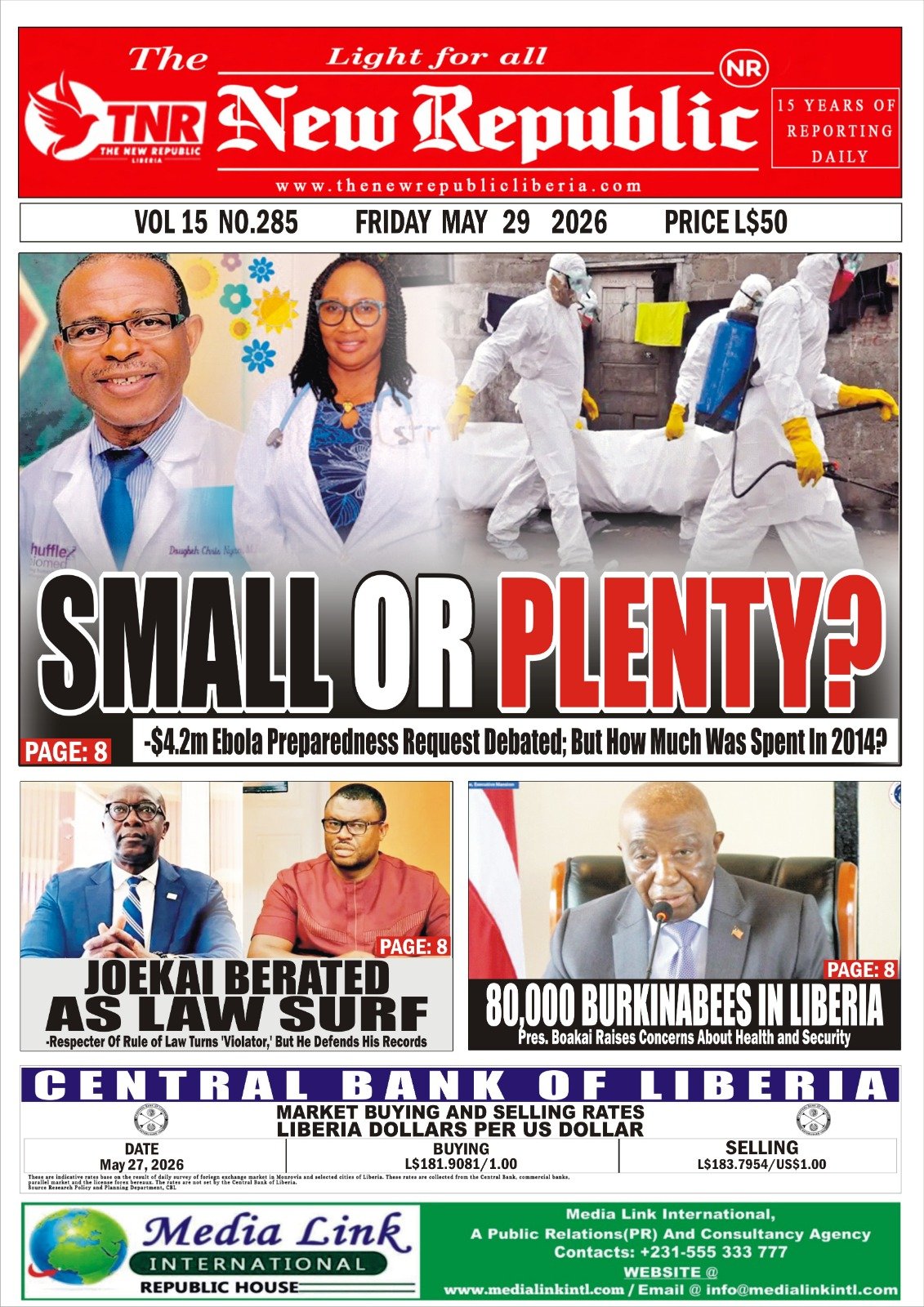
Monrovia – How much was spent during the country’s Ebola 2014 fight comes alive as the country’s topnotch health experts share contrasting views on the smallness or plenteousness of the amount the country requires to prepare for the Ebola outbreak ravaging parts of east Africa – mainly the Democratic Republic of Congo (DRC).
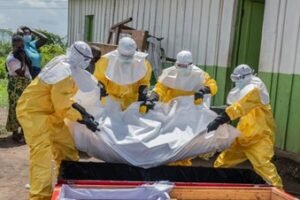
Hundreds of people have lost their lives to the virus and hundreds more affected, according to international news wires.
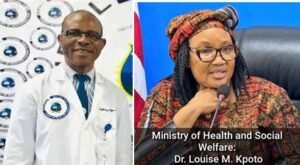
Health Minister Louise Kpoto recently disclosed that the Ministry requires approximately US$4.2 million specifically for the country’s Ebola preparedness plan.
She argued the proposed amount is intended strictly for preparedness activities, including early detection systems, training of health workers, stockpiling essential medical supplies, surveillance operations, and strengthening rapid response mechanisms across the country.
She was quick to emphasize that the proposed budget is not for managing an active Ebola outbreak.
The Health Minister clarified that if Liberia were to record confirmed Ebola cases or experience a full-scale epidemic, an entirely separate and significantly larger emergency response budget would be required.
“Preparedness and outbreak response are two different things,” the Minister reportedly explained, stressing that preventive action remains critical to protecting the country from another deadly health crisis.
However, while the current administration has defended the figure as necessary for national safety and readiness, criticism has emerged from some public health experts who believe the amount may be excessive.
Among the strongest voices questioning the budget is Dr. Dougbeh Chris Nyan, former senior official of the National Public Health Institute of Liberia (NPHIL) and a respected public health expert. Dr. Nyan has openly challenged both the size and justification of the proposed allocation.
According to him, the US$4.2 million budget is far above what is realistically needed under the current circumstances, especially given that Liberia has not recorded any active Ebola outbreak at this time.
Dr. Nyan argued that the amount exceeds the normal annual operational budget of NPHIL itself and suggested that a preparedness budget closer to US$1 million would have been more realistic, reasonable, and sufficient for preventive measures.
The growing disagreement between the Ministry of Health and public health critics has now sparked broader concerns about accountability, transparency, and fiscal responsibility in the management of public health emergencies.
For many observers, the debate is no longer only about the numbers, but also about public trust and how government resources are managed during times of potential crisis.
As the Liberian Senate continues its review of the proposed budget, lawmakers now face a difficult balancing act.
On one hand, approving too little funding could leave the country vulnerable and unprepared in the event of an outbreak. On the other hand, approving a large amount without detailed breakdowns, monitoring systems, and strict accountability measures could raise concerns about misuse of public funds.
Public health analysts say the lessons from the devastating 2014 Ebola outbreak remain fresh in the minds of many Liberians, making preparedness a sensitive but necessary national priority.
Ultimately, many believe the real issue is not simply whether US$4.2 million is too much or too little, but whether every dollar allocated will be transparently managed and effectively used to protect lives.
As the national conversation continues, one thing remains clear: Liberia cannot afford to be unprepared for another Ebola threat, but it also cannot afford waste, secrecy, or weak oversight in the process.
How was spent in 2024 Ebola fight?
As the disagreement continues to rage between and among Liberians over the sufficiency or insufficiency of the amount needed for Ebola preparedness, others are keen to know how the country spent when Ebola hit Liberia in 2014.
Some health workers and experts with information on how much was spent put the amount at $900 million dollars, though it could not be independently verified as this paper traced no record to substantiate the claims.
Someone who claimed he worked in the sector during the Ebola plague insisted the country spent the amount in question, saying “there are records to prove his claims.”
Reeling from a disastrous civil war, Liberia’s response quickly became one of the largest international public health mobilizations in recent history.
According to research, while most donor pledges were made for the entire West Africa outbreak, Liberia received some of the earliest and largest direct support as the country with the highest case load at the time.
It is shown that international donors and organizations spent over $3.6 billion globally to fight the West Africa epidemic, with Liberia accounting for good percentage of the amount.
For example, it is recorded that the U.S. government alone allocated more than $2.3 billion to regional containment and response activities.
“By October 2014, the U.S. had already committed over $350 million toward fighting the outbreak in West Africa, including more than $111 million in humanitarian aid,” research shows.
The Department of Defense was prepared to devote more than $1 billion to the whole-of-government Ebola response.
According to reports, much of this amount came to Liberia, where the U.S. deployed military assets, USAID Disaster Assistance Response Team experts, and CDC staff to set up Emergency Operations Centers and treatment units.
Of the over $1.2 billion U.S. committed toward the regional response, significant funds channeled through USAID and CDC for treatment units, labs, and burial teams in Liberia.
Research also shows that the World Bank Group mobilized an initial $200 million emergency package, with $58 million specifically designated for Liberia. The Bank later expanded this to a $1 billion regional financing package, including $518 million for the hardest-hit countries.
Also, the European Union allocated more than €70 million in immediate humanitarian funding and over €210 million in early recovery assistance for affected countries, while Doctors Without Borders spent approximately $80 million regionally in 2014, establishing treatment facilities including Monrovia’s ELWA centers.
U.S. and international funds supported a range of activities in Liberia including construction and staffing of Ebola treatment units, including 17 planned 100-bed ETUs across Liberia.
This paper gathered that five mobile labs were deployed in the region, two of which doubled lab capacity in Liberia and cut test turnaround from days to hours.
In addition, Liberia had 50 safe burial teams working across every county, with the U.S. procuring 140,000 sets of personal protective equipment and delivered 50,000 community care kits.
More than 130 civilian medical and disaster experts deployed, plus approximately 350 U.S. military personnel. A training site was set up to train up to 500 health workers per week.
Aggressive campaigns reached every Liberian county with information on prevention and treatment. USAID delivered heavy-duty plastic sheeting for ETU construction and provided nutritional support to patients.
The epidemic hit Liberia’s economy hard, with the World Bank estimating the short-term fiscal impact at $93 million, or 4.7% of GDP for Liberia in 2014.
The Bank noted that the total fiscal impact of the crisis across Guinea, Liberia, and Sierra Leone was “well over half a billion dollars in 2014 alone”.
The international response helped bring Liberia’s outbreak under control by early 2015, but the country faced lasting damage to its health system and economy.
Considering Liberia’s financial management records, experts argue it would be hard for citizens to accept the genuineness of the health ministry’s request, but those who experienced the field believe the amount is a drop in the bucket taken into account the complexity in the fight against the Ebola virus.
About The Author