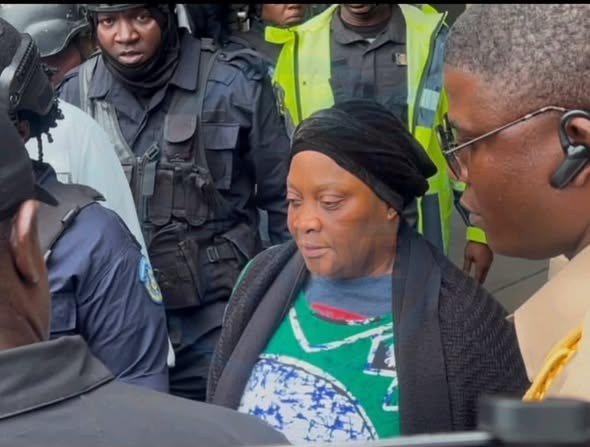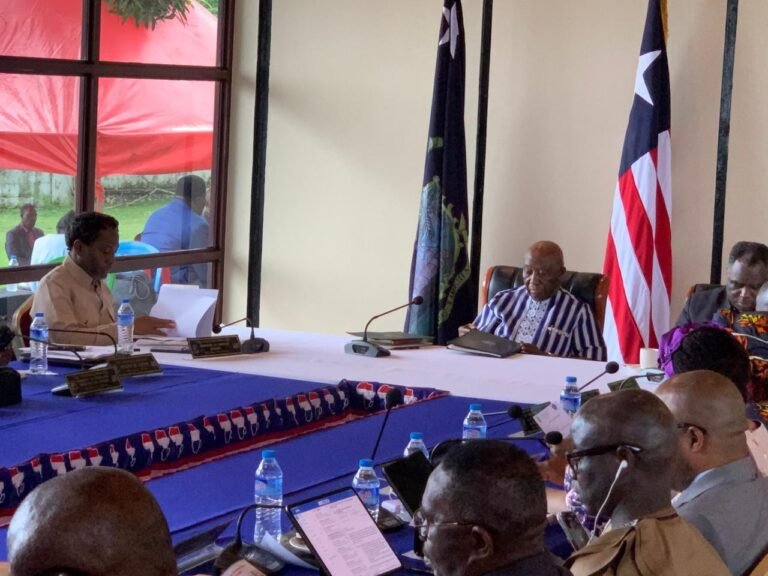
TEMPLE OF JUSTICE–The Supreme Court of Liberia has upheld the conviction of Enree Bee Neeplo, former Program Manager of the Planned Parenthood Association of Liberia (PPAL), for economic sabotage, bringing a major corruption case before the country’s highest court to a conclusion.
The Supreme Court, on Thursday, August 27, affirmed the lower court’s finding of guilt and ordered Neeplo to pay a US$10,000 fine within 60 days and serve 10 years in prison.
However, the High Court did not find Neeplo liable for several other charges brought against her, including theft, illegal disbursement and expenditure of public money, misuse of property, forgery and counterfeiting, according to the ruling.
The Republic of Liberia prosecuted the case through the Liberia Anti-Corruption Commission (LACC).
The prosecution stemmed from allegations concerning the handling and expenditure of funds connected to PPAL.
In its first-quarter 2025 report, the LACC identified the PPAL case as involving approximately US$148,965, with charges including theft of property, illegal disbursement and expenditure of public funds, misuse of public money, economic sabotage, forgery and criminal conspiracy.
The case was initially heard before Criminal Court “C” under Judge A. Blamo Dixon.
The LACC later announced that Neeplo had been found guilty of economic sabotage by Criminal Court “C” on April 25, 2025.
According to the Commission, the allegations involved expenditures associated with a PEWETTA vehicle, a Ford Everest SUV, laptops, catering services and youth programs.
The PPAL case had already resulted in convictions involving several other defendants.
According to the LACC, Miatta K. K. Kojolo, Ernest Vobah, Peter Collins and William Gibson were among those convicted following an earlier trial.
Neeplo, however, pursued a separate trial.
LACC records show that she initially filed a motion seeking a separate trial, while the defendants collectively challenged the indictment.
The lower court denied the motions, prompting Neeplo to seek relief through a petition for certiorari before a Justice of the Supreme Court in Chambers.
The Chambers Justice ultimately granted Neeplo’s request for a separate trial but declined to dismiss the indictment.
The matter was subsequently returned to Criminal Court “C” for trial on its merits.
Following the separate proceedings, Criminal Court “C,” presided over by Judge Dixon, found Neeplo guilty of economic sabotage.
The LACC welcomed the verdict as a significant development in its anti-corruption campaign, saying the case demonstrated its determination to pursue accountability in both public and donor-funded institutions.
The lower court subsequently sentenced Neeplo to 10 years in prison. Reports at the time also indicated that she was ordered to repay more than US$200,000 and pay a fine.
Neeplo appealed the conviction to the Supreme Court.
The appeal also highlighted the enforcement challenges confronting the LACC.
In June 2025, LACC Executive Chairperson Cllr. Alexandra K. Zoe cited Neeplo’s case while explaining that defendants convicted by Criminal Court “C” can appeal, potentially delaying enforcement until the Supreme Court resolves the matter.
The Supreme Court affirming the lower court’s finding of economic sabotage, the appeal has reached its decisive stage.
The ruling, however, narrows Neeplo’s criminal liability by declining to sustain the other offenses challenged before the High Court.
The Supreme Court’s decision therefore leaves economic sabotage as the conviction carrying the 10-year prison sentence and US$10,000 fine, while Neeplo was not held liable by the High Court for the other cited charges.
The decision places another major corruption prosecution under the LACC’s spotlight and renews attention to the enforcement of corruption judgments in Liberia.
The case now moves from appellate litigation toward enforcement of the Supreme Court’s judgment.
About The Author