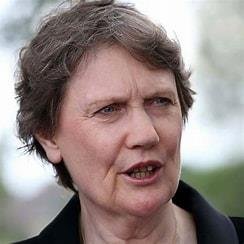
“It is deeply regrettable that the operational details of the Pathogen Access and Benefit Sharing (PABS) Annex could not be agreed in time for adoption at the next World Health Assembly later this month,” said Rt. Hon. Helen Clark, Co-Chair of The Independent Panel for Pandemic Preparedness and Response, in a statement released today.
Her warning is blunt, saying “A PABS Annex which delivers on equity is an essential component of the WHO Pandemic Agreement. Without agreement on the Annex, the Agreement as a whole cannot proceed towards ratification. If a new pathogen emerged today, the world remains largely unprepared for it. A lack of action to prevent and prepare for the next pandemic threat is a disservice to humanity.”
Clark’s statement lands as WHO Member States confirm what civil society groups feared: talks on the PABS system have stalled.
On Friday, governments extended negotiations for another year, casting doubt on when the treaty adopted in May 2025 can actually come into force.
The PABS Annex governs how countries share data and samples of pathogens that could cause pandemics, and how they get fair access to the vaccines, tests, and treatments that result.
It is meant to fix the equity failures of COVID-19, when African scientists identified the Beta and Omicron variants and shared genomic data within days, yet the continent — home to 17% of the world’s population — received less than 3% of vaccines.
“Finalizing the PABS Annex is necessary so countries can proceed with signature and ratification of the Pandemic Agreement,” WHO said Friday. Without it, the Agreement “cannot come into effect.”
WHO Director-General Tedros Adhanom Ghebreyesus noted “real progress was made,” but acknowledged “major differences” remain. “The next pandemic is a matter of when, not if,” he said.
Member States will now ask the World Health Assembly, which opens May 18, 2026, to allow negotiations to continue. Any agreement would go to the next Assembly in May 2027, or earlier at a special session in 2026.
Even with the Annex unfinished, Clark said governments have work to do now. “All countries must be able to detect and rapidly report outbreaks which may pose an international threat. Effective surveillance is a foundation for that work.”
“All countries should have updated national outbreak and pandemic preparedness plans drawing on lessons learned from COVID-19.”
“A One Health approach is vital and requires multisectoral coordination and testing through simulation exercises.”
“One country’s health security is only as strong as that of their neighbour. Greater regional self-reliance and resilience can be built now.”
Clark pointed to the financing gap, saying “There is still simply not enough allocated for preparedness, and no adequate, capitalised surge mechanism exists for response.”
“While more domestic resourcing for PPPR is essential, many low- and middle-income countries are impacted by high debt levels, and a sharp decline in development assistance. Additional stresses flow from geopolitical conflict and trade disruption.”
She called new international finance “an investment which would pay off in millions of lives saved and trillions of dollars protected should a pandemic threat materialise.”
How to enforce a proposed 20% set-aside of vaccines, therapeutics, and diagnostics for WHO distribution, plus non-exclusive licenses and tech transfer.
The EU floated a “hybrid” model mixing mandatory and voluntary measures, delinking information-sharing and benefit-sharing.
Civil society groups, including AHF Nigeria, warned ahead of the talks.
The Pandemic Agreement cannot move forward without a binding PABS Annex that guarantees enforceable benefit-sharing across all phases — pandemics, PHEICs, and interpandemic periods.”
Executive Director of Resilience Action Network Africa Aggrey Aluso said: “If the PABS Annex fails to deliver, it will be because powerful countries chose extraction over cooperation.”
Clark’s panel was formed after COVID-19 exposed how unprepared the world was. The next virus won’t wait for diplomacy.
WHO’s IGWG will meet again July 6-17, 2026, but every month without PABS is a month where pathogen samples can be shared with no guarantee of return benefits — and where low-income countries fear they’ll be last in line again.
“While political leaders must wrestle with immediate issues, they cannot afford to neglect foreseeable risks,” Clark said. She pointed to the UN High-Level Meeting on Pandemic Prevention, Preparedness and Response in New York in September as a chance for leaders to “make progress to fill enduring gaps in PPPR including on co-ordination, financing, equity, and accountability.”
“They should also make it clear that the PABS Annex must be finalised to enable the WHO Pandemic Agreement to proceed.”
The WHO Pandemic Agreement was adopted in May 2025 to strengthen global prevention, preparedness, and response. But without PABS, it’s a car without an engine. Clark’s message is that the world can’t park and wait.
Countries can start now: fund surveillance, run simulations, update plans, and invest in regional manufacturing. Because as Tedros put it, and Clark echoed: the next pandemic is not an “if.”
And as of May 1, 2026, the legal tool meant to ensure the world shares both the danger and the defenses is still just a draft.
About The Author