By Jamesetta D Williams
MONROVIA – Increasing student registration fees to LD$10,000 the administration of the University of Liberia is mulling amid an increasingly severe economic hardship marked by rising taxes, increasing transportation fares, and soaring prices for food and other essential commodities is considered as “an added burdened,” and an “economic war” on and against struggling students and low-income families.
But the proposed increase is being resisted by some civil society groups, including Solidarity and Trust for a New Day (STAND) which insists the proposed increase is being made at the very wrong and turbulent economic times many Liberians are already facing severe economic hardship.
STAND’s May 18, 2026, statement on the proposal to increase registration by the UL authorities spoke of rising taxes, increasing transportation fares, and soaring prices for food and other essential commodities.
Imposing additional financial burdens on students under the current economic conditions would make higher education inaccessible for many young people whose parents are already struggling to survive, it argued.
“Instead of increasing registration fees, the government should prioritize subsidizing the university and addressing any operational challenges being faced by the institution,” it suggested.
STAND further claimed that while ordinary citizens continue to suffer from the high cost of living, government spending in other sectors remains high, including plans surrounding the circulation of new banknotes.
The organization warned that education must not become a privilege reserved only for wealthy families, stressing that many ordinary Liberian students risk being pushed out of school because of poverty and economic difficulties.
The group called on authorities to immediately reverse the reported decision and protect access to affordable education for students across the country.
STAND also used the statement to renew its political slogan, “Lead or Leave,” while referencing what it called “The 2nd Coming” ahead of July 17, 2026, signaling possible future public action or mobilization.
The statement adds to growing public debate surrounding the future of tuition and registration policies at the state-run university amid worsening economic conditions in Liberia.
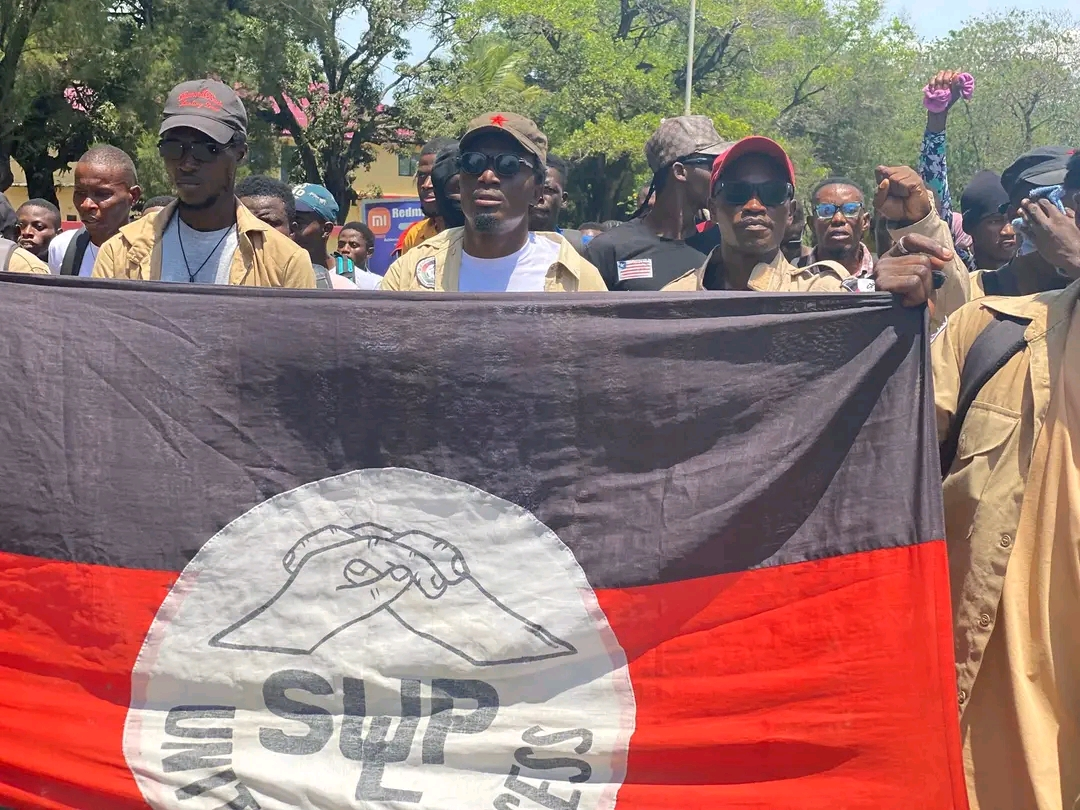
At the same time, the Students Unification Party (SUP) at the University of Liberia has warned the Liberian Government and the University of Liberia administration against any attempt to abolish the country’s free tuition policy at the state-run university.
SUP accused the UL administration headed by Dr. Layli Maparyan of pursuing policies that would worsen the economic hardships facing students.
During a conference held at UL Capitol Hill campus, SUP argued that ending free tuition would place an unbearable burden on more than 22,000 students already struggling with poverty, unemployment and rising living costs.
It dismissed reports that operational challenges, including rising fuel prices, could justify an increase in tuition or fees, while criticizing the administration over what it described as inadequate transportation services for students while senior officials allegedly receive high salaries.
“The Free Tuition policy was instituted because of structural poverty, unemployment and economic exclusion,” the statement said, adding that any move to reverse the policy would face “revolutionary resistance.”
SUP has vowed to mobilize students against any attempt to end free tuition, warning that such a decision could spark nationwide protests.
Also, SUP condemned what it called a “political witch-hunt” against former Finance Minister Samuel D. Tweah Jr., who recently faced prosecution in connection with alleged financial improprieties.
According to student movement, the government’s continued pursuit of investigations against Tweah following a non-guilty verdict undermines the rule of law and judicial independence, accusing the Boakai-Koung administration of selectively targeting political opponents while allegedly ignoring corruption allegations involving figures linked to the ruling establishment.
SUP said it is not defending Tweah personally but rather advocating for due process, judicial independence and equal application of the law.
The group also criticized civil society organizations and religious leaders for what it described as their silence on issues of governance and accountability.
The statement read: “Your refusal to speak out against this blatant overreach is a betrayal of the public trust.”
With the proposed increase of fee, a George Weah-time free tuition policy introduced at the UL to mitigate harsh financial burdens on students seems to be in serious jeopardy, as it faces extermination.
About The Author