

By Jamesetta D. Williams
Monrovia-The Board of Trustees of the University of Liberia (UL) has called for the immediate resumption of academic activities, urging the University Administration, faculty, staff, and students to return to classes on December 1, 2026, amid ongoing concerns over labor disputes, institutional governance, and campus rehabilitation.
In a press statement issued Monday, November 23, the Board also endorsed a blended learning approach, combining traditional classroom instruction with online and digitally supported teaching, as part of efforts to address temporary classroom limitations caused by ongoing renovation works across the University’s campuses.
The Board said the resumption of academic activities should not be delayed while outstanding administrative and labor-related concerns are being addressed, stressing that the restoration of teaching and learning must proceed alongside efforts to resolve the issues affecting the institution.
It acknowledged concerns raised by faculty and staff regarding conditions of service, outstanding financial obligations, institutional governance, and the state of the University’s physical infrastructure.
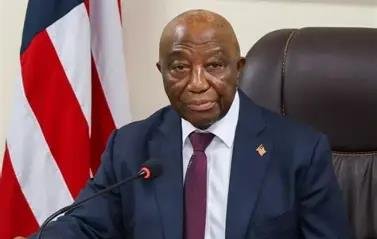
The Board also recognized efforts by the Office of the Visitor, President Joseph Nyuma Boakai, Sr., the University Administration, and other stakeholders to address the concerns through dialogue, mediation, and institutional reforms.
According to the Board, continued delays in the commencement of classes could undermine students’ academic progress, place additional financial and social burdens on their families, and affect the University’s institutional mission and credibility.
It said the level of student registration demonstrates continued confidence in the University and students’ determination to pursue higher education despite the ongoing challenges.
The Board therefore called on the University Administration, faculty, staff, and students to cooperate in facilitating the resumption of classes, while emphasizing that the institution must take proactive steps to address the situation without waiting for further intervention from the Legislature or other external institutions.
The Board also endorsed the implementation of a mediation and reconciliation framework facilitated by the Office of the Visitor on August 15, 2026, aimed at resolving differences between the University Administration and faculty and staff associations.
The proposed framework addresses several concerns, including outstanding obligations to employees of the University, proposed appropriations in the 2027 national budget to settle salary-related obligations, reconciliation and payment of adjunct faculty and overload compensation, and improvements in institutional governance.
It also includes a review of the University’s Human Resources Manual, renovation and modernization of classrooms, laboratories, restrooms, libraries, administrative offices, and other essential facilities, as well as continued dialogue among the University Administration, ULFA, ULSA, and other stakeholders.
The Board said these matters require transparent, measurable, and time-bound implementation arrangements, adding that a joint implementation and verification mechanism should be established to monitor progress and provide periodic reports.
However, it maintained that resolving the outstanding issues should proceed alongside the restoration of normal academic activities.
On campus rehabilitation, the Board disclosed that government-supported renovation, rehabilitation, and modernization works are ongoing under the 2026 budget’s PSIP project, with an estimated cost of US$6.3 million.
The project covers facilities at Capitol Hill Campus, including the Business College, Graduate School, A.M. Dogliotti School of Medicine, Louis Arthur Grimes School of Law, the Pre-Clinical Campus at Fendall, and the Davis A. Straz-Sinje Technical and Vocational College.
The Board emphasized that the works must be carried out in accordance with approved technical specifications, procurement requirements, bills of quantities, and realistic construction schedules.
It said it would remain engaged with the Office of the Visitor, University Administration, government institutions, contractors, technical consultants, and other stakeholders to ensure the timely implementation of the projects while maintaining accountability, quality assurance, value for money, and safety standards.
The Board further stressed that ongoing renovation works should not unnecessarily prevent academic activities from taking place in facilities certified as safe and suitable for instruction.
As part of efforts to address the temporary shortage of classroom space, the Board endorsed the engagement of the UL Administration with Sean H. Joseph to secure temporary space at his college in New Georgia.
The arrangement, according to the statement, would provide an additional 44 classrooms and eight offices to compensate for space unavailable on campus because of renovation works.
The Board said the adoption of blended learning would allow the University to maintain academic continuity while making efficient use of available classroom space and technological resources.
Under the proposed approach, face-to-face instruction would continue in classrooms, laboratories, and other facilities certified as safe and operational, while online instruction would be introduced where appropriate for courses that can be effectively delivered through digital platforms.
Practical, laboratory-based, clinical, and other courses requiring physical participation would be prioritized in the allocation of available facilities.
The Board also called for flexible timetabling, including staggered class schedules, to maximize available instructional space.
It said students and faculty should receive appropriate technological, instructional, and administrative support to facilitate participation, while accommodations should be made for students facing limited internet access, inadequate digital devices, disabilities, or other barriers.
The Board further emphasized that the blended learning approach must preserve academic rigor, equitable access, instructional quality, and the integrity of examinations and academic assessments.
It directed the University Administration to submit a comprehensive blended learning implementation plan detailing course distribution between in-person and online instruction, departmental responsibilities, faculty preparedness, technological requirements, student support mechanisms, and quality-monitoring arrangements.
The Board has also directed the University Administration to undertake several measures within the transitional period.
Among the directives, the Administration is expected within seven calendar days to publicize a revised 2026–2027 academic calendar, including the proposed commencement date, instructional periods, examination schedules, and the proposed date for the University’s 106th graduation.
The Administration is also required to present an itemized implementation budget covering digital infrastructure, learning management systems, internet connectivity, faculty training, classroom preparation, instructional materials, student access support, and related operational costs.
The budget is expected to identify available resources, funding gaps, and proposed financing arrangements.
Additionally, the Administration must submit an updated campus rehabilitation schedule identifying facilities available for immediate academic use, ongoing renovation works, anticipated completion dates, temporary teaching locations, and applicable safety certification requirements.
The Board also called for transitional academic arrangements for the Louis Arthur Grimes School of Law and other academic units particularly affected by the renovation works.
It further directed the establishment of a mechanism for regular consultations with faculty, staff, and student representatives to facilitate implementation, address operational challenges, and promote institutional cooperation.
The Administration is expected to submit a consolidated implementation report to the Board within seven calendar days, followed by regular progress updates throughout the transitional period.
The Board appealed to the University of Liberia Faculty Association (ULFA), the University of Liberia Staff Association (ULSA), the University Administration, students, and alumni to demonstrate flexibility, mutual respect, and renewed commitment to the University’s mission.
It acknowledged the contributions of faculty and staff to the academic and institutional development of the University, while reaffirming that legitimate grievances should be addressed through established administrative, consultative, and legal mechanisms.
The Board also called for sustained support from the Government of Liberia, the National Legislature, development partners, alumni, and other stakeholders to address the University’s infrastructural, financial, and technological challenges.
It welcomed legislative engagement toward increased budgetary support for academic quality enhancement and improved institutional governance, noting that such support should help restore academic normalcy rather than delay it.
The Board said the University of Liberia remains central to the intellectual, professional, and socioeconomic development of the country, noting that its graduates have contributed to leadership and development in public administration, science, medicine, law, education, business, and other sectors.
It maintained that restoring academic activities, accelerating infrastructure rehabilitation, and responsibly introducing blended learning could provide a practical path toward rebuilding stability and confidence in the institution.
“The time to resume teaching and learning is now,” the Board said in concluding its statement.
About The Author