
By Stephanie M. Duncan
MONROVIA-Victims and survivors of Liberia’s civil wars have renewed their calls for justice and accountability while welcoming efforts by President Joseph Nyuma Boakai’s administration to establish a War and Economic Crimes Court (WECC).
The victims and survivors say the government’s efforts to advance legislation and other transitional justice measures have renewed hope among people who suffered atrocities during Liberia’s years of armed conflict.
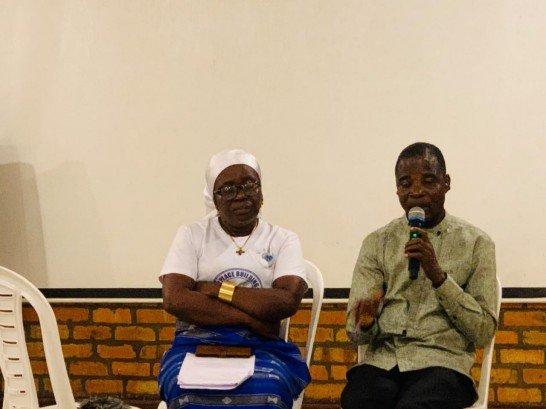
They made the comments during the second day of a workshop organized by New Narratives and its partners for journalists and editors, which focuses on strengthening media coverage of Liberia’s transitional justice process and highlighting the experiences of victims and survivors.
Peterson K. Sonyah, Executive Director of the Liberia Massacre Survivors Association Inc., commended the government for taking steps toward implementing recommendations contained in the Truth and Reconciliation Commission (TRC) report.
Sonyah welcomed the introduction of legislative bills and other initiatives aimed at establishing the War and Economic Crimes Court, describing the developments as important steps toward addressing Liberia’s history of violence and impunity.
He also referenced the reburial of former President Samuel K. Doe and others, saying recent developments demonstrate movement on issues that have remained unresolved for decades.
According to Sonyah, victims and survivors should remain hopeful as the government continues its efforts to establish the court.
He expressed optimism that the WECC will eventually become a reality and provide a legal avenue for prosecuting individuals accused of committing war-related crimes.
Meanwhile, Beatrice D. Johnson of the Women in Peacebuilding Network said the experiences of victims, particularly women and girls, must remain central to Liberia’s transitional justice process.
Johnson recalled the widespread suffering experienced during the civil wars, including rape, sexual violence, harassment, molestation and other abuses against women and girls.
She praised New Narratives and its partners for creating platforms where victims and survivors can share their experiences and contribute to discussions about justice and reconciliation.
Johnson also called for greater opportunities for victims and alleged perpetrators to participate in truth-telling and reconciliation processes.
She argued that, where appropriate and safely facilitated, direct engagement could help victims confront unresolved issues from the war years and contribute to healing and reconciliation.
The participants stressed that the establishment of a War and Economic Crimes Court should be accompanied by broader victim-centered measures, including documentation of violations, recognition of victims and preservation of Liberia’s history.
They said accountability should not be viewed solely through prosecution, but should also include measures that address the needs of survivors and communities affected by the conflicts.
The workshop is bringing together journalists and editors to examine the role of the media in reporting on transitional justice, accountability and the experiences of victims.
The participants also announced plans to commemorate this year’s Founders’ Day, describing the occasion as an opportunity to reflect on Liberia’s history, including the experiences that continue to shape the country.
As Liberia continues to debate and advance the establishment of the War and Economic Crimes Court, victims and survivors are calling for sustained political commitment and meaningful participation in the process.
They say justice, accountability, truth-telling and reconciliation remain essential to addressing the legacy of Liberia’s civil wars and preventing the recurrence of such atrocities.
About The Author