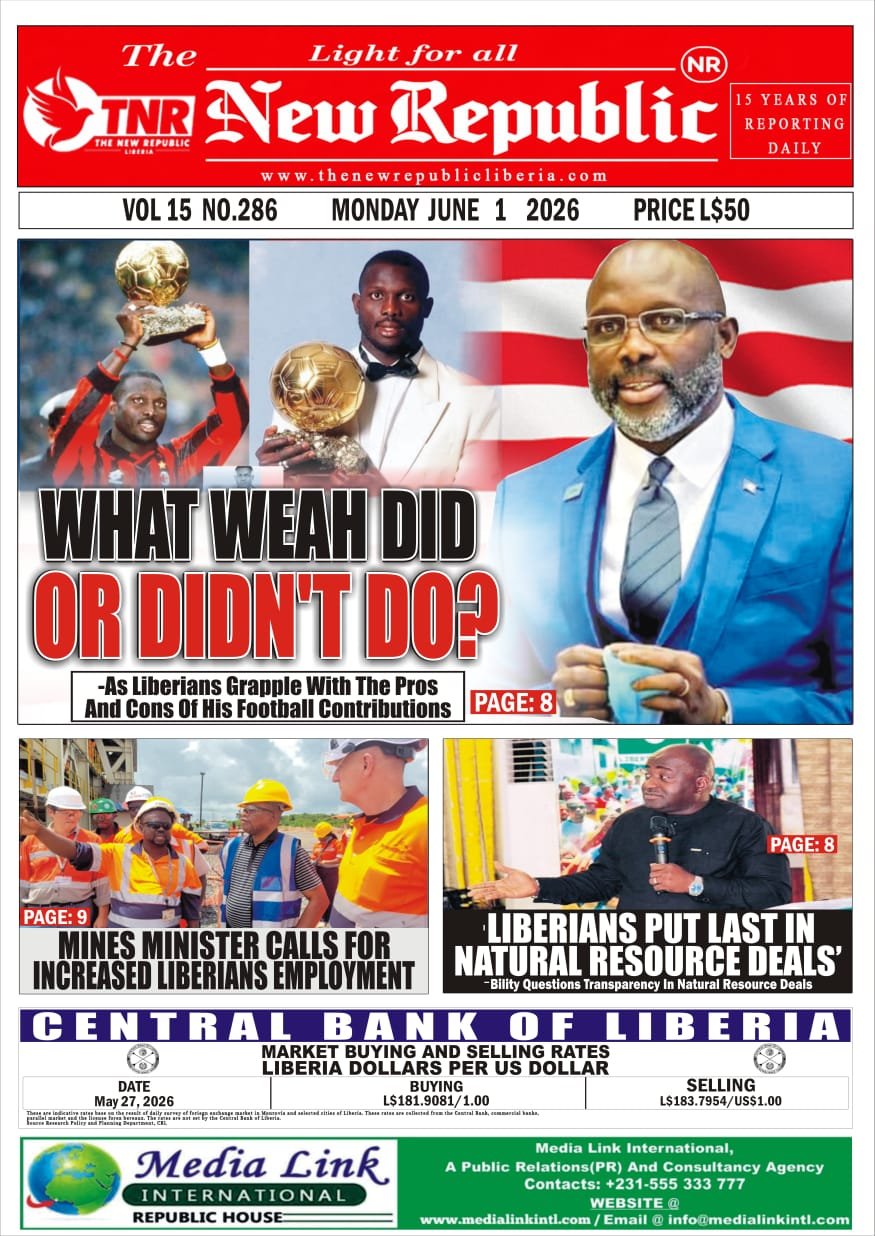
MONROVIA – Years after hanging up his boots and following a six-year presidency that ended with his 2023 election loss, George Weah’s legacy in Liberian football is still one of the most debated topics in the country.
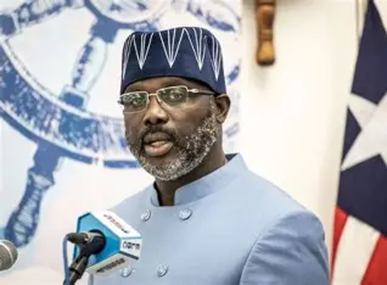
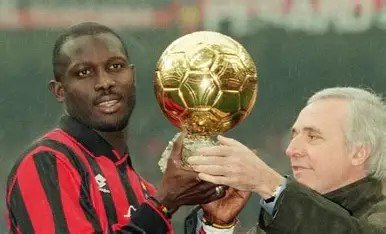
As a Ballon d’Or winner and Liberia’s most famous export, Weah’s influence spans three roles as global icon, former Lone Star captain/technical director, and head of state. As a player, he won African Player of the year title three times, underscoring significant pinnacle of his professional football achievement.
Liberians on both sides of politics and football are now weighing whether he helped build the game or failed to take it to the next level.
The debate about Weah did or didn’t do was ignited by former Lone Star Captain Sam Johnson when he publicly criticized him of neglecting and mistreating the country’s male and female soccer teams during his administration.
Johnson, a former Liberian international star, made the remarks in an emotional social media post after Weah celebrated his son Timothy Weah’s participation in a major international tournament.
“You are so happy and proud to see your son going to one of the greatest tournaments. That is good because every father or mother will be very happy to see their child or children in this wonderful tournament,” Johnson wrote.
“We put you there to help the national team” The former Lone Star captain said Liberians voted for Weah in 2017 expecting him to use his global football influence to lift the national teams.
“We put you there to help push our national team to get to that stage, but you were very wicked to the national soccer teams, both males and females,” Johnson declared.
Johnson expressed frustration that some young players still support Weah despite what he described as years of hardship for players who represented Liberia.
“Seeing others young footballers still around you and want you come back, I can be like he or she doesn’t care about the career,” he added.
He suggested that difficult economic conditions may explain some of that loyalty, adding “Anyway poverty that bad thing, you can’t be hurt and be showing fake smile to him, guys.”
Despite Johnson’s criticism, it is widely accepted that Weah, Africa’s only Ballon d’Or winner, remains the country’s most celebrated footballer.
His presidency from 2018 to 2024 was closely watched by the football community, given his background as a player, captain, and technical director of the Lone Star.
However, while some former players, including members of the “Weah-Eleven” era, have argued he did little to move the game forward, others highlight his interventions during the civil war and 2002 AFCON campaign as evidence of his commitment.
Experts say Johnson’s outburst and public reaction underscore how football and politics remain intertwined in Liberia, with expectations for the former captain still shaping public judgment of his record six years after he left office.
The former president’s defenders have pushed back, pointing to contributions that stretch from the civil war era to his time in office.
According to him, reducing Weah’s impact to “he did nothing” ignores decades of personal sacrifice and interventions that kept Liberia in international football when the country was on the brink of isolation.
His supporters cite several concrete contributions across Weah’s career, including securing a “home” during the civil war when Liberia faced disqualification from 1990 World Cup qualifiers.
They contend that it is inconceivable that some Lone Stars, for selfish and political reasons, are taunting Weah who used his growing international connections to lobby FIFA, allowing Liberia to use Ghana as a home venue. Supporters say that move not only kept the Lone Star alive but set a precedent for FIFA’s “second home” policy for countries in conflict.
They made reference to the Diadora kit deal and equipment – 1993-1996, saying that during the peak of his playing career, Weah’s Diadora sports contract brought major material support to the Liberia Football Association and the national team.
“Kits, boots, and training gear flowed in during 1993-1996, a period when domestic sponsorship was nearly non-existent,” one supporter wrote.
Also, it is stated by supporters that his personal football brand, “Weah’s Sports,” continued supplying free jerseys and equipment to the Lone Star.
One added: “For a federation with chronic budget shortfalls, those donations filled critical gaps.”
As captain and technical director, they defended Weah when he led Liberia to the 2002 Africa Cup of Nations in Mali.
Another said “With Liberia facing severe instability under Charles Taylor’s government, he arranged for the squad to assemble in Côte d’Ivoire for a training camp, arguing it was safer than Monrovia.”
Players and officials have recounted how Weah personally financed much of the logistics, jerseys, and organizational costs for the tournament. Liberia played under extremely difficult conditions but qualified, a feat the team has struggled to repeat since.
Also, it is stated that during his presidency from 2018-2024, he made football a talking point. He approved budgets for the LFA, pushed for stadium rehabilitation, and used his office to lobby for international matches in Monrovia.
Supporters say having a president who understood the game’s politics gave Liberia more diplomatic access at CAF and FIFA.
They also referenced several infrastructural improvements undertaken during Weah’s time in office, including the SKD training pitch, Tulsa Field, Clara Town football pitch, West Point Pitch and the D. Twe pitch in New Kru Town.
“These infrastructural upgrades are added opportunities for young Liberian football talents development Weah should be credited for,” said one supporter.
“These are facilities Weah and his generation of footballers did not have but yet pushed harder to make Liberian football proud,” he said.
However, critics, including some ex-internationals, argue that Weah’s symbolic weight never translated into structural change.
They argued that Liberia still lacks FIFA-standard stadiums and training facilities.
The Antoinette Tubman Stadium and SKD Sports Complex saw upgrades, but critics say the pace was slow and long-term development plans were missing. Youth academies and grassroots programs remained underfunded.
Despite Weah’s profile, Liberia failed to qualify for another AFCON after 2002 and missed multiple World Cup cycles.
Detractors say a president who is also a football legend should have leveraged his network to attract investment, coaching, and sponsorship deals that outlasted his term.
Another issued raised is that Weah’s early involvement with LFA politics created friction.
Opponents of his LFA ambitions fought him heavily, with “Weah did nothing” becoming a refrain used to block his influence.
That political split, critics say, weakened coordination between government and the federation.
For many Liberians, Weah’s Ballon d’Or status set the bar impossibly high. The argument goes that if anyone could transform Liberian football, it was him.
The fact that the national team still relies on foreign-based players and struggles with basic logistics is, for critics, proof of missed opportunity.
The debate splits largely along two lines, including those who measure Weah by crisis-era rescue missions and personal donations, and those who judge him by institutional development and results during his presidency.
“Weah did nothing” has become what one commentator calls “an old choir song” sung whenever his public ambitions came up.
But the examples supporters list, from the 1990 FIFA waiver to 2002 AFCON financing, show a pattern of personal intervention when the state could not.
At the same time, the counter-argument is that football development requires more than individual goodwill. It needs academies, leagues, and consistent public investment, areas where Liberia’s progress remains limited.
Six years after leaving office, the verdict is still unsettled. Weah gave Liberia visibility, pride, and moments of survival in football’s toughest moments. Whether that adds up to “help” or “destruction” depends on whether Liberians value survival over transformation.
For the next generation of Lone Star players, the challenge will be moving beyond the Weah debate and building systems that don’t rely on one man’s name.
About The Author