MONROVIA – The African Region, according to the World Health Organization (WHO), faces one of the highest burdens of youth tobacco use globally, estimating that 5.5 million children aged 13–15 are already using tobacco, exposing them to addiction at a stage when their bodies and brains are still developing.
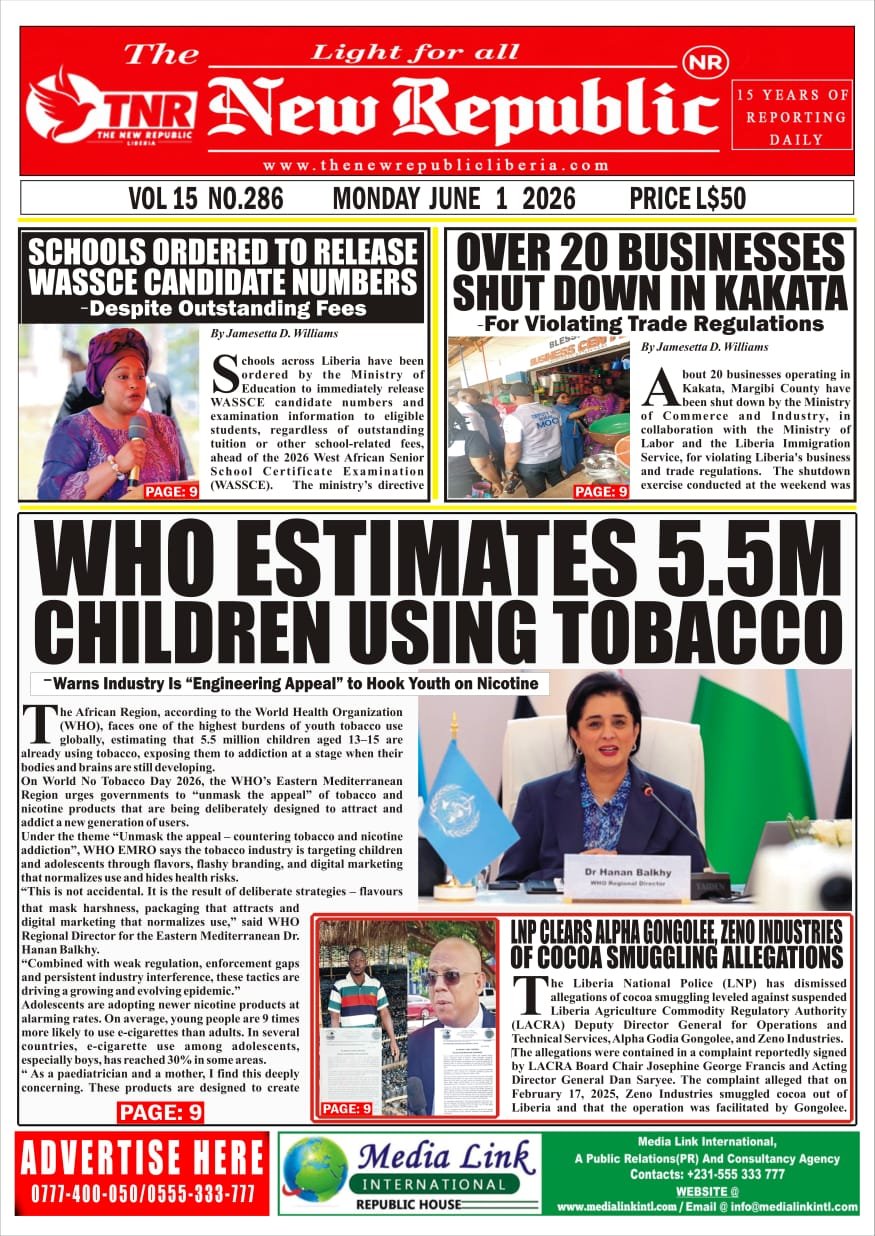
On World No Tobacco Day 2026, the WHO’s Eastern Mediterranean Region urges governments to “unmask the appeal” of tobacco and nicotine products that are being deliberately designed to attract and addict a new generation of users.
Under the theme “Unmask the appeal – countering tobacco and nicotine addiction”, WHO EMRO says the tobacco industry is targeting children and adolescents through flavors, flashy branding, and digital marketing that normalizes use and hides health risks.
“This is not accidental. It is the result of deliberate strategies – flavours that mask harshness, packaging that attracts and digital marketing that normalizes use,” said WHO Regional Director for the Eastern Mediterranean Dr. Hanan Balkhy.
“Combined with weak regulation, enforcement gaps and persistent industry interference, these tactics are driving a growing and evolving epidemic.”
Adolescents are adopting newer nicotine products at alarming rates. On average, young people are 9 times more likely to use e-cigarettes than adults. In several countries, e-cigarette use among adolescents, especially boys, has reached 30% in some areas.
“ As a paediatrician and a mother, I find this deeply concerning. These products are designed to create addiction early, targeting young people at a stage of life when their bodies and brains are still developing,” Dr. Balkhy said.
Digital marketing is the new battleground
Exposure to tobacco and nicotine marketing remains widespread. In several countries, more than half of young people report exposure to tobacco advertising and promotion, with some surveys showing exposure levels of 80% to 90%. Much of it occurs online through social media and other digital platforms where regulations are harder to enforce.
“In a Region where a large share of the population is under 30, the stakes could not be higher. Without decisive action, we risk locking a new generation into lifelong addiction,” Dr. Balkhy warned.
WHO says countries in the Region already have legal frameworks and policy tools, but gaps in implementation allow harmful industry practices to persist. Without stronger action, decades of progress in tobacco control risk being reversed and health systems will face added strain.
To prevent the next wave of tobacco-related disease and death, WHO is calling on governments and partners to enforce comprehensive bans on tobacco advertising, promotion and sponsorship, and strengthen health warnings, including graphic warnings across all products.
It also called for increased taxes and prices to reduce affordability, regulate all nicotine and tobacco products, including e-cigarettes and heated tobacco products, and counter industry tactics, especially on digital platforms and in retail environments
WHO also urged parents, educators and community leaders to play a role locally in recognizing and pushing back against these tactics.
WHO noted that tobacco use is still one of the biggest public health threats worldwide, responsible for over 8 million deaths annually from tobacco-related diseases.
Around 80% of the 1.3 billion tobacco users live in low- and middle-income countries, where the health and economic burden is heaviest. Tobacco use also contributes to poverty by diverting household spending from basic needs like food and shelter.
“With stronger enforcement, clearer accountability and sustained political commitment, it is possible to break the cycle of nicotine addiction and keep future generations from preventable harm,” WHO concluded.
This year’s campaign aims to pull back the marketing curtain and show young people exactly how addiction risks are being masked to expand the industry’s reach.
About The Author