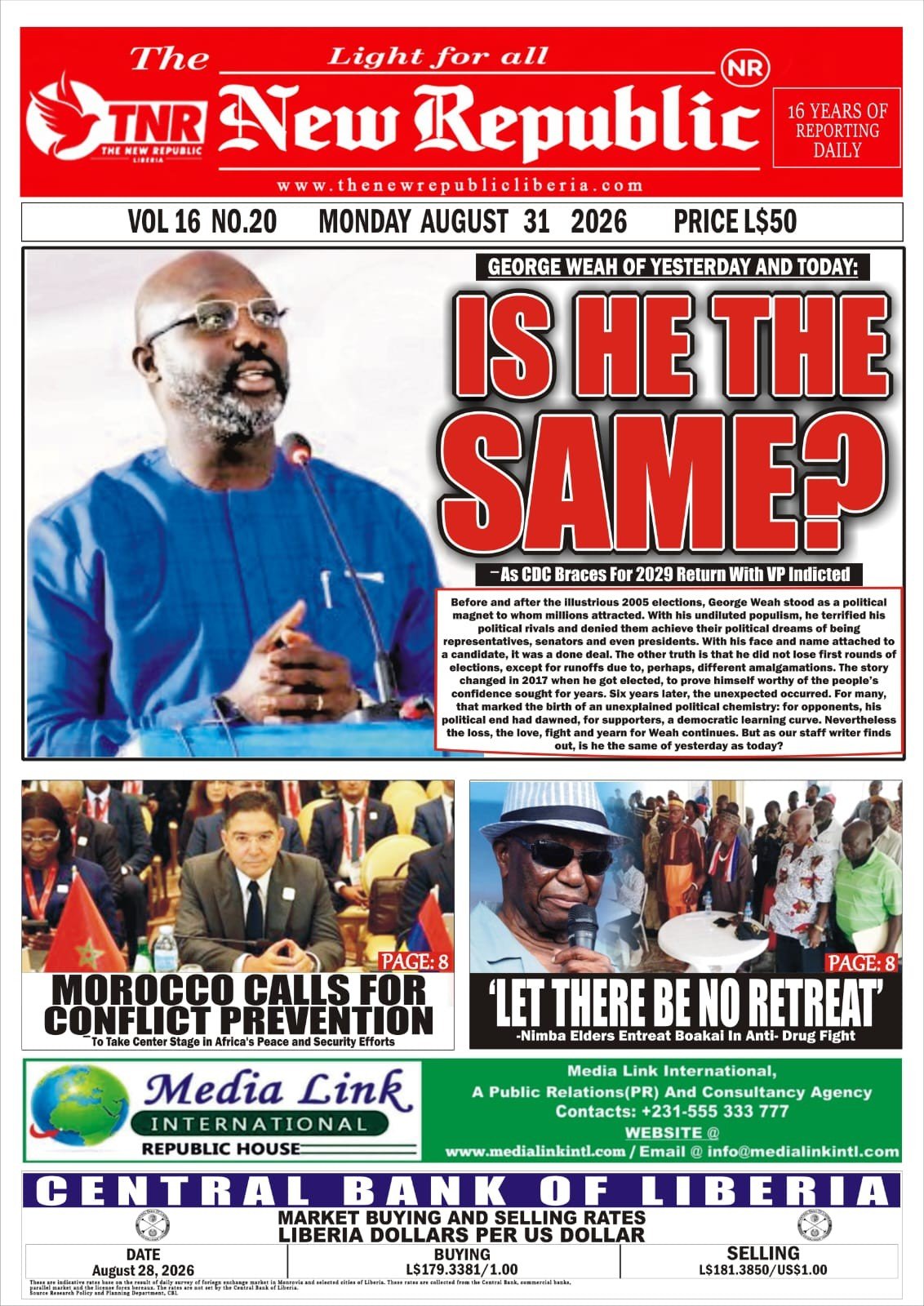
Before and after the illustrious 2005 elections, George Weah stood as a political magnet to whom millions attracted. With his undiluted populism, he terrified his political rivals and denied them achieve their political dreams of being representatives, senators and even presidents. With his face and name attached to a candidate, it was a done deal. The other truth is that he did not lose first rounds of elections, except for runoffs due to, perhaps, different amalgamations. The story changed in 2017 when he got elected, to prove himself worthy of the people’s confidence sought for years. Six years later, the unexpected occurred. For many, that marked the birth of an unexplained political chemistry: for opponents, his political end had dawned, for supporters, a democratic learning curve. Nevertheless the loss, the love, fight and yearn for Weah continues. But as our staff writer finds out, is he the same of yesterday as today?
MONROVIA–Former President George Weah is returning home Wednesday September 2, according to a statement from his party, the Congress for Democratic Change (CDC).
The former president and party standard bearer will arrive at Roberts International Airport, RIA, to a reported mammoth rousing reception. He is returning following months of absence from the country since June, spending time in the United States for the World Cup and other engagements, then in Ghana, with a recent stop in Nigeria where he addressed the National Bar Association (NBA).
While in the US, he extensively and actively participated in the CDC-USA chapter convention where he declared to the would he would contesting the 2029 elections.
Already, the Weah return momentum is high amongst supporters, well-wishers and partisans, reports coming into the newsroom say.
Supporters, partisans, and well-wishers are said to be mobilizing for what the party calls a “triumphant reception” with reports that motorcades, T-shirts, and sound systems are being prepared from ELWA to Paynesville to RIA – the trend often experienced when he is returning aimed at magnifying his return to the country.
As the drums however get ready, one question hangs over the airport tarmac is whether he is the same George Manneh Oppong Weah of yesterday- the pre-presidency days?
To millions, the Weah of 2005, 2011, 2017 was simple, seen as the boy from Clara Town who became a Ballon d’Or winner, then a senator, then president.
According to analysts, he built his politics on three things, including populism, which projects his growing-up life of being from the slumps as many others, access, which is to be with the people in town halls, radio call-ins, street greetings, and hope, which is to speak to jobs, pro-poor agenda, football fields, and a promise that power would finally look like the people.
He had and still has single message, “I know your suffering because I lived it.”
Analysts stressed that message carried him to the presidency in 2017 and kept a base loyal even through economic hardship, COVID, and criticism of governance, and that same message still resonates.
Referred to him as man of humility and simplicity, speaking of the most singular decision to conceded defeat even when votes will still being countered. “When he lost to Joseph Boakai in 2023, he conceded and left peacefully,” remarked one loyalist, and added “that concession bought him goodwill and seen as statesmanship. For others, it was a strategy.
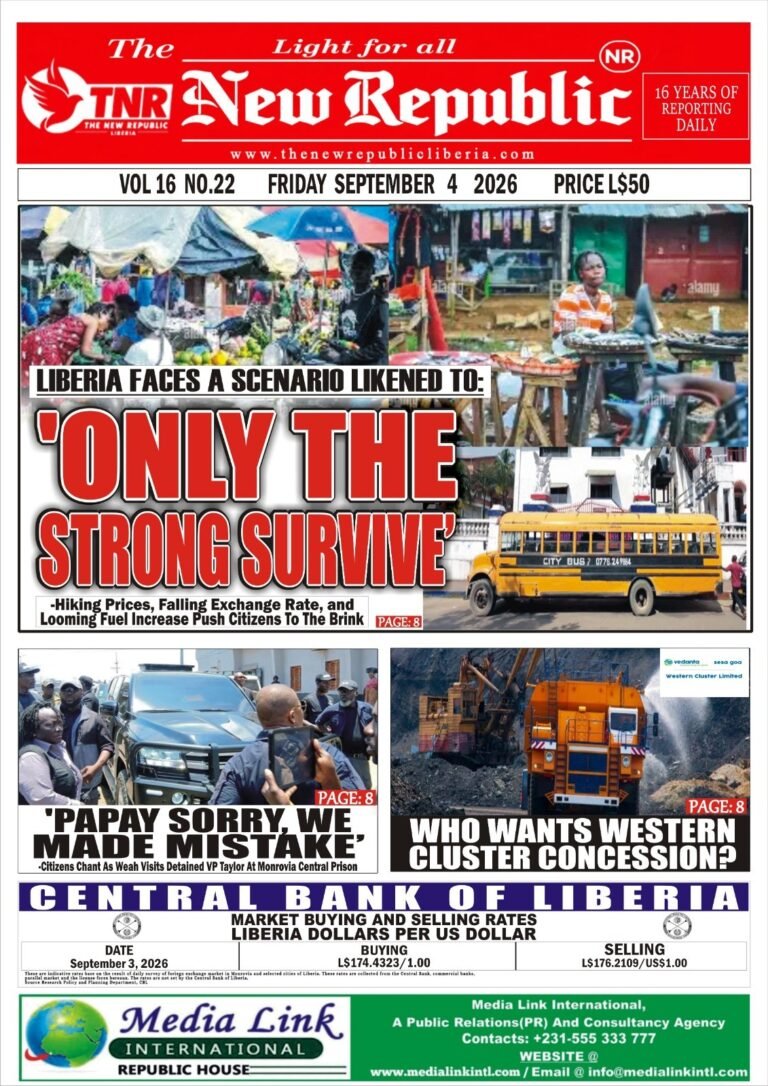
His absence from the country coincided with the biggest crisis to hit his party since 2023, and that has to do with the arrest and 8-count indictment of his former Vice President, Jewel Howard Taylor, on alleged drug trafficking and money laundering charges.
The former vice president is now at South Beach awaiting trial. The case has split the opposition and forced the CDC to answer questions about corruption, drug networks, and 2018-2024 governance.
Weah harshly responded to ex-VP Taylor’s indictment, accusing the administration of President Joseph Boakai of using extrajudicial powers and “authoritarian tendencies” to orchestrate a politically motivated attack on his political rival, following the detention and formal drug trafficking charges against former Vice President Jewel Howard-Taylor.
He described the prevention of Howard-Taylor’s travel and her subsequent questioning by the Liberia National Police (LNP) as a violation of her constitutional right to free movement and an alarming sign of democratic decline.
“What we all witnessed today has further revealed the extent of our democratic decline in the last few years, marked by the continuous use of extrajudicial powers by President Joseph Boakai,” Weah said.
He asserted that the allegations of unlicensed drug importation, illicit trafficking, criminal conspiracy, and money laundering are “politically motivated” and vehemently denied by the former Vice President.
He also criticized Justice Minister Cllr. N. Oswald Tweh for presenting “blanket accusations” against Howard-Taylor without supporting evidence. The former President argued that the government’s focus on the CDC administration is a distraction from its own failures.
Weah pointed out that the two massive cocaine discoveries, including a record-breaking seizure of approximately 238 kilograms valued at over US$317 million in Duazon, and another at Roberts International Airport, occurred after his administration had “peacefully handed over power”.
Instead of diligently pursuing the investigation, Weah accused the Boakai administration of giving a “slap on the wrist” to implicated government and security officials, many of whom he claims still roam free.
“This action by the government comes after two major drug discoveries amounting to nearly half a billion dollars, which officials themselves have admitted were brought into Liberia after we had peacefully handed over power,” Weah stated.
He maintains the probe is a political witch-hunt. Weah also revealed that he has been engaging with regional and continental leaders to alert them to what he perceives as the systematic undermining of the rule of law in Liberia.
“Despite a peaceful democratic transition, President Boakai seeks to rule as a tyrant. This we must all resist,” Weah declared. He announced his intention to return to Liberia shortly to rally the CDC and “all well-meaning Liberians” to resist this “tyrannical attempt” by all political and legal means guaranteed under the constitution.
But ahead of his return, Liberians are debating how politically weighted he remains.
CDC supporters argue nothing has changed. “He is still the people’s man,” a CDC youth leader in Paynesville said. “They arrested his VP to weaken him ahead of 2029. The crowd on Wednesday will prove he still owns the street.”
To them, Weah remains the anti-establishment figure, arguing that the indictment of Taylor is political persecution designed to clear the field for the ruling party.
According to them, just as leaders learn from past mistakes made while in office, Weah too has learned from whatever he did not right while in office.
“George Weah is not finished; he is the same cherished and adored, and as president again, he is going to be different,” said his supporter.
He referenced the Weah situation with the current political and development evolution Ghana is undergoing under President John Dramani Mahama.
“As sitting president, he lost to former president Nana Akufo Addo of the New Patriotic Party (NPP),” he recalled. “Eight years after, he was elected and his taking Ghana into a new development age unseen in decades in the whole of Africa.”
He said Liberians know the former president’s development ability as was shown during his time in office, and his ability to ensure Liberia benefits from good things he sees outside.”
According to them, a big turnout at RIA will reset the narrative.
However, critics and even some former allies say the Weah of 2026 is different. “He left as president with state power. He’s returning as opposition leader with legal baggage around him,” a political analyst in Monrovia said. “Populism without power is harder. You can’t cut ribbons anymore. You have to explain the past.”
Others point to three different factors, including his governance record, questions about corruption, concessions, and drug enforcement during 2018-2024 will follow him.
There is also a party dynamics tied to Taylor indictment, with many wondering if he will keep her on a 2029 ticket, or if the NPP stay in the CDC
Critics also argued that much has changed about the populist political figure Liberia has ever seen in the past 20 years, referencing the fact that he has already been tested, politically evaluated and priced.
“Even Liberians yearned for him becoming president, they saw him as the savior long spoken of. They believed he could do far more than imagined and loved,” said one critic.
According to him, that narrative has changed simply because he failed the test as president for six years.
Others make reference to the political shocks experienced in the departure of key political figures such as Thomas Fallah, Saah Joseph and others who are now dinning with the ruling Unity Party.
With these departures, they believe Weah and his CDC have lost enormous support bases and connections.
Most of his supporters lost faith in him for allegedly failing to take proactive steps against officials accused of undermining his government including engaging into corruption and other forms of malfeasance.
For that, they see him as a weak and indecisive character, someone who does meet the standards to lead a country such as Liberia with all the difficulties and uncouth characteristics.
“The Weah of yesterday rallied. The Weah of today may have to litigate, explain, and rebuild,” said one analyst.
Amid the argument about Weah’s relevance under the current political dispensation, it is believed the RIA reception will be the first real test.
If thousands turn out, it sends a message to the Boakai administration and to donors that the CDC base is intact and Weah is still the main opposition figure heading to 2029,” remarked an analyst.
“If the crowd is thin, or if the event is hijacked by questions about Taylor, it signals vulnerability,” he furthered.
According to them, the CDC would then have to rebrand without its most recognizable face at the center.
Weah has declared he will run again amid a shifted political landscape.
With President Boakai is 2 years into his term and running anti-corruption and anti-drug campaigns, a former VP under indictment complicates the CDC’s anti-corruption messaging.
However, youth unemployment and hardship remain, which was Weah’s lane in 2017.
Buy can he still carry the same populist weight, or will 2029 require a new message, new allies, and new explanations, is the overwhelming question analysts are finding answers for.
As ex-president Weah lands Wednesday, his admirers see him as the same man with humble roots, global name, political fighter, while his opponents say he is a former
president returning to a country that has moved on, and to a party under legal scrutiny.
But truth be told, it is Jesus Christ is known to be the same yesterday, today and forever.
About The Author