
By Jamesetta D. Williams
Monrovia-Events of the past months, since the passing of late Senate Prince Yomie Johnson (PYJ), have reportedly shown how the County of Nimba, one of Liberia’s largest and populated counties, is struggling to hold together and come to term.
The people of Nimba regarded the late PYJ as unifier, strategist, political god father and a venerated Senator and elder.
In his absence, sons and daughters of the county are not at peace with each other, they are reportedly rising up against each other on political lines, personal interest lines and other lines, with concerned citizens describing the situation as “the center can’t longer hold water.”
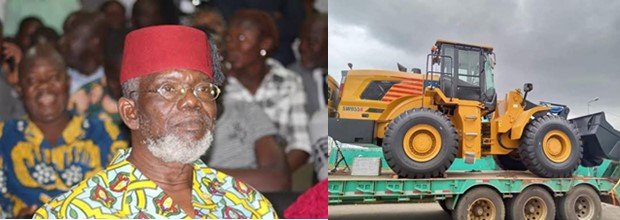
The PYJ playbook was once more reopened during the official turning over of a few batch of yellow machines to the people of County.
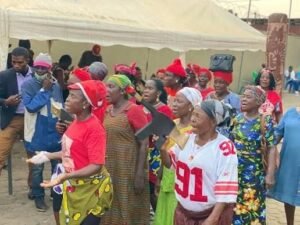
The exercise reignited political discussions about development, political loyalty, and the legacy of the late PYJ and raised questions about whether the county is moving toward a new chapter of progress or remains caught between political divisions and unresolved grief.
The development comes amid growing political disagreements surrounding the relationship between the ruling Unity Party (UP) and the Movement for Democracy and Reconstruction (MDR), a political institution founded by the late senator, whose influence shaped Nimba’s political landscape for years.
While the yellow machines are expected to contribute to road rehabilitation and infrastructure development, the political statements surrounding their presentation have generated questions about why the equipment is being linked to the political decisions of a leader who is no longer alive.
During the 2023 general elections, Senator Johnson reportedly encouraged his supporters to vote for President Joseph Nyuma Boakai and Vice President Jeremiah Kpan Koung, believing that their administration would provide the kind of leadership and governance he envisioned for Nimba County and Liberia.
Speaking at the official turning over ceremony in Sanniquellie City, District #6 Representative Dorwahn Gleekia recalled that political decision, describing the delivery of the machines as evidence that the late senator’s expectations were beginning to materialize.
“Senator Johnson, we know where you are today. You’re watching us. The decision you made us take a few years ago, the results are here,” Representative Gleekia said.
His remarks have placed the yellow machines within the context of the political understanding between the late senator and the Boakai-Koung administration.
However, the presentation has also raised a broader question about whether public development projects should be celebrated primarily through political loyalty or measured by their actual impact on citizens.
Meanwhile, Margibi County Senator Nathaniel McGill has criticized what he described as the use of yellow machines for political rallies and parades, calling on members of the ruling Unity Party to stop turning the equipment into instruments of political celebrations.
According to McGill, the machines were acquired to address Liberia’s road infrastructure challenges rather than serve political interests.
“The yellow machines were bought to fix our roads, not for political rallies. It has been over a year, yet they have not been put to the purpose for which they were acquired,” McGill said.
He further expressed concern that several roads across the country remain in deplorable condition, making transportation difficult for citizens traveling between counties.
“We continue to witness rallies and parades of these machines while most of our roads remain in poor and deplorable condition, making it difficult for our people to travel between counties. The very reason these machines were purchased seems to have been forgotten, and that is to fix our roads!” he added.
McGill’s concerns have brought attention to the government’s responsibility to ensure that the equipment serves its intended purpose, particularly at a time when citizens continue to demand improved road connectivity.
Beyond the yellow machines, Nimba County continues to experience political tensions following the death of Senator Prince Y. Johnson on November 28, 2024.
His death left a major political vacuum in the county and created questions about the future of the MDR, his political legacy, and the relationship between the party and the Unity Party-led government.
Since his passing, disagreements have emerged among political actors and supporters over whether the political alliance he helped establish with the Unity Party should continue in the same manner.
Some MDR members and supporters have accused political figures within the alliance of abandoning the late senator during a difficult period, while others maintain that cooperation with the Boakai-Koung administration was part of his political vision.
During the late senator’s funeral activities in January 2025, MDR National Chairman Cllr. Cooper W. Kruah reaffirmed the party’s commitment to its alliance with the Unity Party-led government, describing the relationship as the late senator’s “life dream and legacy.”
However, the party’s former Youth Chairman, Czar Mabulu Palay, publicly criticized the Unity Party alliance during the funeral, accusing some political allies of abandoning the late senator after the elections. His remarks generated controversy within the party, and he subsequently apologized to Vice President Jeremiah Kpan Koung.
The differing positions exposed disagreements within the political organization over how the late senator’s legacy should be protected and interpreted.
The political disagreements became more visible in August 2026 when Nimba County Senator Samuel G. Kogar was expelled from the Movement for Democracy and Reconstruction.
The MDR announced his expulsion on August 29, following an Executive Committee decision, citing alleged violations of the party’s constitution and bylaws, including disagreements over his conduct and public statements.
The party’s leadership also defended its relationship with the Unity Party-led government, maintaining that members should not publicly oppose an administration with which the MDR is politically aligned.
Kogar, however, has rejected the circumstances surrounding his expulsion and accused the Unity Party-led government of influencing the decision.
Following his expulsion, the senator also accused the government of betraying the late Senator Johnson, linking the disagreement to discussions surrounding the proposed establishment of a War and Economic Crimes Court.
“The Rescue government betrayed and killed Senator Johnson, who supported the government to gain state power,” Kogar alleged while addressing supporters in Ganta.
His allegation reflects the growing mistrust among some political actors concerning the relationship between the late senator, the Unity Party, and discussions about transitional justice.
Kogar’s accusations have not been established by any independent medical or judicial findings. The Unity Party and the government should be given an opportunity to respond to the allegations.
The controversy surrounding the late senator’s death has also been raised by former Good Governance Commission Executive Chairperson Cllr. Garrison Doldeh Yealue Jr.
During a radio interview in Ganta, Yealue accused the Unity Party and the MDR of putting pressure on the late senator in connection with discussions surrounding the establishment of a War and Economic Crimes Court.
“The Unity Party and MRD killed Senator Prince Yormie Johnson under pressure from the War Crimes Court. They lied to him and killed him,” Yealue alleged.
However, Yealue did not provide evidence establishing a direct connection between the government, the proposed court, and the senator’s death.
Senator Johnson died following a period of illness, and allegations that political pressure or government actions caused his death remain unproven.
These claims have nevertheless become part of the political debate surrounding his legacy, particularly among supporters who believe the late senator was not adequately protected by some of the political allies who benefited from his support.
For a county with significant political influence and a history of competing political interests, the continuing disagreements raise questions about its future direction.
The late Senator Johnson was a central figure in Nimba politics, and his death has left supporters, party members, and political stakeholders debating who should carry forward his political vision.
The expulsion of Senator Kogar, disagreements within the MDR, and accusations involving the Unity Party have further complicated the political environment.
Against this background, the turning over of yellow machines has become more than a development ceremony. It has renewed discussions about whether Nimba’s future should continue to be defined by the political legacy of its late leader or by a new commitment to inclusive development and political reconciliation.
For ordinary citizens, the immediate concern remains the condition of roads, access to essential services, employment opportunities, and the economic challenges affecting communities across the county.
Residents will want to know whether the machines will reach all districts, which roads will receive priority, and whether the equipment will be properly maintained to ensure lasting benefits.
The government’s development efforts should also be assessed on whether they improve the lives of citizens rather than the political advantages they may provide to any party or individual.
As Nimba continues to remember its late senator, an important question remains: Should the county’s political future be built around the glory of a departed leader, or should the grief and divisions following his death become a reason for a new beginning?
Ultimately, the people of Nimba need more than political speeches, accusations, and public displays of machinery. They need development, accountability, unity, and leadership that places their interests above political differences.
The yellow machines may provide an opportunity to begin addressing some of these challenges, but their real significance will only become clear when they begin delivering visible improvements to the lives of the people.
About The Author