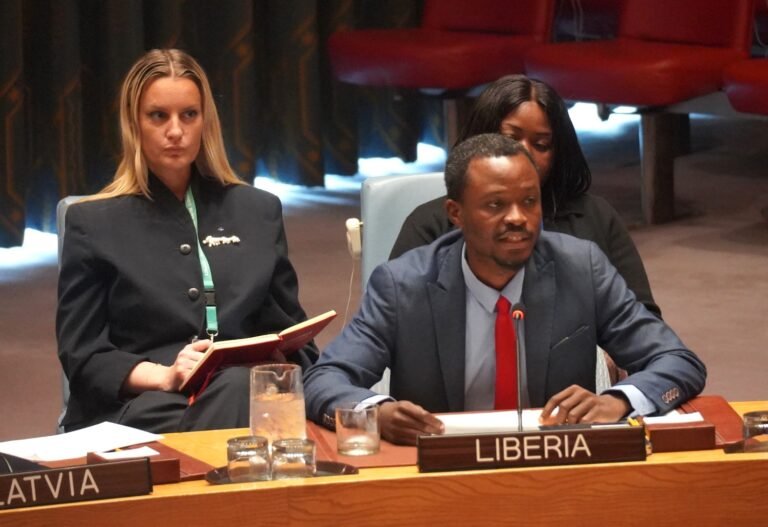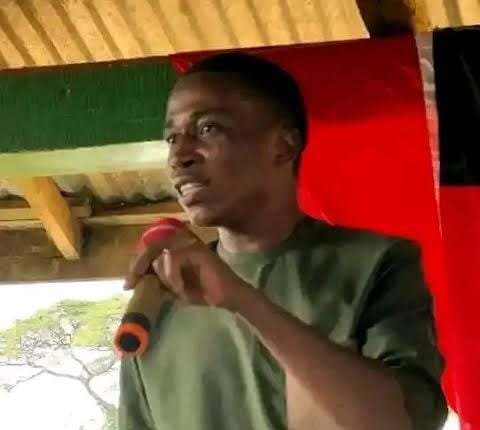
Monrovia-Though weird in Liberia’s political governance, citizens of District 10, Montserrado County have injected a new phenomenon. Several months since their representative, Yekeh Kolubah, was shown the back door by hid colleagues for “incompatible behavior,” they have rolled their sleeves in his defense, prevailing on the Supreme Court of Liberia to do justice with the case. Considering g the length of time the case has been before it, they are giving a 14-day ultimatum. How realistic is the demand given that Liberia does not have any other court higher than the supreme court. What next comes into play as contributor Benjamin Johnson reports on the intriguing story.
A group of citizens from Montserrado County Electoral District #10, under the banner of the Concerned Citizens of District #10, has come to the defense of lameduck Representative Yekeh Kolubah, having petitioned the Supreme Court of Liberia to urgently resolve the legal dispute surrounding his expulsion.
Prior to the decision to expel him, Kolubah served as the elected representative of the district in the 55th National Legislature.
Recall that in April of this year about 49 lawmakers signed a resolution to expel Kolubah, who was regarded as the most controversial lawmaker after members voted overwhelmingly.
The move was taken amid an active stay order issued by the Supreme Court just a day earlier.
The vote was 50–0 to remove Kolubah from office, with the resolution carrying 49 signatures, meeting the two-thirds majority required under Article 38 of the 1986 Constitution to expel a sitting lawmaker.
The decision was taken one day after Associate Justice Yussif D. Kaba issued a formal citation ordering “an immediate stay on all further proceedings or actions related to the matter” pending a conference scheduled for Monday, April 20, 2026.
Kolubah’s expulsion followed an investigation by the House Committee on Rules, Order and Administration, which acted on complaints filed by Montserrado County District #3 Representative Sumo K. Mulbah and Liberia National Police Inspector General Gregory O.W. Coleman.
The allegations included gross misconduct, violation of oath of office, breaches of House rules, and conduct deemed to have brought the Legislature into public disrepute, along with concerns related to national security and stability.
He was formally notified on April 9, 2026, to appear before the Committee on April 13. He acknowledged receipt but requested five days to consult with his legal counsel. The Committee granted him two additional business days, citing the importance of balancing fairness with procedural efficiency.
Meanwhile, citizens on Tuesday met with Chief Justice Yemie Quiqui Gbeisay, seeking the Court’s intervention in what they described as a prolonged legal and constitutional uncertainty that has left the district without representation in the House of Representatives.
In a formal communication submitted to the Supreme Court, the group gave the Court a 14-day ultimatum to speedily adjudicate the case involving Kolubah and his former legislative colleagues who voted for his expulsion.
The citizens argued that the continued pendency of the case has created a serious representation gap in District #10, leaving thousands of constituents without an elected voice in the National Legislature.
The National Legislature is yet to announce vacancy of the seat while the National Elections is yet to be notified by law three months after the vacancy had been created.
The citizens are demanding clarity on whether Kolubah should be reinstated if the Supreme Court overturns his expulsion or whether the National Elections Commission (NEC) should proceed with a by-election if the expulsion is upheld.
They have equally called on President Joseph Nyuma Boakai not to interfere in the matter or engage in what they described as political maneuvering over the future of District #10.
The group maintained that the controversy should be resolved through the Constitution, the courts and the electoral process—not through political negotiations.
According to the residents, if the Supreme Court determines that Kolubah’s expulsion was lawful, the constitutional and electoral process should immediately be activated to enable the people of District #10 to elect a new representative.
They said the district should not remain indefinitely without representation while political and legal authorities debate the fate of the vacant seat.
The group has also warned that it could stage public demonstrations if the Supreme Court fails to resolve the case and a by-election is not conducted.
In one of the strongest statements from the group, the citizens warned that President Boakai could face protests along the Congo Town–Capitol Hill route, a major corridor used by the President in traveling to and from work.
The warning raises the possibility of a growing confrontation between residents demanding a resolution to the District #10 controversy and state authorities responsible for maintaining public order.
The citizens, however, insist that their position is driven by the need to restore representation and should not be interpreted as an attempt to undermine the government.
Speaking on behalf of the Concerned Citizens, Alfred P. S. Grear launched a strong attack on the former lawmaker, describing Kolubah as a “noise-maker” and accusing him of failing to adequately deliver development to District #10.
Grear alleged that the district remains poor and underdeveloped despite Kolubah’s years as its elected representative.
The allegations are political claims by the group and have not, in themselves, established any finding of financial or administrative wrongdoing against Kolubah.
The criticism nevertheless highlights the growing divisions within District #10 over the former lawmaker’s political record and his continued legal challenge to the decision of his colleagues.
Kolubah’s expulsion by members of the 55th Legislature has generated a legal and constitutional dispute over the power of the House of Representatives to remove an elected lawmaker and the rights of the voters who elected him.
The former representative has challenged the action taken against him, bringing the dispute before the Supreme Court and effectively placing the constitutional authority of the Legislature under judicial scrutiny.
At the heart of the case is a fundamental constitutional question:
To what extent can the Legislature expel an elected representative, and what happens to the constitutional right of the constituents to representation when their elected lawmaker is removed from office?
The case therefore goes beyond Kolubah personally. Its outcome could establish an important precedent regarding the relationship between legislative disciplinary actions, elected representatives and the voters who sent them to the National Legislature.
The latest petition from District #10 residents places additional public pressure on the Supreme Court to bring the controversy to an end.
For the citizens, the issue is straightforward: either Kolubah should be legally restored to his seat or the district should be allowed to elect a new representative.
But the matter presents a delicate constitutional challenge.
While citizens have the right to petition government institutions, demand accountability and peacefully protest, the judiciary is expected to determine cases based on law and evidence rather than political ultimatums.
The Supreme Court must therefore balance the constitutional rights of Kolubah, the authority of the Legislature and the rights of District #10 residents to effective political representation.
A ruling in the case could have consequences extending well beyond Montserrado County, particularly if the Court is called upon to define the constitutional limits of legislative expulsion and the circumstances under which a legislative seat may become subject to a by-election.
They argue that they have waited long enough and their 14-day ultimatum signals that their next move could be public protest if they do not see a clear path toward resolving the district’s representation crisis.
About The Author